

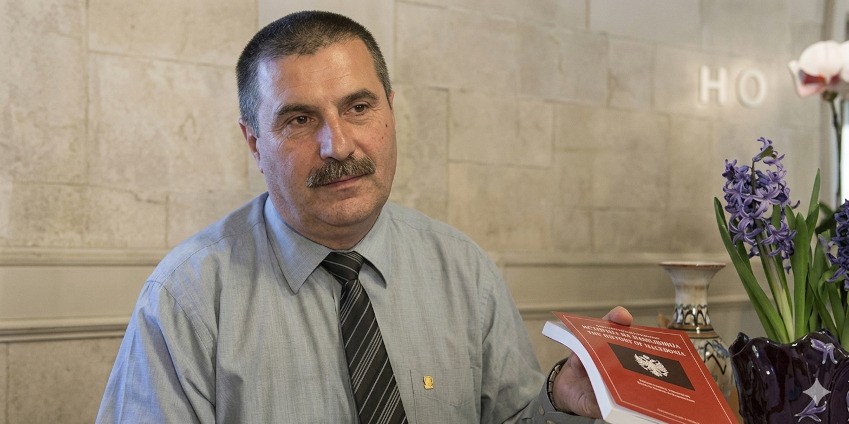
When Bad Things Happened in the 19th Century to Good Macedonian People by Risto Stefov
On November 18, 2001, the Canadian Macedonian Historical Society (CMHS) hosted researcher Risto Stefov for a lecture exploring how 19th-century geopolitics manufactured the "Macedonian Question." Stefov argued that the region's modern instability stems from a combination of the Ottoman Empire's decline, the destructive impact of European economic imperialism on local industry, and the diplomatic betrayals of the Great Powers. The centerpiece of his analysis was the 1878 Congress of Berlin, where European diplomats prioritized a "balance of power" over local self-determination, returning Macedonia to Ottoman rule and setting the stage for the violent partitions and identity conflicts that followed.
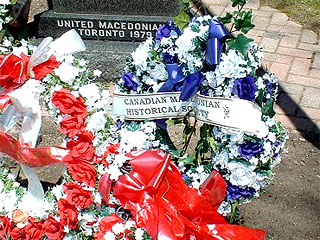
Wreath Laying Ceremony Commemorating the Death of Gotse Delchev
Wreath Laying Ceremony Commemorating the Death of Gotse Delchev The Canadian Macedonian Historical Society participated in the wreath laying ceremony at St. Clement church. The event was sponsored by the United Macedonians organization to commemor...
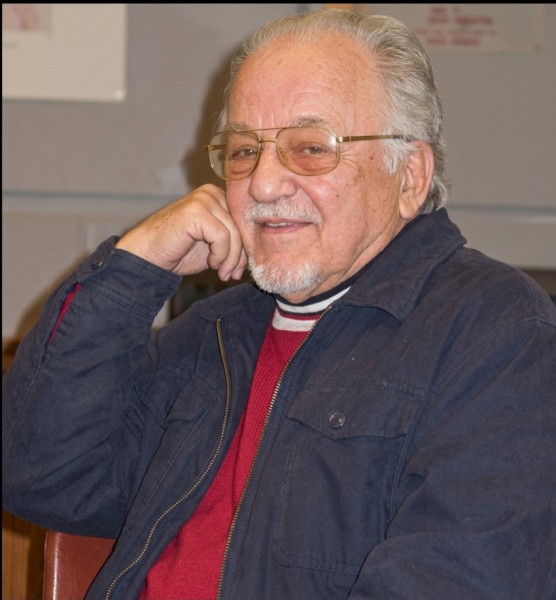
Canadian Macedonian Historical Society - Annual General Meeting
Canadian Macedonian Historical Society - Annual General Meeting 2003 The Canadian Macedonian Historical Society held its Annual General Membership Meeting on Friday, May 2, 2003 at the Canadian Macedonian Place in Toronto. The president, Alexander...
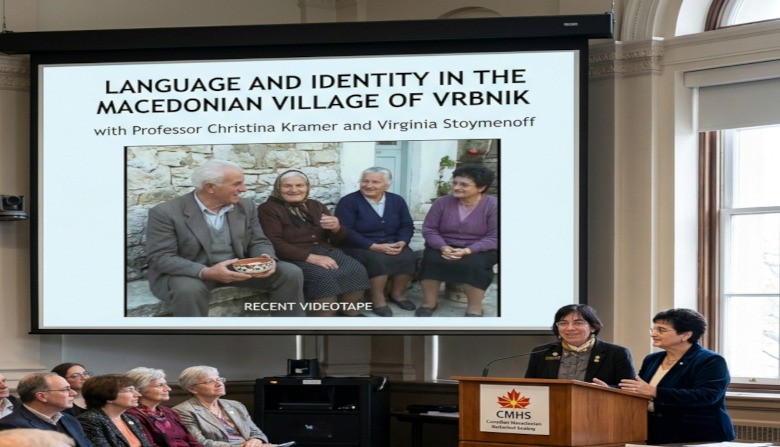
Language and Identity in the Macedonian Village of Vrbnik with Christina Kramer and Virginia Stoymenoff
On April 13, 2003, Christina Kramer, professor of Slavic Languages & Literatures at the University of Toronto, and Virginia Stoymenoff, gave a brilliant presentation on their visit to the village of Vrbnik, in Southern Albania.
The presentation took place in the committee chamber at North York City Hall. This extremely valuable lecture enthralled the audience and was highlighted by a recent videotape from the village.
Both professor Kramer and Virginia Stoymenoff went to great lengths to visit Vrbnik, in Albania, and meet with its isolated Macedonian residents. The CMHS appreciates their efforts and congratulates them on a superb presentation.

Bucephalus - A Short Film by Alexander Vasolla. CMHS Premier
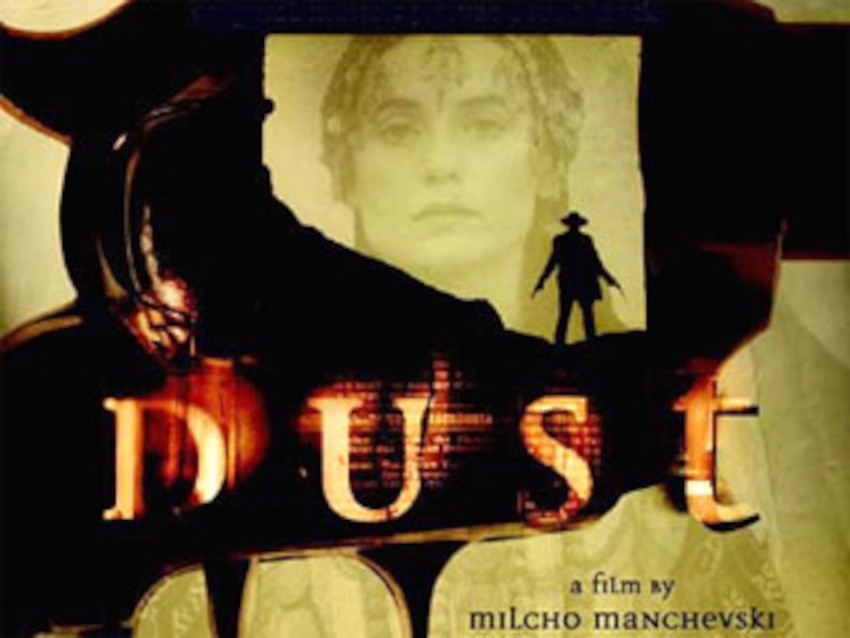
Private Screening of "DUST" with Milcho Manchevski
On March 29, 2003, the Canadian Macedonian Historical Society (CMHS) hosted a sold-out screening of the film Dust at the University of Toronto. Director Milcho Manchevski attended to discuss the film’s portrayal of the Macedonian revolutionary era. To honor his cultural impact, the CMHS presented him with a custom glass vase by artist Darinka Danevska, featuring depictions of the film’s central female figures and its iconic quote: "Where does the voice go when you are no more?"

The Macedonian Question and Instability in the Balkans
The Macedonian Question and Instability in the Balkans by Professor Andrew Rossos On March 9, 2003, Andrew Rossos, Professor of History, University of Toronto, spoke on The Macedonian Question and Instability in the Balkans. Professor Rossos' main...

Ethnic Culture of the population of Macedonia by Aleksandar Stoimilov
Professor Aleksandar Stoimilov’s 2001 lecture, hosted by the Canadian Macedonian Historical Society, provides a rigorous geographical and sociological analysis of Macedonia’s ethnic landscape during a period of intense national crisis. Stoimilov dismantles the complexities of the "Macedonian Question" by classifying the population into distinct categories—the state-building nation, national minorities with external kin-states, and stateless ethnic groups—while highlighting the existential threats posed by the "triple denial" of identity from neighboring Bulgaria, Greece, and Serbia. Ultimately, the lecture serves as a strategic call to action for the diaspora, warning that "demographic desertification" of rural areas threatens the country's territorial integrity and urging expatriates to maintain their ancestral roots through land ownership and economic investment to ensure the survival of the Macedonian state.
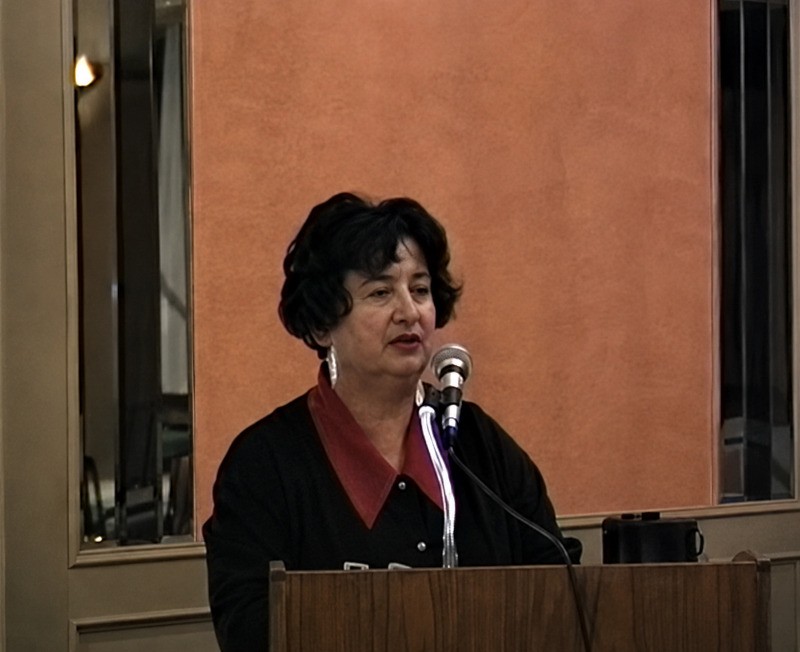
Macedonian language by Vera Antic
Organized by the Canadian Macedonian Historical Society (CMHS), the lecture on the Macedonian language by Vera Antić-Stojčevska stands as an important scholarly contribution to the understanding of one of the Balkans’ most historically layered and culturally significant languages. Preserved within the CMHS archival lecture series, this presentation examines the historical development, literary codification, linguistic uniqueness, and cultural significance of the Macedonian language, situating it within both the Slavic linguistic family and the broader historical experience of Macedonia. As a distinguished scholar of Macedonian literature and medieval texts, Antić-Stojčevska approaches the language not merely as a system of grammar and vocabulary, but as a living historical organism shaped by migration, empire, religion, and national identity. Her lecture reveals how language functions as one of the strongest pillars of cultural continuity and historical survival for the Macedonian people.

Ancient Rock Carvings in Macedonia with Vasil Ilov
Organized by the Canadian Macedonian Historical Society (CMHS) in 1999, the lecture Ancient Rock Carvings in Macedonia by Vasil Ilov represents an important contribution to the study of Macedonia’s prehistoric and protohistoric past, focusing on one of the oldest and least understood forms of human expression: rock carvings, or petroglyphs. Through this lecture, preserved in the CMHS archival lecture series, Ilov explores the archaeological significance of ancient carvings discovered throughout Macedonia, situating them within broader questions of early human spirituality, communication, astronomy, ritual, and social organization. His presentation highlights the importance of Macedonia as a prehistoric cultural landscape, emphasizing that its rocky terrain contains evidence of human symbolic activity stretching back thousands of years. Recent institutional and archaeological documentation confirms the significance of Macedonian rock art, particularly in areas such as Kratovo and the Osogovo region, where extensive rock carvings have been recorded and studied.