



Language and Identity in the Macedonian Village of Vrbnik with Christina Kramer and Virginia Stoymenoff

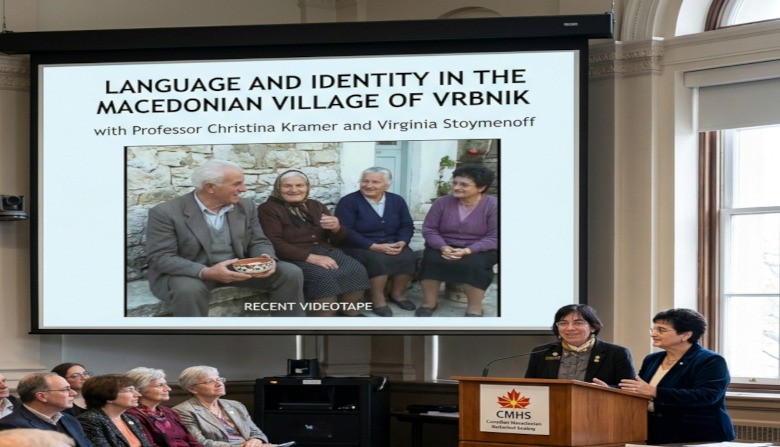
On April 13, 2003, the Canadian Macedonian Historical Society (CMHS) hosted a profoundly moving and academically significant lecture at North York City Hall. The presentation featured Professor Christina Kramer, a renowned expert in Slavic Languages and Literatures from the University of Toronto, and Virginia Stoymenoff, who shared their firsthand experiences from a recent research expedition to the village of Vrbnik in Southern Albania.
I. An Enclave Frozen in Time
Vrbnik represents a unique linguistic and cultural "island." Located in the mountainous border region of Southern Albania, the village is home to an isolated Macedonian-speaking population that has maintained its distinct identity, language, and customs despite decades of political isolation under various regimes.
The lecture was highlighted by a rare videotape recorded during their visit, providing the audience with a window into a world few outsiders have seen. The footage captured:
-
The Living Language: Demonstrations of the local Macedonian dialect, preserved through oral tradition.
-
Traditional Customs: Visual documentation of daily life, architecture, and social structures within the village.
-
Oral Histories: Interviews with residents who shared the history of their families and their connection to the wider Macedonian heritage.
II. The Journey and the Research
Professor Kramer and Virginia Stoymenoff went to great lengths to reach Vrbnik, navigating difficult terrain and bureaucratic hurdles to connect with this isolated community. Their work was not merely a travelogue but a vital piece of sociolinguistic and ethnographic research.
By documenting the specific dialect and folkways of Vrbnik, Kramer and Stoymenoff have contributed to the broader understanding of the Macedonian diaspora and the survival of minority identities in the Balkans. Their presentation enthralled the audience, many of whom were struck by the resilience of the Vrbnik residents in maintaining their Macedonian roots while living within Albanian borders.
III. CMHS Recognition

The CMHS recognizes that such field research is critical to the "accurate presentation of Macedonian history" that the Society strives to promote. The efforts of Professor Kramer and Ms. Stoymenoff provide the raw data—the voices and images of the people themselves—that academic history often lacks.
The Society extended its deepest appreciation to both presenters for their "superb presentation" and their dedication to uncovering the "hidden" pockets of Macedonian life. The event concluded with a vibrant Q&A session, as members of the community sought to learn more about how they might support or further document these isolated Macedonian enclaves.
Significance of the Event:
-
Educational: Provided the first visual and academic update on the village to many in the Toronto diaspora.
-
Cultural Preservation: Highlighted the urgency of documenting endangered dialects and traditions.
-
Community Connection: Strengthened the bond between the University of Toronto’s academic research and the local Macedonian-Canadian community.