

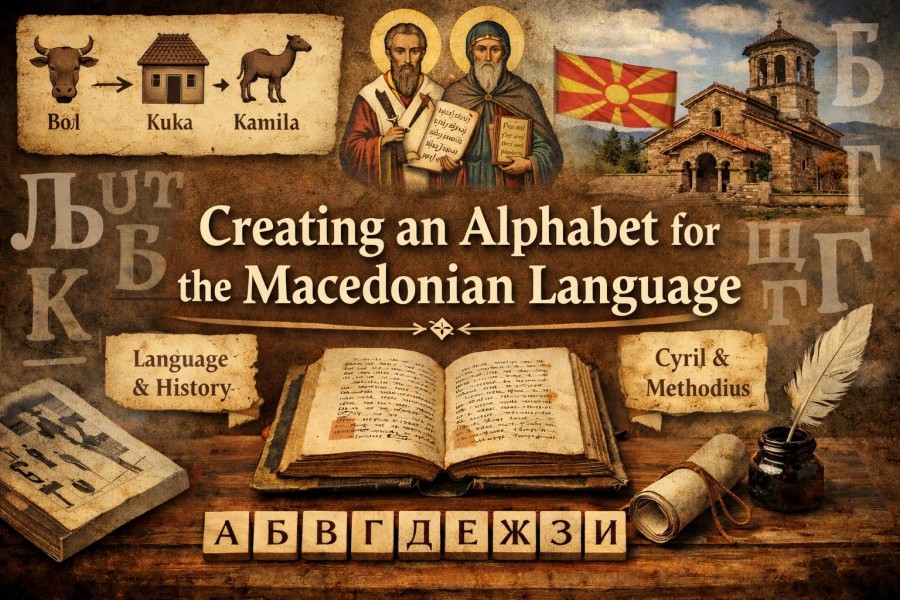
Creating an Alphabet for Macedonian: Not Quite as Easy as ABC
The Canadian Macedonian Heritage Society hosted a lecture by Christina Kramer at the St. Clement of Ohrid Macedonian Orthodox Cathedral, exploring the development of writing systems and the Macedonian alphabet. Titled “Creating an Alphabet for Macedonian: Not quite as easy as ABC,” the talk highlighted how alphabets evolve and focused on the mid-20th-century standardization of Macedonian led by Blaže Koneski.
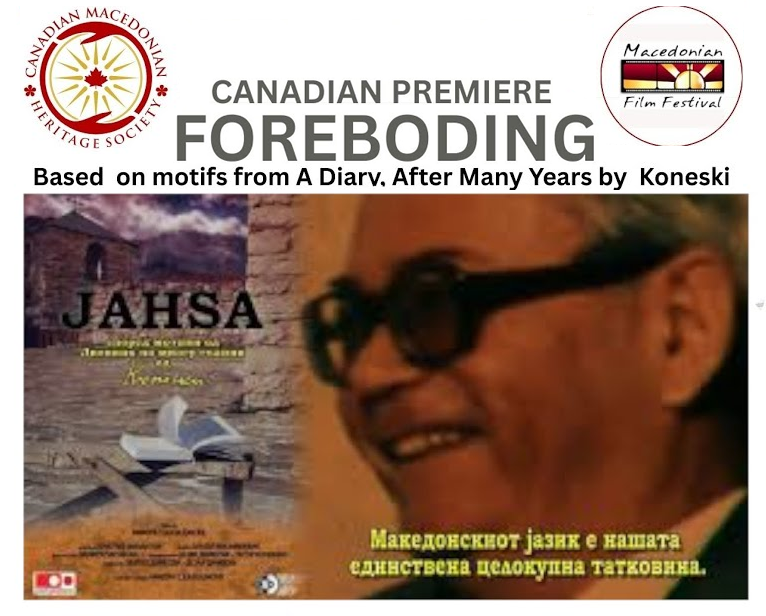
Foreboding: based on motifs from A Diary, After Many Years by Koneski
The Canadian Macedonian Heritage Society, in partnership with the Macedonian Film Festival, is proud to present the Canadian premiere of Foreboding (Macedonian title: Јанза - Janza), the acclaimed feature-length documentary on the life and work of eminent poet, philologist and cultural figure Blaže Koneski. The screening was held at Fairview Public Library Theatre (address: 35 Fairview Mall Drive) with a post-screening Q&A and reception.
Beauty & Art in Our Churches
Aneta Georgievska Shine presented a lecture on the beauty and significance of church art, drawing on her extensive scholarship in European art history. The talk focused on renowned Macedonian iconographer Dicho Zograf, highlighting his life, his role in the Debar School, and his contributions to Byzantine-style icon and fresco painting. Through this exploration, she illuminated the deep cultural, historical, and spiritual meaning of Macedonian Orthodox Christian art, while also acknowledging contemporary contributions, including those of Georgi Danevski.
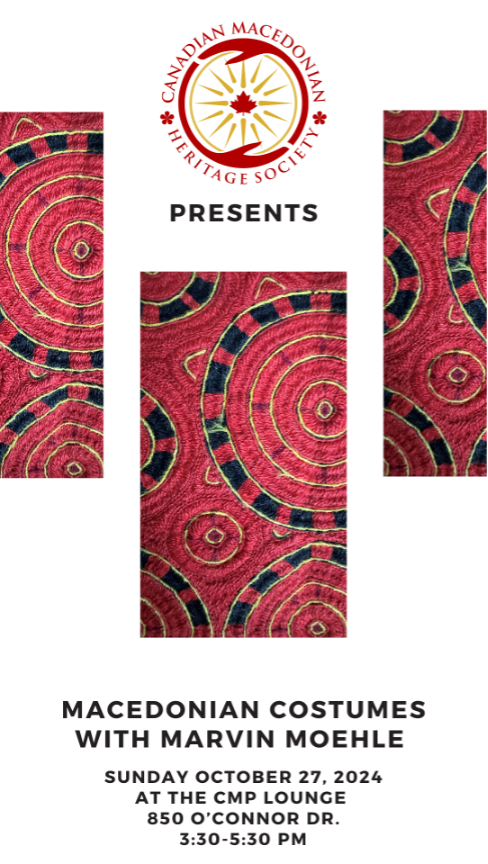
Macedonian Costumes with Marvin Moehle - "“kostumi za obleka Q & A”
The Canadian Macedonian Heritage Society is hosting a workshop at Canadian Macedonian Place featuring Marvin Moehle, a passionate collector of Balkan—especially Macedonian—folk costumes. With ancestral roots in villages from the Kostur region, Marvin has built an extensive private collection of hundreds of historical costume pieces and has even contributed to museum exhibits. Known for his expertise, he helps identify and preserve rare garments and is also deeply involved in folklore dance and the collection of Macedonian oral and written histories. The event invites participants to bring their own costume items or photos to learn more about their cultural heritage.
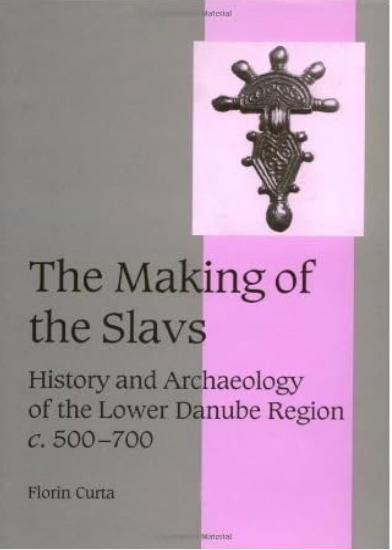
The Making of the Slavs and The Invention of the Slavic Fairytale March 3, 2024
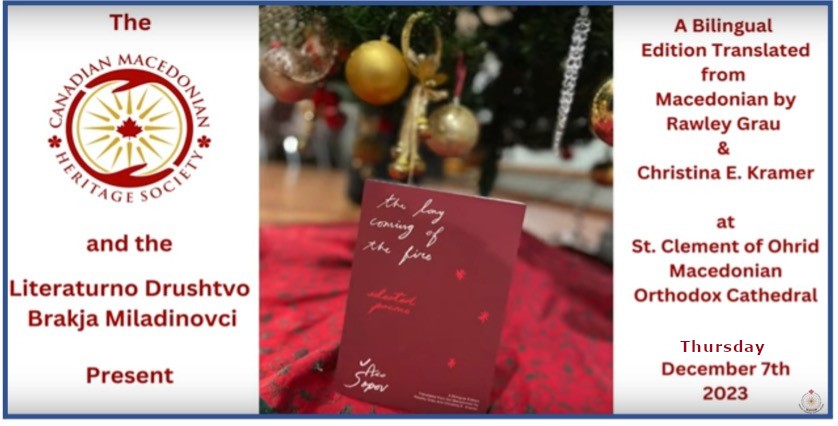
Putting the Macedonian Modernist Poet, Aco Šhopov, into English
The Canadian Macedonian Heritage Society and the Literaturno Društvo “Brakja Miladinovci” hosted a well-attended literary evening celebrating the work of Macedonian poet Aco Šopov. The event, held at St. Clement Church, featured Christina Kramer and Rawley Grau, who presented their English translation of Šopov’s poetry collection The Long Coming of the Fire.
They shared insights into their three-year translation process, read selected poems in both Macedonian and English, and engaged the audience in a discussion that deepened appreciation for Šopov’s powerful, evocative work. The evening highlighted the emotional intensity and historical depth of his poetry, while also recognizing the translators’ dedication. The project was supported by several organizations and published by Deep Vellum Press.

MACEDONIAN IMMIGRANTS AND REFUGEES – Two Authors, Three Novels
The Canadian Macedonian Historical Society hosted a talk titled “Macedonian Immigrants and Refugees – Two Authors, Three Novels,” featuring a discussion with authors Sylvia Karakaltsas and Tom Petsinis about their works A Perfect Stone, Fitzroy Raw, and Fog. The presentation explored the rare presence of Macedonian protagonists in English-language fiction and examined why the authors chose to focus on Macedonian history and identity. Through their novels, they depict the experiences of young Macedonian refugees and immigrants—highlighting themes of displacement, adaptation, and resilience. The discussion also անդրlined the role of research and personal narratives in shaping their stories, connecting these fictional accounts to the real-life experiences of many Macedonian families in the diaspora.
A talk with Victor Bivell on: Macedonia Genocide Books Homeland & Villages
Victor Bivell’s talk outlines four key efforts: promoting Macedonian literature through free ebooks, documenting the largely underrepresented Macedonian perspective on the Balkan Wars and genocide, encouraging diaspora return or support to sustain Macedonia as a homeland, and revitalizing declining villages by strengthening connections between communities and their ancestral roots.
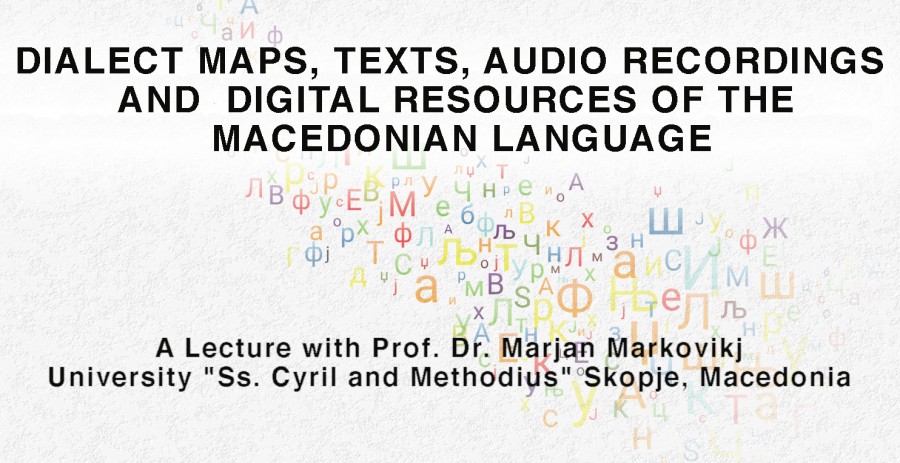
Preserving Macedonian Dialects with Professor Marjan Markovikj
This lecture by Professor Marjan Markovikj highlights the importance of Macedonian dialects in preserving the continuity and development of the Macedonian language. Despite being standardized relatively late, the language has evolved naturally through its dialects and long-standing interaction with other Balkan languages. These dialects remain vital, continuously enriching modern Macedonian through everyday use. The presentation showcases this evolution through maps, recordings, and digital resources, while emphasizing the role of dialectology and linguistic research in safeguarding Macedonian linguistic heritage.

YOU (MIGHT) KNOW MORE MACEDONIAN THAN YOU THINK YOU DO!
The Canadian Macedonian Historical Society hosted a lecture by Christina Kramer titled “You (Might) Know More Macedonian Than You Think You Do!” which explored how elements of the Macedonian language persist within the diaspora, even among those who no longer speak it fluently. Through a community questionnaire, Kramer revealed that Macedonian words and phrases often remain embedded in everyday life, especially in emotional or cultural contexts. The talk emphasized the importance of heritage language—how it is retained, used, and passed on—and encouraged reflection on preserving Macedonian identity and linguistic traditions within families and communities.