

All News & Events
All News & Events

Sojourners, Settlers, and a Lasting Legacy: Remembering Dr. Lillian Petroff
The First Annual Celebration of Macedonian Immigration to Canada served as a heartfelt tribute to the late Dr. Lillian Petroff, a pioneering academic who dedicated her career to documenting and validating the distinct identity of Macedonian immigrants in Ontario. Attendees, including family, colleagues, and community leaders, shared stories that painted a portrait of a brilliant, quick-witted, and defiant woman who successfully navigated political pressures to ensure her heritage was recognized independently of neighboring ethnic labels. Through her seminal work, Sojourners & Settlers, and her leadership at the Multicultural History Society of Ontario, Petroff became the definitive voice for early Macedonian "pechalbari" (sojourners), establishing a historical legacy that the Canadian Macedonian Historical Society aims to preserve through this recurring memorial event.
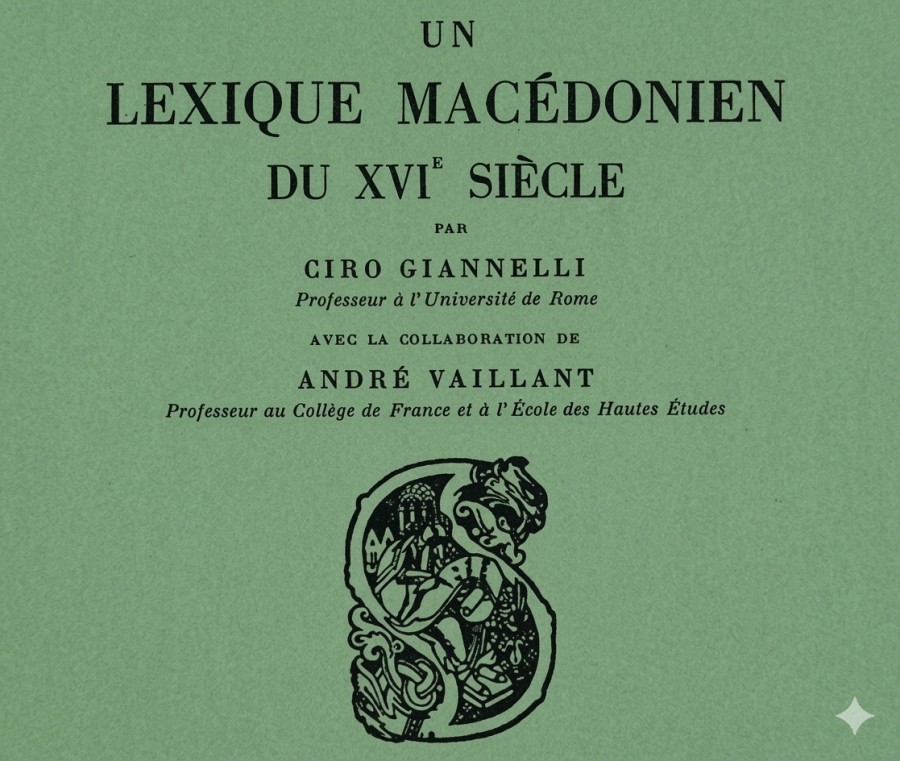
16 Century Macedonian Lexicon Found at the Vatican
On October 27, 2013, the Canadian Macedonian Historical Society hosted a lecture at the East York Civic Centre featuring professors Joseph Schallert and Kosta Peev, who presented a significant 16th-century Macedonian lexicon discovered in the Vatican archives. Originally found in the late 1940s and written in the Greek alphabet, the manuscript was eventually identified as the Old Kostur dialect of Macedonian rather than Greek, as evidenced in the 1954 study Un Lexique Macédonien du XVIe Siècle. Odyssey Belchevsky, the Director of Cultural Events, noted that a copy of this scholarly work was personally delivered to the Society by Macedonian President George Ivanov, serving as vital historical proof of the Macedonian language's long-standing existence centuries before the formation of the modern state.
One Hundred Years of Occupation
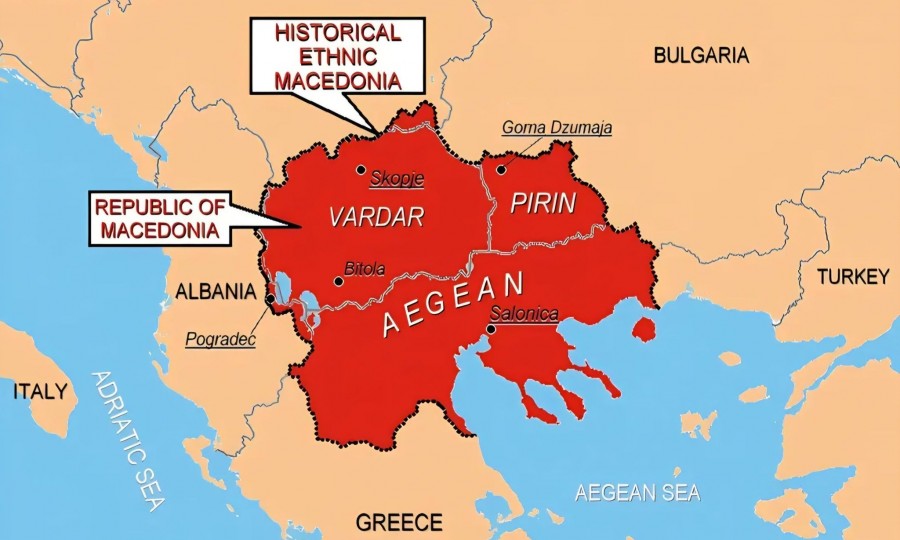
Lecture - presented for the Historical Society in Toronto on January 27, 2013 In spite of the Macedonian people having risen in 1903 to fight for their freedom and to create an Independent Macedonian state, only ten years later, Macedonia was brutally invaded, occupied and partitioned by its neighbours Greece, Serbia and Bulgaria; a partition validated by the European Great Powers on August 10, 1913 by the Treaty of Bucharest. Why did this happen? What were the factors leading ...
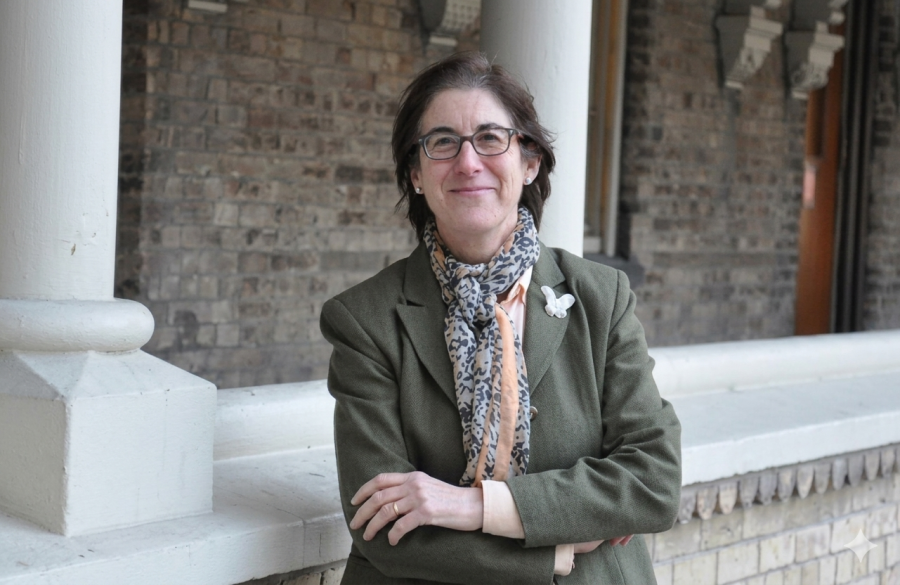
Translating Balkans - Professor Christina Kramer, author, translator, linguist
On March 3, Professor Christina Kramer—Chair of Slavic languages at the University of Toronto—presented a lecture and book launch titled "Translating the Balkans," where she detailed the intricate and often "agonizing" process of translating Macedonian and Bulgarian literary works into English. Focusing on her translations of authors Luan Starova and Goce Smilevski, Kramer described her methodology as a multi-stage evolution: beginning with a raw "blast" of words followed by months of meticulous polishing to balance English fluency with loyalty to the original tone and intent. The event, supported by the Canadian Macedonian Historical Society and the Albanian Canadian Community Association, highlighted the cultural significance of these works and featured a live Skype appearance by Starova, as well as a tribute to Smilevski’s award-winning novel Freud's Sister. Kramer's expertise was underscored by praise from critics and authors alike, emphasizing her ability to make translated prose feel as though it were originally authored in English.
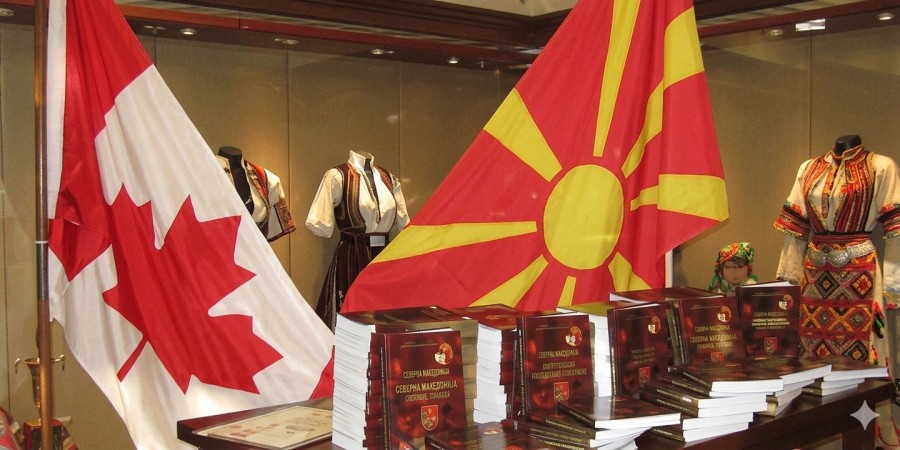
The Consulate General of the Republic of Macedonia
The July 2012 donation of a 130-title virtual library by Consul General Dragan Gjurceski represents a landmark achievement in making Macedonian literature accessible to the Canadian diaspora. This extensive collection, featuring translations by over 80 scholars including Dr. Christina Kramer, bridges the gap between traditional Macedonian narratives and English-speaking audiences through a diverse array of fiction, poetry, and drama. Complemented by the personal donations of local author Patsy Sider, the acquisition strengthens the Canadian Macedonian Historical Society’s role as a cultural hub, though its long-term success relies on community volunteers to ensure these newly acquired resources remain available through a regularly open library.
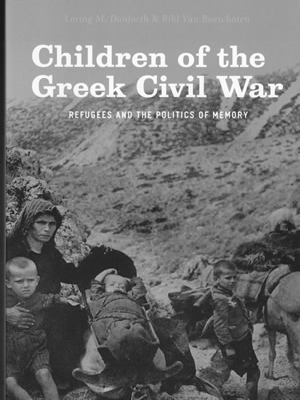
Children of the Greek Civil War - Refugees and the Politics of Memory - Loring M. Danforth & Riki Van Boeschoten
Children of the Greek Civil War Refugees and the Politics of Memory Loring M. Danforth & Riki Van Boeschoten This long awaited book was launched in Toronto by the CMHS on June 12th, with a “sold out” audience. Loring Danforth, Professor of...
Lifetime Achievement Award
In recognition of her exceptional civic leadership and tireless commitment to heritage preservation, the Canadian Macedonian Historical Society (CMHS) honors Past President Virginia Evans for her receipt of the prestigious Queen Elizabeth II Diamond Jubilee Medal. This distinguished award celebrates Virginia’s decades of service in documenting Macedonian-Canadian history and her significant contributions to the cultural fabric of Canada. Through her advocacy, philanthropy, and executive leadership, she has played a vital role in elevating the profile of the CMHS and fostering a deeper understanding of the community's legacy. This formal commendation reflects her unwavering dedication to public service and serves as a testament to her lasting impact on both the Macedonian community and the broader Canadian public.
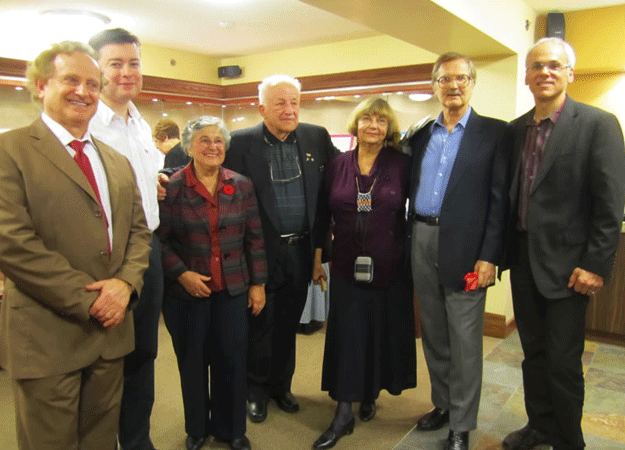
Happy 20th Anniversary
Happy 20th Anniversary On November 11th the Canadian Macedonian Historical Society celebrated its 20th anniversary with a wine and cheese night of remembrance. Those in attendance included members of the society, the present board of directors, an...
Reassessing the Demotic Text of the Rosetta Stone
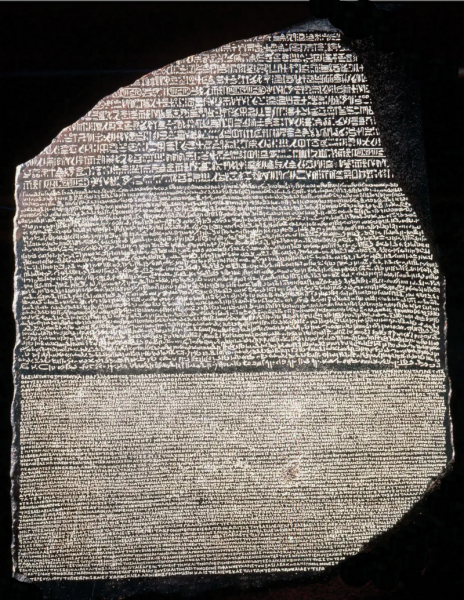
On Sunday, May 15, 2011, the Canadian Macedonian Historical Society (CMHS) hosted a landmark inaugural Skype lecture featuring Dr. Tome Boshevski and Dr. Aristotel Tentov, who presented their pioneering research into the middle text of the Rosetta Stone. The researchers identified this script—historically categorized as Demotic—as the language of the ancient Macedonians who ruled Egypt during the Ptolemaic period. Utilizing a "wiring for sound" methodology to identify 27 consonants and 8 vowels, they revealed a sophisticated syllabic script with a complex grammatical structure that shares characteristics with modern Slavic languages. This methodology was successfully applied to other ancient artifacts, such as the Canopus Decree and items from the Vincha culture, suggesting a remarkable linguistic continuity dating back to 3000 B.C. The lecturers concluded that the Rosetta Stone served as a multi-ethnic communication tool, with the Macedonian text providing significantly more detail than the Greek version, thereby offering profound new implications for the study of historical linguistics and the enduring legacy of the ancient Macedonian language.
"Let me tell you a story..." A Symposium of Immigration to Canada
The first lecture event of the Society’s season was a resounding success. We were filled to capacity at the North York Central Library. Ginny Evans, co-President of the CMHS welcomed everyone and introduced the guests.