Canadian Macedonian Heritage Society Canadian Macedonian Heritage Society Become a member!

Tagged “Christina Kramer”

Browse Tagged “Christina Kramer” from the Canadian Macedonian Heritage Society archive, library and community collections.

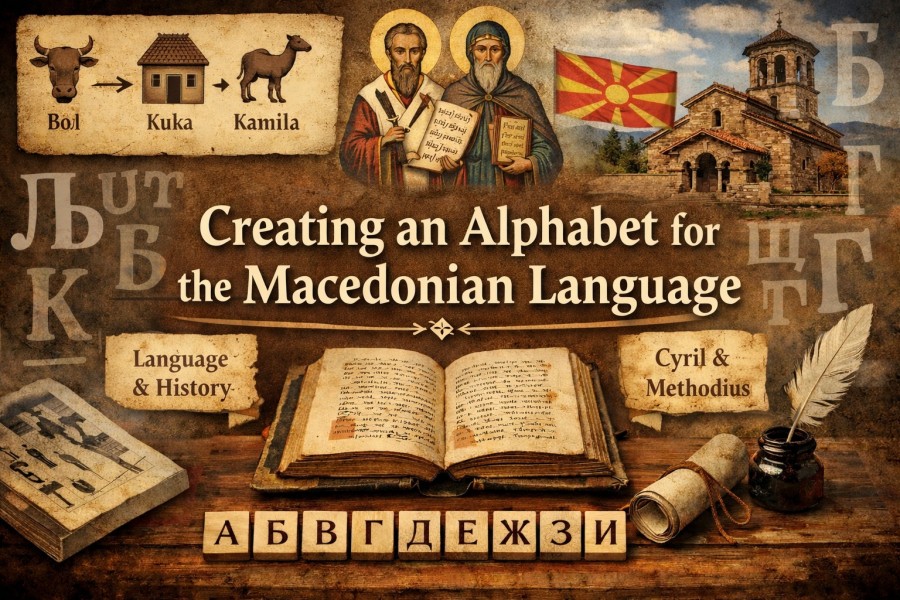
Creating an Alphabet for Macedonian: Not Quite as Easy as ABC

The Canadian Macedonian Heritage Society hosted a lecture by Christina Kramer at the St. Clement of Ohrid Macedonian Orthodox Cathedral, exploring the development of writing systems and the Macedonian alphabet. Titled “Creating an Alphabet for Macedonian: Not quite as easy as ABC,” the talk highlighted how alphabets evolve and focused on the mid-20th-century standardization of Macedonian led by Blaže Koneski.
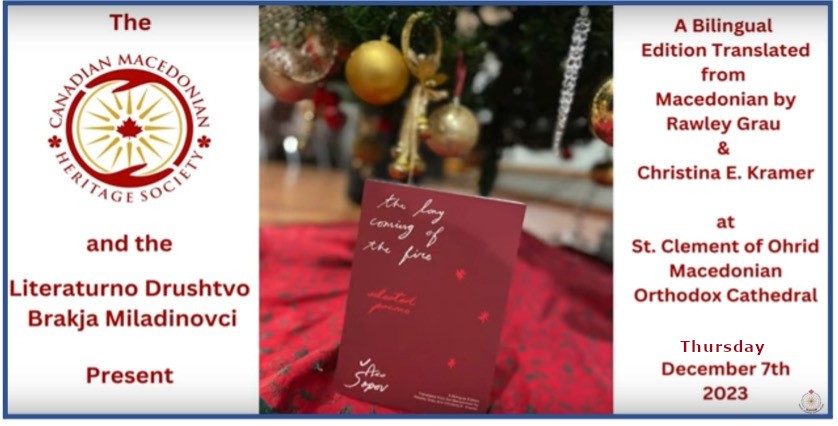
Putting the Macedonian Modernist Poet, Aco Šhopov, into English

The Canadian Macedonian Heritage Society and the Literaturno Društvo “Brakja Miladinovci” hosted a well-attended literary evening celebrating the work of Macedonian poet Aco Šopov. The event, held at St. Clement Church, featured Christina Kramer and Rawley Grau, who presented their English translation of Šopov’s poetry collection The Long Coming of the Fire. They shared insights into their three-year translation process, read selected poems in both Macedonian and English, and engaged the audience in a discussion that deepened appreciation for Šopov’s powerful, evocative work. The evening highlighted the emotional intensity and historical depth of his poetry, while also recognizing the translators’ dedication. The project was supported by several organizations and published by Deep Vellum Press.

YOU (MIGHT) KNOW MORE MACEDONIAN THAN YOU THINK YOU DO!

The Canadian Macedonian Historical Society hosted a lecture by Christina Kramer titled “You (Might) Know More Macedonian Than You Think You Do!” which explored how elements of the Macedonian language persist within the diaspora, even among those who no longer speak it fluently. Through a community questionnaire, Kramer revealed that Macedonian words and phrases often remain embedded in everyday life, especially in emotional or cultural contexts. The talk emphasized the importance of heritage language—how it is retained, used, and passed on—and encouraged reflection on preserving Macedonian identity and linguistic traditions within families and communities.

Double Book Launch: "BANITSA IN THE MAELSTROM OF THE WARS, 1903-1949" and "THE BELLS WILL RING TOMORROW: Tales of Village Life in Aegean Macedonia"

The Canadian Macedonian Historical Society featured a Zoom double book launch moderated by Professor Emerita Christina Kramer on "BANITSA IN THE MAELSTROM OF THE WARS, 1903-1949' presented by Dr. Constantine Mallin and "THE BELLS WILL RING TOMORROW: Tales of Village Life in Aegean Macedonia" presented by Virginia Evans. "Banitsa was a big influential village and here is its story of turmoil affecting the unsettled lives of 3 generations of resilient Macedonians." "There is nothing in English that deals with Macedonian culture in this way. Human response to death, grieving, exploitation and fear, struggle and survival ... a powerful vehicle of storytelling." To order a copy of "Banitsa in the Maelstrom of the Wars, 1903-1949," please email Dr. Dan Mallin at: cdan.mallin@utoronto.ca To order a copy of "The Bells Will Ring Tomorrow: Tales of Village Life in Aegean Macedonia," please email Virginia Evans at: vaenter@rogers.com

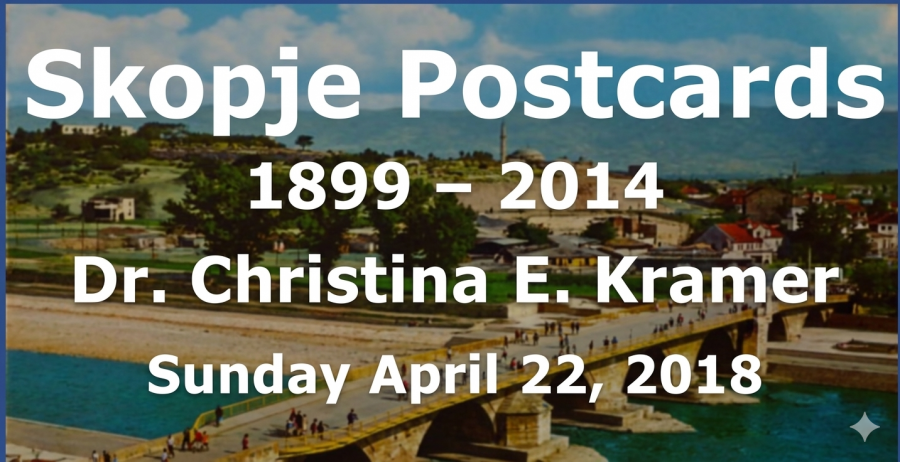
Archives of the Mobile Lanscape: Skopje Postcards, 1899-2014 by Prof. Christina Kramer

In her presentation, "Archives of the Mobile Landscape: Skopje Postcards, 1899–2014," Professor Christina Kramer explores how a century of political and environmental upheaval is reflected through the shifting "frame" of the postcard. By tracking four iconic landmarks—the Kale Fortress, the Stone Bridge, Macedonia Square, and the Old Bazaar—Kramer demonstrates how successive regimes used these spaces to project power, evidenced by the constant renaming of sites and the changing symbols on their facades. Beyond the visual architecture, the messages written by soldiers, travelers, and students provide a human record of a city that has survived occupation, war, and the devastating 1963 earthquake, ultimately revealing Skopje’s resilient history of destruction and reimagining.

Translating Balkans - Professor Christina Kramer, author, translator, linguist

On March 3, Professor Christina Kramer—Chair of Slavic languages at the University of Toronto—presented a lecture and book launch titled "Translating the Balkans," where she detailed the intricate and often "agonizing" process of translating Macedonian and Bulgarian literary works into English. Focusing on her translations of authors Luan Starova and Goce Smilevski, Kramer described her methodology as a multi-stage evolution: beginning with a raw "blast" of words followed by months of meticulous polishing to balance English fluency with loyalty to the original tone and intent. The event, supported by the Canadian Macedonian Historical Society and the Albanian Canadian Community Association, highlighted the cultural significance of these works and featured a live Skype appearance by Starova, as well as a tribute to Smilevski’s award-winning novel Freud's Sister. Kramer's expertise was underscored by praise from critics and authors alike, emphasizing her ability to make translated prose feel as though it were originally authored in English.

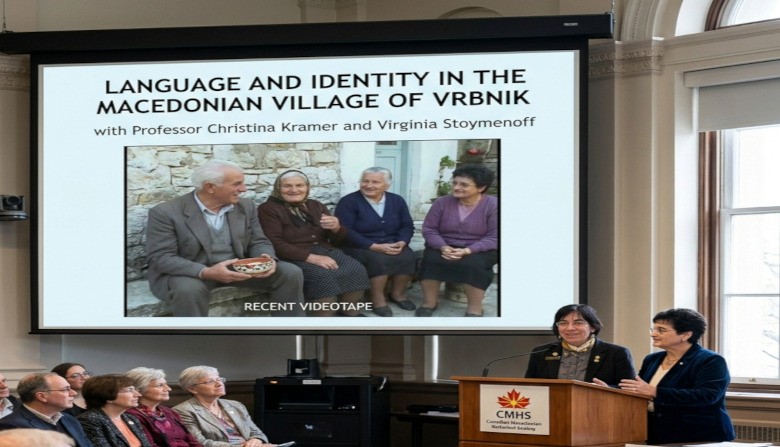
Language and Identity in the Macedonian Village of Vrbnik with Christina Kramer and Virginia Stoymenoff

On April 13, 2003, Christina Kramer, professor of Slavic Languages & Literatures at the University of Toronto, and Virginia Stoymenoff, gave a brilliant presentation on their visit to the village of Vrbnik, in Southern Albania. The presentation took place in the committee chamber at North York City Hall. This extremely valuable lecture enthralled the audience and was highlighted by a recent videotape from the village. Both professor Kramer and Virginia Stoymenoff went to great lengths to visit Vrbnik, in Albania, and meet with its isolated Macedonian residents. The CMHS appreciates their efforts and congratulates them on a superb presentation.

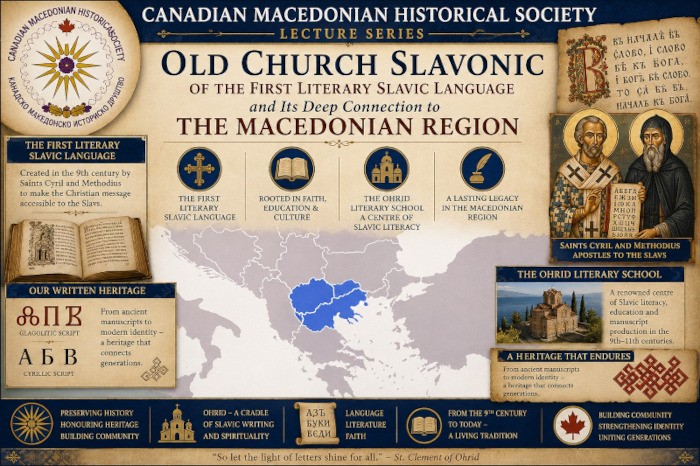
Old Church Slavonic: Language, History, and Macedonian Context

The Canadian Macedonian Historical Society lecture on Old Church Slavonic, featuring Christina Kramer and Joseph Schallert, explored the historical, linguistic, and cultural significance of the first literary Slavic language and its deep connection to the Macedonian region. The speakers examined how the mission of Saints Cyril and Methodius and the later work of Saint Clement of Ohrid and Saint Naum in Ohrid Literary School helped establish and preserve Slavic literacy, emphasizing the central role of Macedonia in this tradition. The lecture also highlighted Old Church Slavonic as a key source for understanding the evolution of modern Slavic languages, especially Macedonian language, while underscoring how language, history, and identity remain deeply intertwined in the Balkans.