Tagged “Historical Writing”
Browse Tagged “Historical Writing” from the Canadian Macedonian Heritage Society archive, library and community collections.
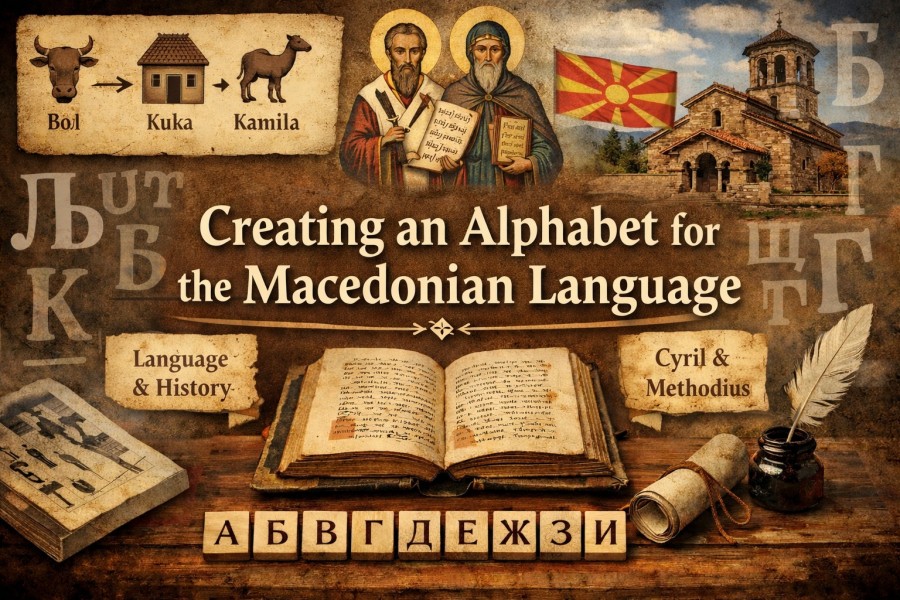
Creating an Alphabet for Macedonian: Not Quite as Easy as ABC
The Canadian Macedonian Heritage Society hosted a lecture by Christina Kramer at the St. Clement of Ohrid Macedonian Orthodox Cathedral, exploring the development of writing systems and the Macedonian alphabet. Titled “Creating an Alphabet for Macedonian: Not quite as easy as ABC,” the talk highlighted how alphabets evolve and focused on the mid-20th-century standardization of Macedonian led by Blaže Koneski.
Beauty & Art in Our Churches
Aneta Georgievska Shine presented a lecture on the beauty and significance of church art, drawing on her extensive scholarship in European art history. The talk focused on renowned Macedonian iconographer Dicho Zograf, highlighting his life, his role in the Debar School, and his contributions to Byzantine-style icon and fresco painting. Through this exploration, she illuminated the deep cultural, historical, and spiritual meaning of Macedonian Orthodox Christian art, while also acknowledging contemporary contributions, including those of Georgi Danevski.
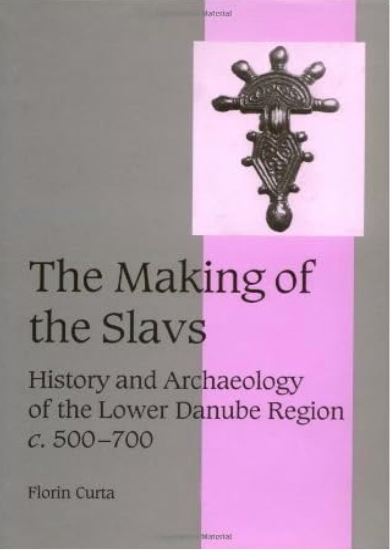
The Making of the Slavs and The Invention of the Slavic Fairytale March 3, 2024
The Making of the Slavs and The Invention of the Slavic Fairytale March 3, 2024 Presentation1a.pdf
A talk with Victor Bivell on: Macedonia Genocide Books Homeland & Villages
Victor Bivell’s talk outlines four key efforts: promoting Macedonian literature through free ebooks, documenting the largely underrepresented Macedonian perspective on the Balkan Wars and genocide, encouraging diaspora return or support to sustain Macedonia as a homeland, and revitalizing declining villages by strengthening connections between communities and their ancestral roots.
"Three countries, two lakes, one future" with Prof. Loring Danforth
The Canadian Macedonian Historical Society was pleased to host Professor Loring M. Danforth for an engaging virtual lecture titled “Three Countries, Two Lakes, One Future: The Prespa Lakes and the Signing of the Prespa Agreement.” Drawing from his chapter in Macedonia and Identity Politics After the Prespa Agreement, Professor Danforth explored the deep historical and political significance of the Prespa region, from its role as the capital of Tsar Samoil’s medieval state to its place in modern Balkan border-making and the signing of the 2018 Prespa Agreement. He examined how the agreement reshaped questions of national identity, language, and citizenship in the region, while highlighting the Prespa Lakes as a powerful symbol of both division and connection between Greece, North Macedonia, and Albania. Through historical analysis and contemporary reflection, Danforth encouraged attendees to re-imagine Macedonia as a shared transboundary space shaped by interconnected histories and a common future.
Archives of the Mobile Lanscape: Skopje Postcards, 1899-2014 by Prof. Christina Kramer
In her presentation, "Archives of the Mobile Landscape: Skopje Postcards, 1899–2014," Professor Christina Kramer explores how a century of political and environmental upheaval is reflected through the shifting "frame" of the postcard. By tracking four iconic landmarks—the Kale Fortress, the Stone Bridge, Macedonia Square, and the Old Bazaar—Kramer demonstrates how successive regimes used these spaces to project power, evidenced by the constant renaming of sites and the changing symbols on their facades. Beyond the visual architecture, the messages written by soldiers, travelers, and students provide a human record of a city that has survived occupation, war, and the devastating 1963 earthquake, ultimately revealing Skopje’s resilient history of destruction and reimagining.
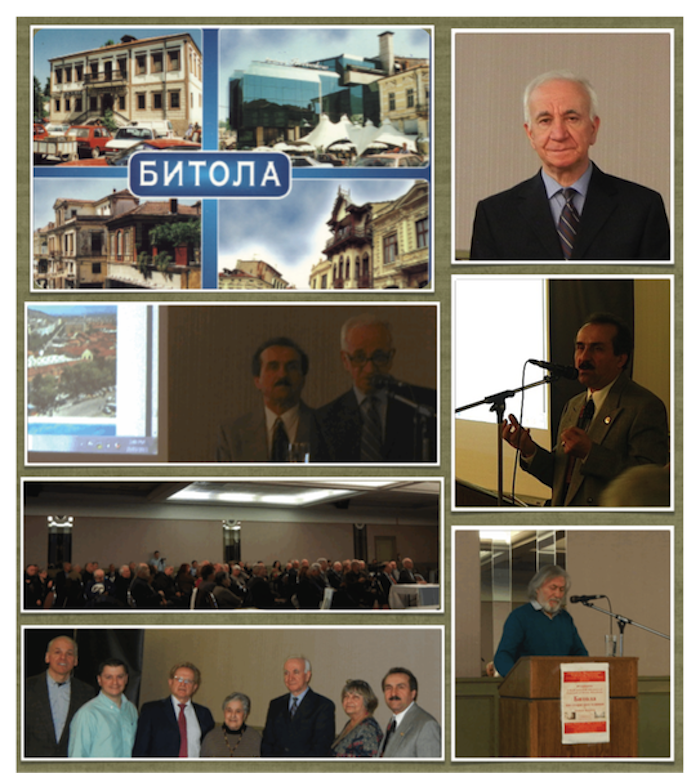
Bitola Macedonia - 100 years of Postcards - Book Launch
On March 22, 2015, the Canadian Macedonian Historical Society celebrated the launch of Dimce Najdov’s book, "Bitola: 100 Years of Postcards," at St. Clement of Ohrid Macedonian Orthodox Church. Introduced by Master Artist Georgi Danevski, the lecture highlighted Najdov’s meticulous journey in curating a visual chronology of Bitola across seven historical eras, ranging from the late Ottoman Empire and the devastating impacts of the World Wars to the modern Republic of Macedonia. By documenting the city's architectural and social evolution through postcards, the work serves as a "visual encyclopedia" that preserves the cultural heritage of the "City of Consuls" for both the local community and the Macedonian diaspora in Canada.
Sojourners, Settlers, and a Lasting Legacy: Remembering Dr. Lillian Petroff
The First Annual Celebration of Macedonian Immigration to Canada served as a heartfelt tribute to the late Dr. Lillian Petroff, a pioneering academic who dedicated her career to documenting and validating the distinct identity of Macedonian immigrants in Ontario. Attendees, including family, colleagues, and community leaders, shared stories that painted a portrait of a brilliant, quick-witted, and defiant woman who successfully navigated political pressures to ensure her heritage was recognized independently of neighboring ethnic labels. Through her seminal work, Sojourners & Settlers, and her leadership at the Multicultural History Society of Ontario, Petroff became the definitive voice for early Macedonian "pechalbari" (sojourners), establishing a historical legacy that the Canadian Macedonian Historical Society aims to preserve through this recurring memorial event.