Canadian Macedonian Heritage Society Canadian Macedonian Heritage Society Become a member!

Poetry

The role and function of Macedonian poetry in Canada represents the most direct way of expressing the spirit of the old world surrounded by the conditions faced in the new world. This genesis began over 100 years ago as the first Macedonians began migrating to Canada. The historical circumstances developed a truly Canadian Macedonian poetic narrative which the Canadian Macedonian Heritage Society presents to you the reader. The selected poems are just a sample of some of the works of Canadian citizens of Macedonian descent.

Spero Thompson is a colleague and contributing writer of the Brachi Miladinovci Macedonian Poetry and Literary Society of Saint Clement of Ohrid Macedonian Orthodox Cathedral in Toronto, Ontario.

Patsy Sider-Aspassia Bossota is the author of five poetry books entitled "Diary of a Soul (1998)", "A Spark from the Ashes (1998)", "Between Two Worlds (2000)", "The Joy of Justice (2003)", "Prohibited Culture (2006)", a book of Short Stories entitled "Amazing Garden"(2009) and author of many other poems and short stories. Poems from "Between Two Worlds" are presented for your reading.

They are following in the footsteps of the first representatives of modern Macedonian literature at the beginning of the 19th century. These include, Joakim Krcovski, Kiril Pejcinovik, Dimitar and Konstantin Miladinov, Grigor Prlicev, and Rajko Zinzifov. It was further developed in the 20th century by Vojdan Cernodrinski, Nikola Kirov - Majski and Atanas Razdolov. Then the development of Macedonian Literature continued with Koco Racin, who is considered to be the founder of modern Macedonian literature.

The first post-war generation of Macedonian poets, include Blaze Koneski, Aco Sopov, Slavko Janevski, Vlado Maleski and Kole Casule. The new generation of Macedonian writers appeared in the early 1950s, encompassing among others Gane Todorovski, Mateja Matevski, Dimitar Solev, Ante Popovski, Boris Visinski and Simon Drakul. They were followed by, Zivko Cingo, Petre M. Andreevski, Radovan Pavlovski, Jovan Koteski and many others.

 

The Refugees

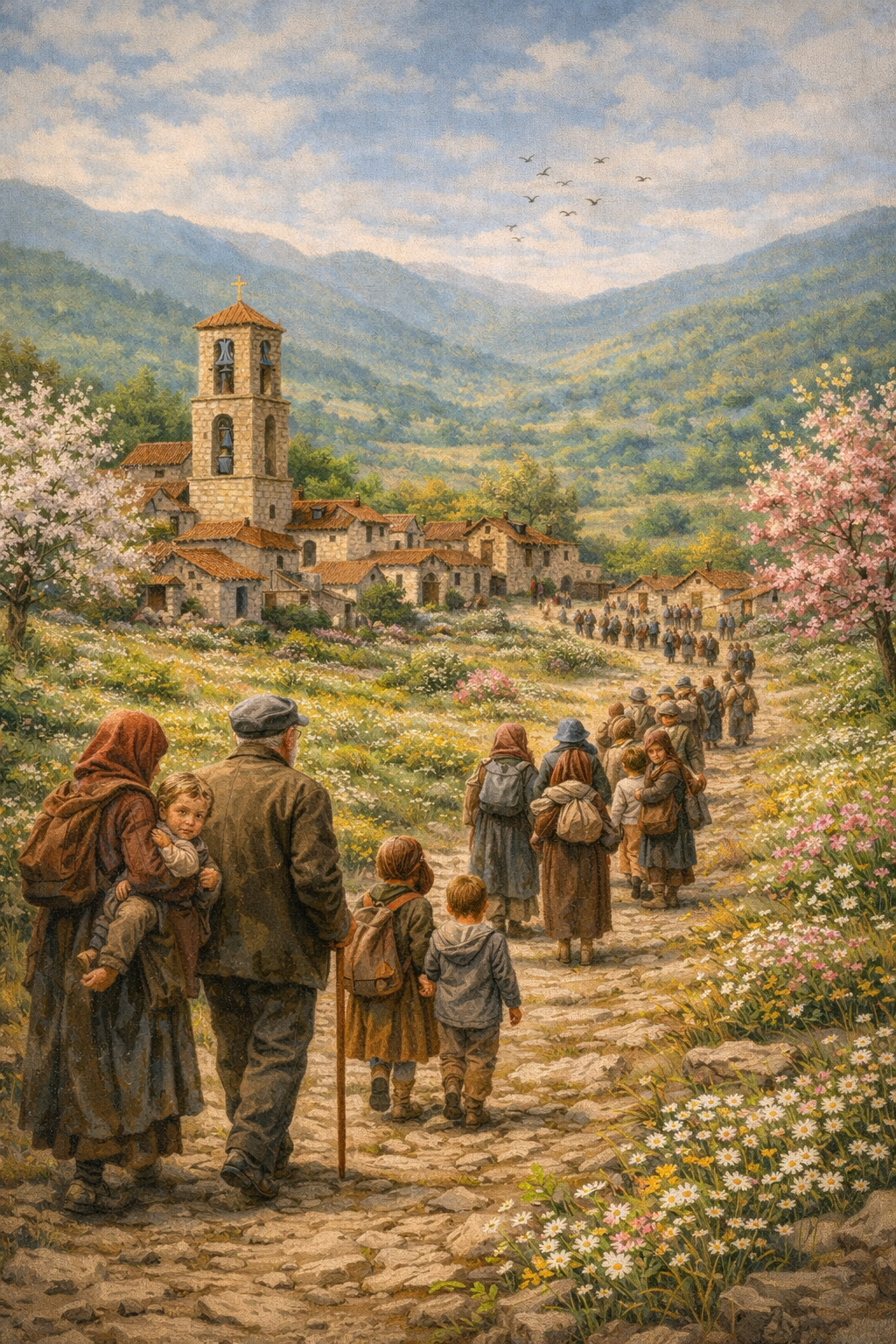
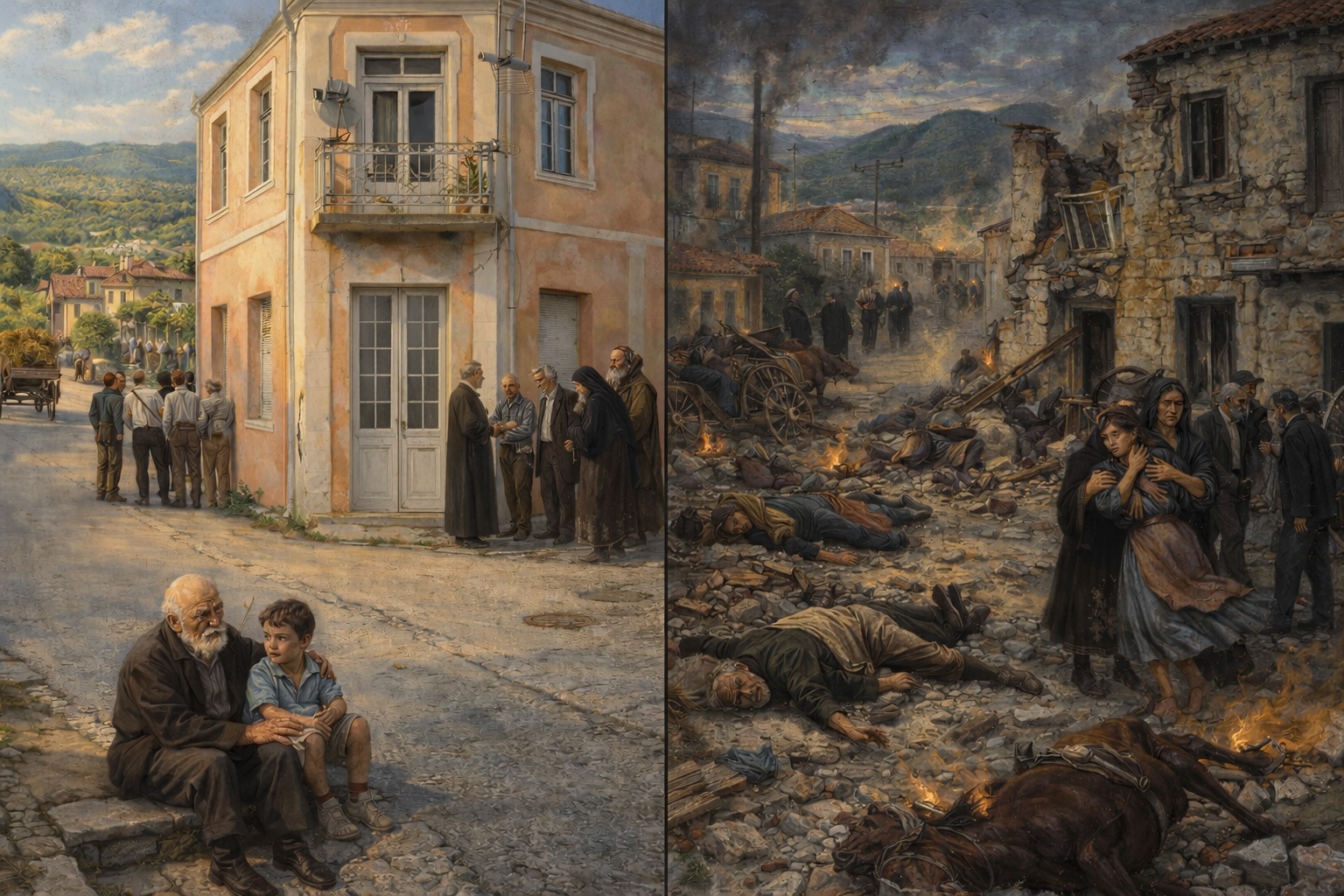
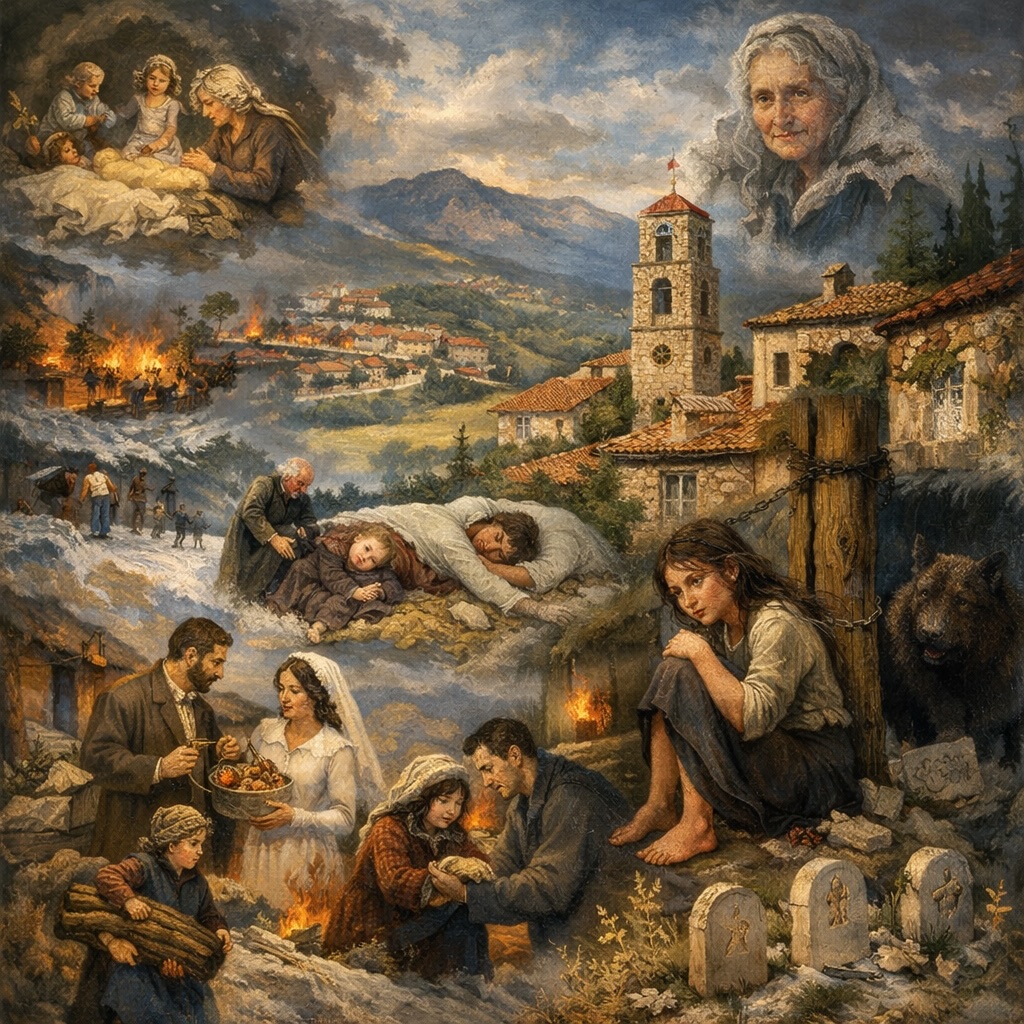
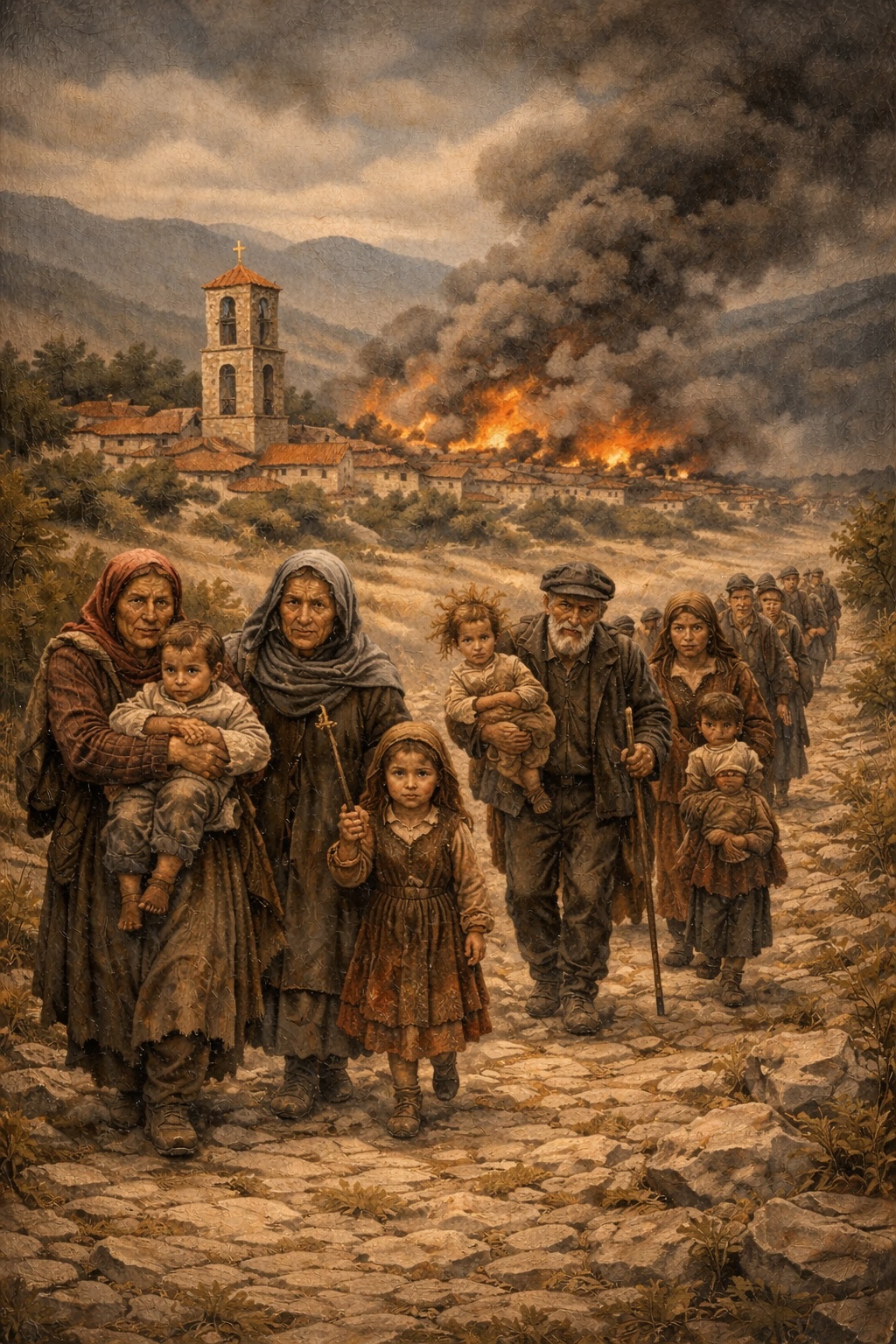
Bombs were falling on the village, The bell was tolling, Machine guns were mowing everything down, And a mother was crying. “Pouvólo, pouvólo,” A little child was shouting — But his mother understood He meant machine gun . The night was heavy; In the dark basements, Barefoot and hungry, All the little ones were hiding. On a black night like this, The partisans came into the yard, Searching to ...

The Return to the Village

The bell rings in celebration, Autumn of forty-nine. The war has ended, But our village has grown smaller. Many children were killed, Others disappeared. Houses abandoned, Houses in ruins. Children lost their mothers, They lost their companions; Countless untouched bodies Lie in the mountains and hills. We returned back to the village, To our beautiful neighbourhoods, To sleep again in our homes, ...

The 1950s

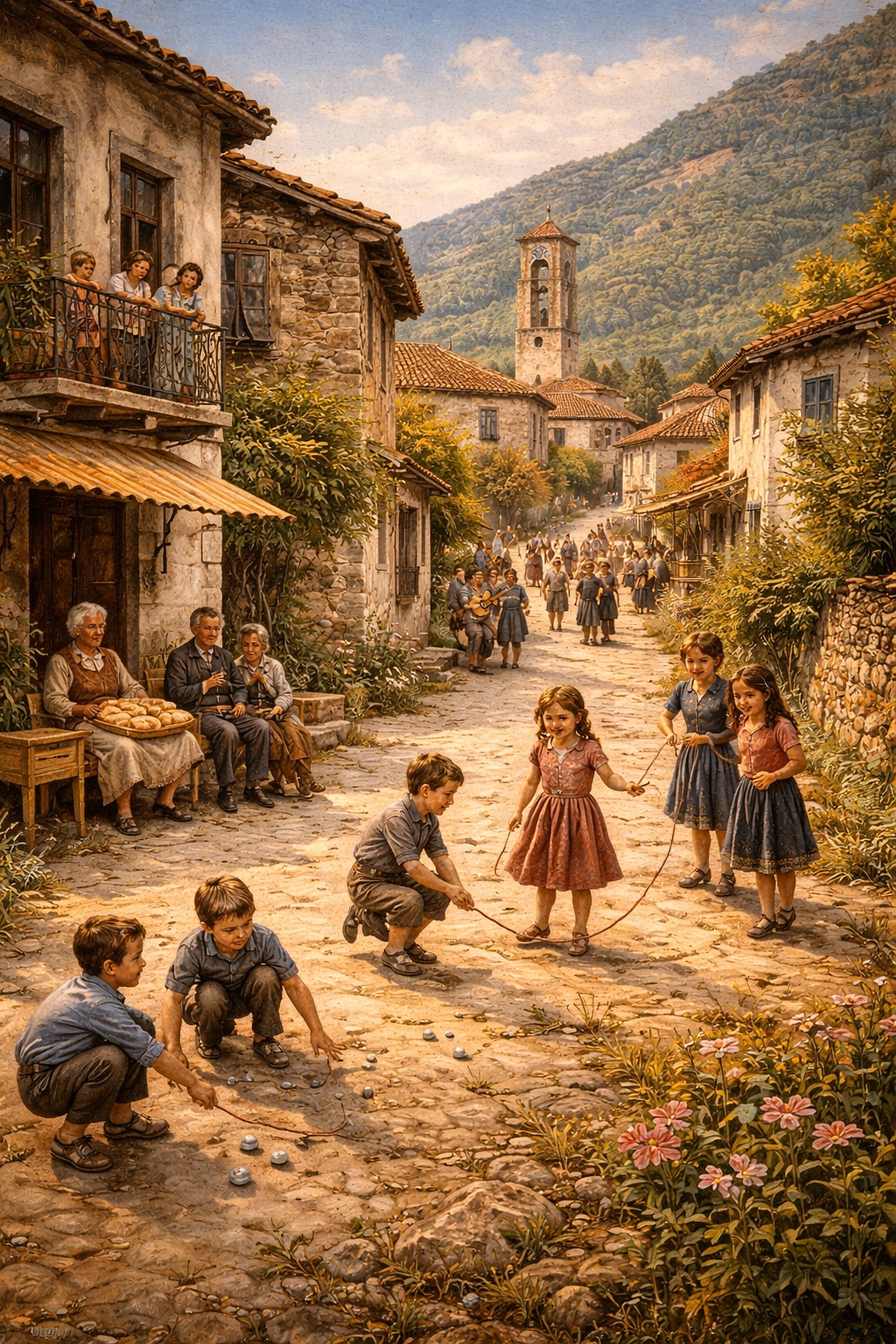
That decade Was very important. We carried great hope, Without having any worries. The worries belonged to our parents — Though we never knew it. They did whatever had to be done With only what remained to them. We did not have much money, And we did not need it. Whoever had a little bread Shared it with everyone. We played skrumbousta in the streets, With stones and broken slabs; In the fields ...

The Wells of the Village

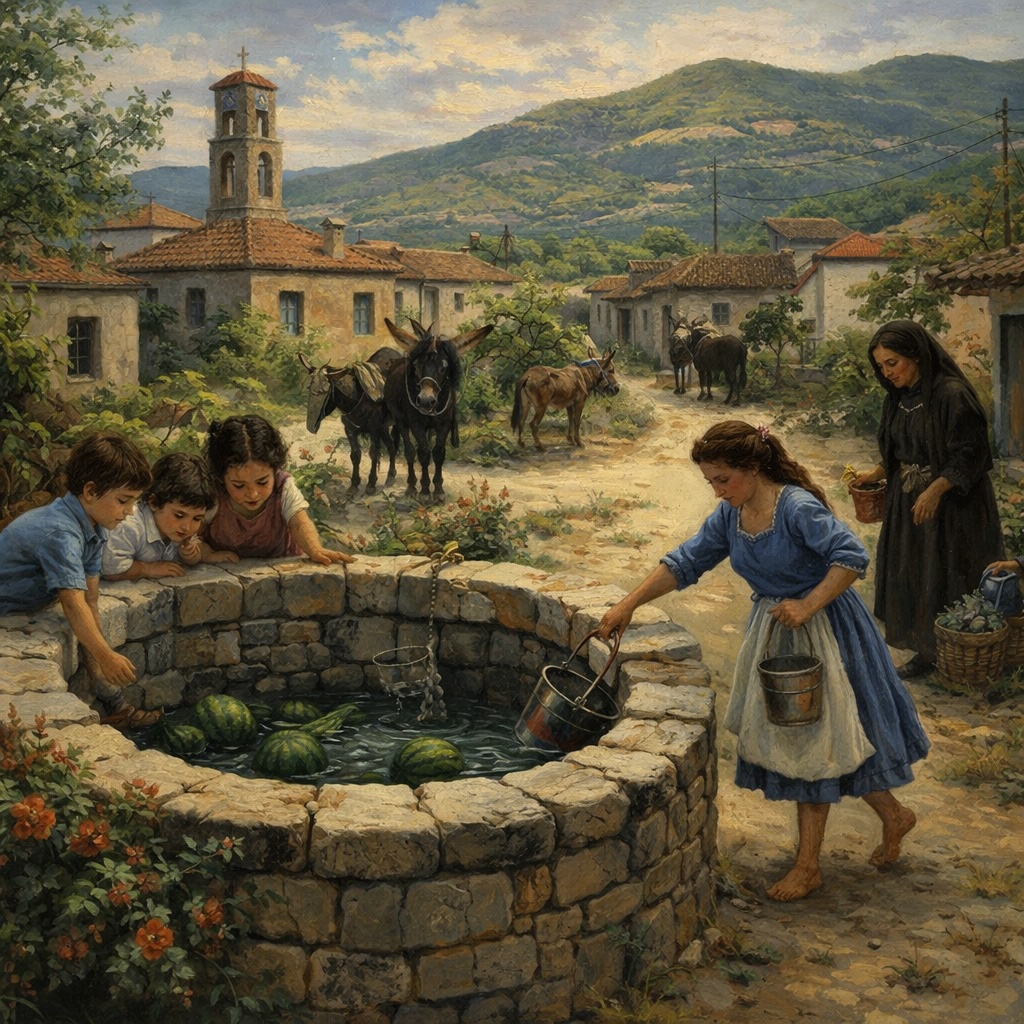
In every house in the village There was a well. Some had theirs more shallow, Others reached into deep darkness. We did not drink the water, Nor did we use it in our food. We only washed our feet with it, And watered the courtyard. In summer it was cool, And we lowered the watermelons inside. In winter it was lukewarm; We watered the donkeys with it. And some of them, as they say, Even had ...

Before Darkness Fell

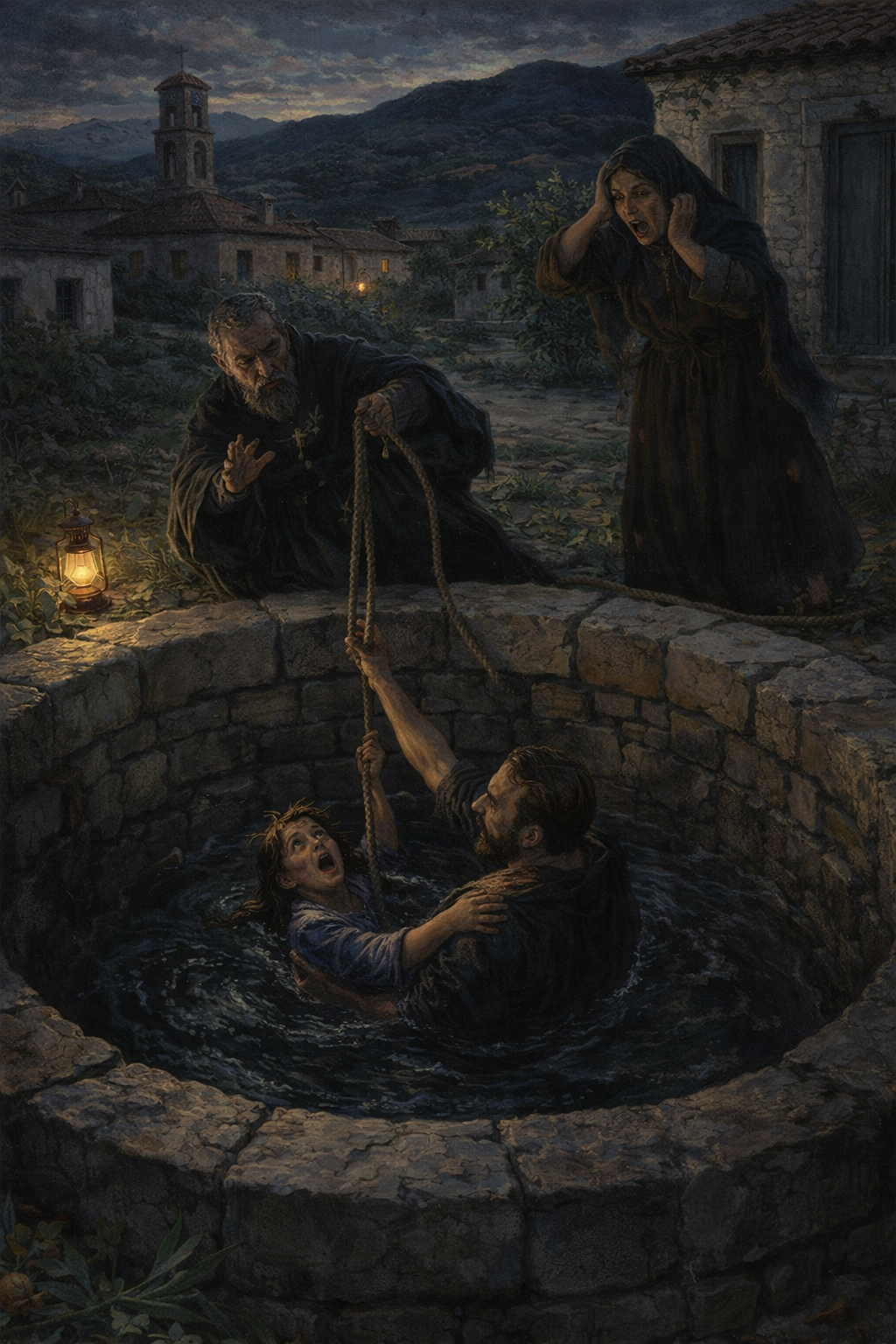
Little Dimitroula ran in haste. She slipped and fell into the well, And like Gerakina , she too Let out a great cry. Her mother’s voice was heard — Terror had overcome her. The father threw himself Into the deep well to save her. A passing priest came running, Trampling the leeks as he rushed. He too wished to jump inside, But his robes held him back. The priest began to pray, Looking high toward ...

September 1947 — Sklithro-Zelenich

One September morning, The day was bright with sunshine. The village was full of people, Just as on every day. All the men gathered At Mishle’s corner, They were not joking much — Great anxiety weighed on them. Grandfather Mitos sat Beneath his window, Rejoicing with fellow villagers, Together with his grandson. The little sheep were grazing Along the mountainside; Their bells could be heard Like ...

The Young Soldiers

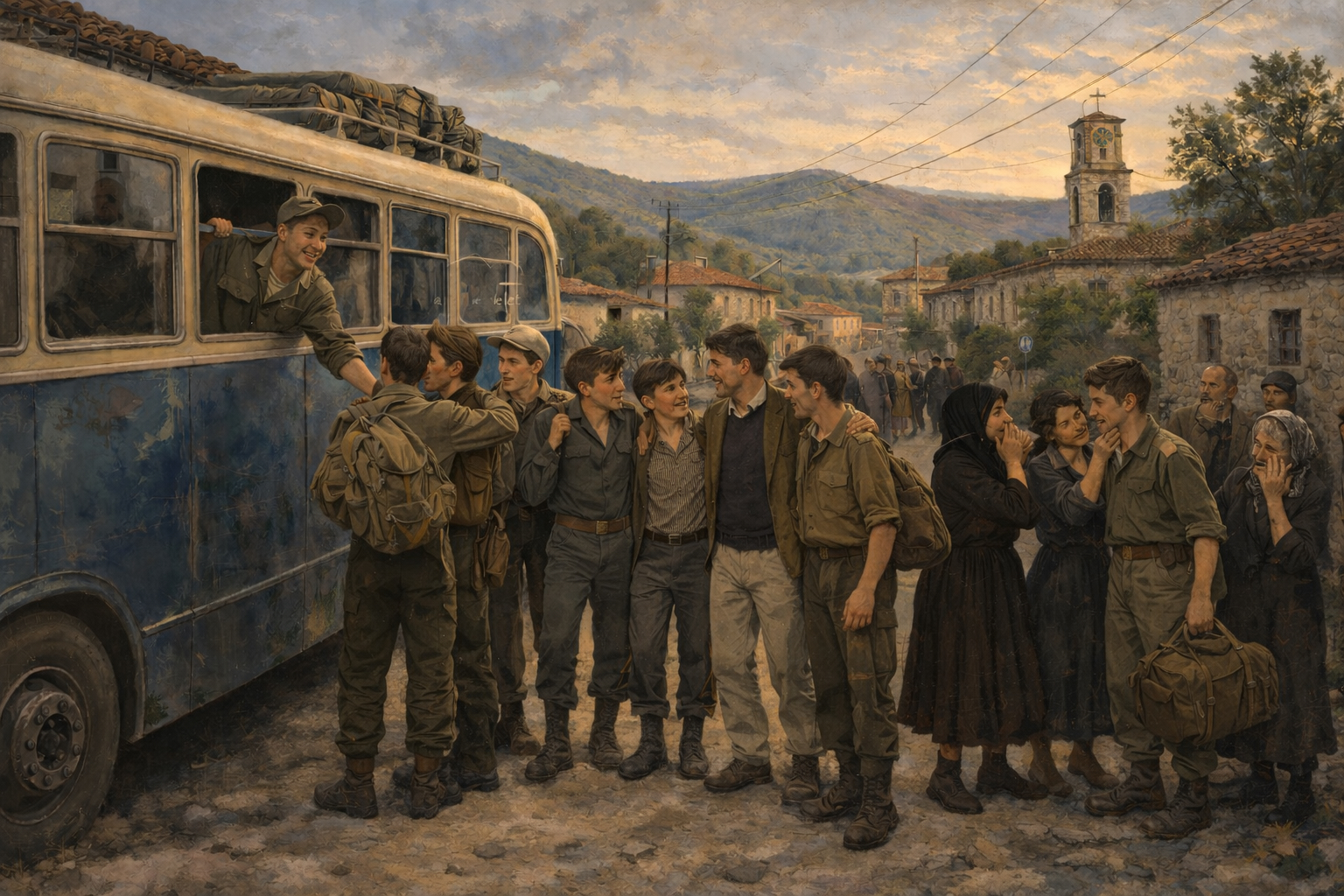
Ten boys from Sklithro Were called by their homeland To go and defend The duty of the state. One would be an infantryman, Another a driver, A third would become a cook, And one a captain. All of them kept wondering; At night they could not sleep: “But what do I know about driving? I was born a farmer.” They became close friends, Together every evening — One night they felt sorrow, The next they ...

The Sausages

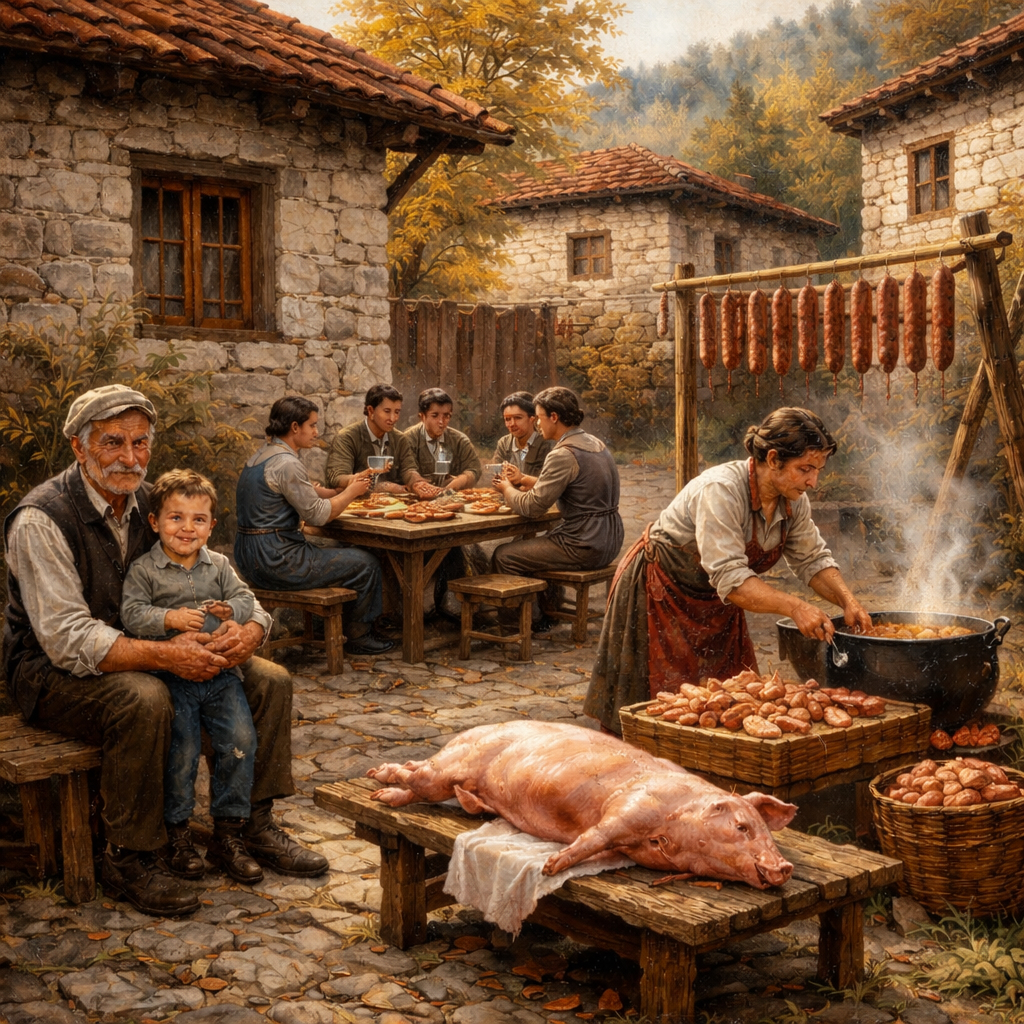
Before the carols came and the deep winter cold, we slaughtered the piglets in every courtyard. We made tzoumarinkes * and fresh fried meat, sharing a little portion with the whole neighborhood. And then the sausages — how wonderful they were! With leeks and fragrant herbs, with well-seasoned minced meat. We hung them out to dry on a wooden pole; our dog stood guard so others would not take them. ...

The Sacrifice of a Sister

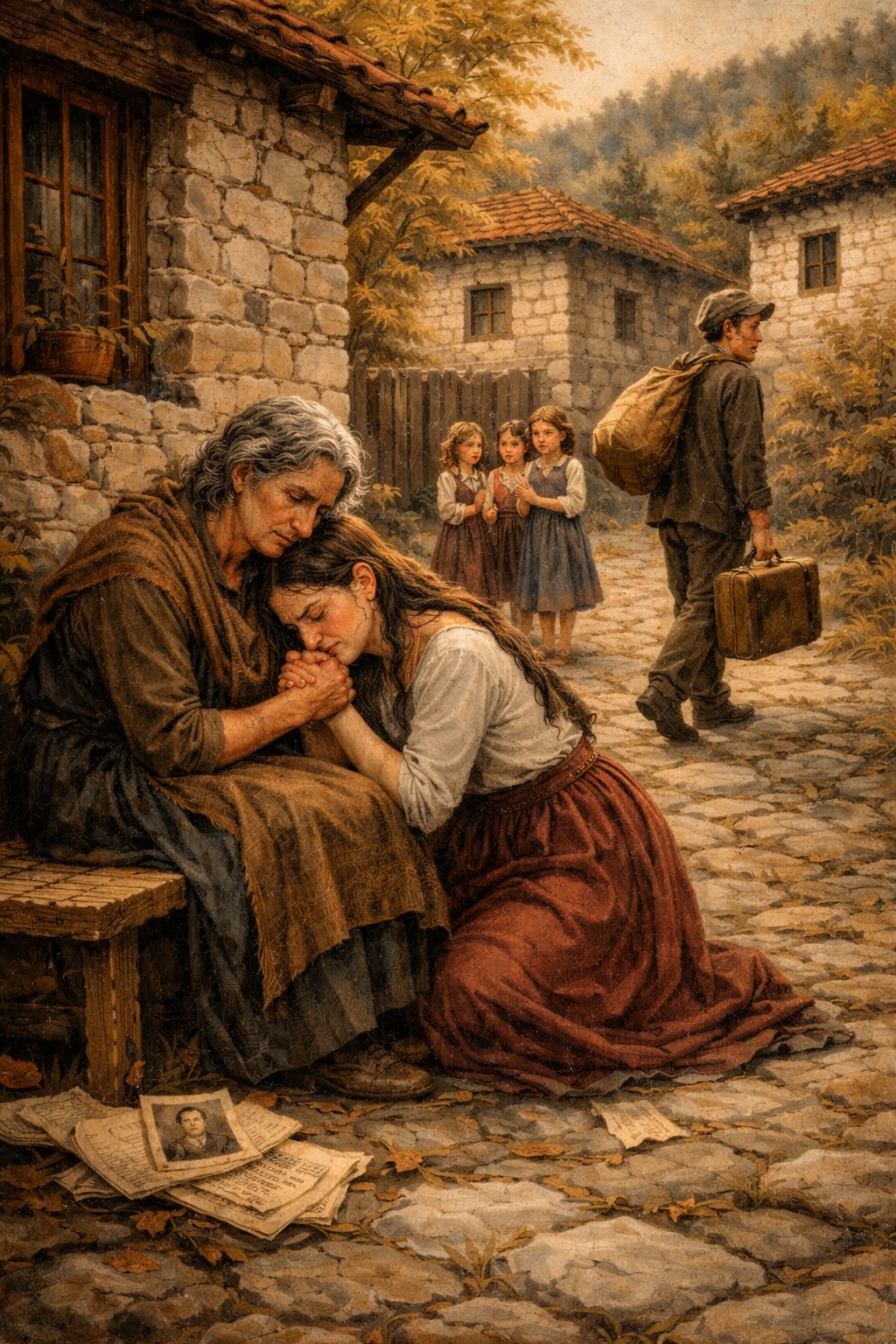
Mother, all the young men are leaving far away. They go to find work — they are all at the ports. I too must leave somewhere else, wherever fate may take me, since it was God’s will to make me their protector. “Where will you leave me, my son, with three little girls?” “But that is why I must go, Mother — I am not searching for palaces. There is no work here nearby. Give me all your blessings; I ...

Biography of an Orphan

At the dawn of the century, In a small and humble village, In the heart of winter’s cold, A baby came into the world. Three Fates had descended there To write the child’s destiny, And before the morning came, Her future had been sealed. They wrote a sorrowful fate, Though the child bore no blame, A burden bound to follow her Forever, without escape. She never knew her father, For he had already ...