



The Jews of Macedonia
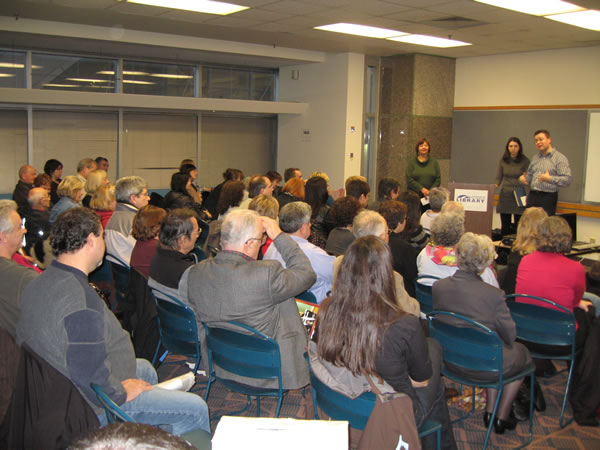
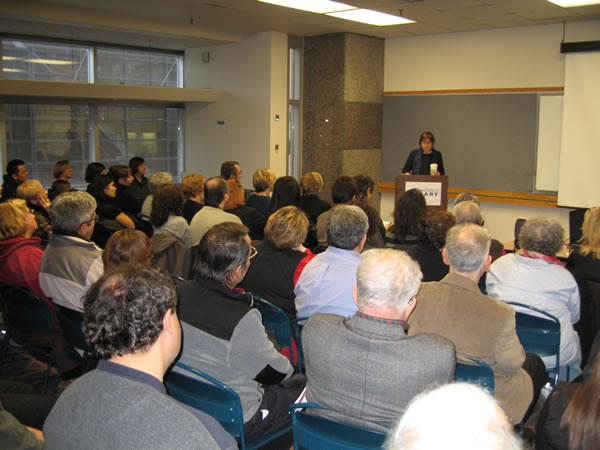
The first lecture event of the Society’s season was a resounding success, drawing a capacity crowd to the North York Central Library. Ginny Evans, co-President of the Historical Society, served as the evening's host, welcoming the large audience and introducing the distinguished guest speakers: Marija Makeska, an emerging filmmaker from Wayne State University in Michigan, and Dr. Christina Kramer, a renowned linguist and Chair of the Department of Slavic Languages & Literatures at the University of Toronto.
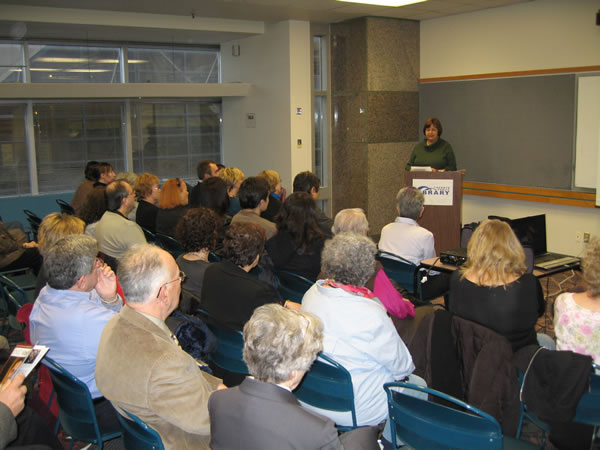
Dr. Kramer provided a comprehensive overview of the history of the Jewish people in Macedonia. Her presentation focused particularly on the period beginning with their 15th-century arrival following the expulsion from Spain and Portugal, through to the tragic era of their deportation and death during World War II. The lecture highlighted the staggering scale of the tragedy, noting that virtually 98 percent of the total Jewish population in Macedonia—which numbered close to 90,000 when including the Aegean region—perished during the Holocaust. Dr. Kramer also noted the shared struggle between the two communities, as many Jewish men and women joined the partisan resistance to fight alongside Macedonians in both Yugoslavia and Greece.
Turning to the present day, it was noted that approximately 200 Jews remain in the Republic of Macedonia. The Republic has taken significant steps to honor this heritage, including the construction of a Holocaust Memorial on the site of the former Jewish neighborhood in Skopje. Furthermore, in 2000, the Macedonian government passed an heirless property restitution law, positioning the country at the forefront of international efforts regarding such legislation. The community has also seen a spiritual renewal through the establishment of a new synagogue, funded in part by the congregation of Beth Israel of Phoenix, Arizona.
The historical overview was followed by a screening of the short documentary Get To Know Us, which provided a visual dimension to the history of Jews in Macedonia from the Byzantine and Ottoman eras to the modern day. The discussion then turned to Marija Makeska’s film Soulmates, which was featured as an Emerging Film at the 2009 Macedonian Film Festival. This film explored the human cost of the deportation through the relationship between two young girls—one Macedonian and one Jewish. Makeska shared that her thematic interest in the topic was sparked by a family connection; her aunt lived in close proximity to the Monopol tobacco factory, which Bulgarian authorities utilized as a transit camp during the deportations. Following the screening, Makeska answered questions about the film's genesis and shared a piece of linguistic history by reciting a short poem in Ladino, the ancestral language brought by Sephardic Jews from Spain to the Balkans.
While the Consul Generals from both Israel and Macedonia were invited to attend, Consul General Gissin of Israel was forced to send his regrets. However, the subsequent question-and-answer period was marked by an active discussion that brought Macedonian Consul General Trenevski to his feet to offer additional historical context and information to the attendees.
In conclusion, the event served as an engaging exploration of a vital topic. It provided the audience with a unique opportunity to become acquainted with the profound historical intersection of Jewish and Macedonian history in the Balkans.
— V. Andreoff