



Presentation by JSG Gandeto, Author of "Ancient Macedonians"
On Sunday, November 30, 2003, the Toronto Macedonian community gathered for a pivotal intellectual event that bridged the gap between academic research and community activism. This historic presentation was a collaborative effort, jointly hosted by three influential pillars of the diaspora: the Canadian Macedonian Historical Society, St. Clement of Ohrid Macedonian Orthodox Cathedral, and the Macedonian Human Rights Movement of Canada (MHRMC). By uniting these religious, historical, and advocacy groups, the event underscored that the reclamation of ancient history is not merely a hobby for scholars, but a fundamental component of modern human rights and ethnic survival.
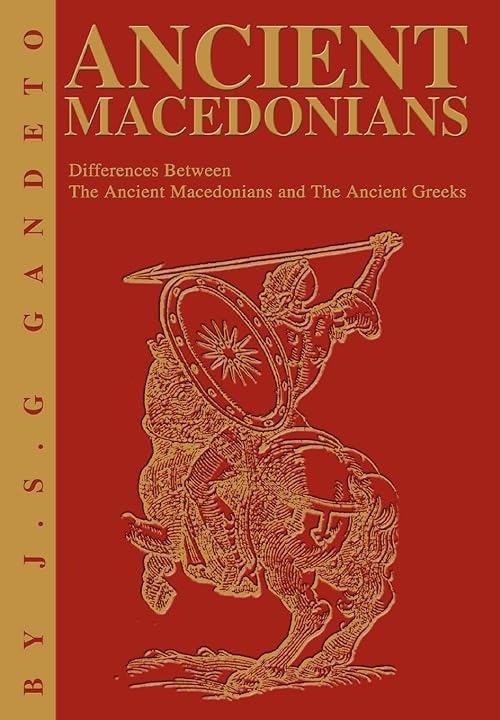
The featured guest was Joseph Gandeto, a scholar whose personal journey mirrors the broader Macedonian experience. Born in the village of Lubojno, Macedonia, Gandeto moved to the United States in 1967. His academic credentials provided a rigorous foundation for his historical claims; he holds both a Bachelor of Science and a Master’s degree from Wayne State University, as well as a Specialist Degree from Nova Southeastern University. At the time of the presentation, Gandeto was a resident of Florida, and his arrival in Toronto was met with great anticipation, particularly following the 2003 release of his seminal work, Ancient Macedonians: Differences Between the Ancient Macedonians and the Ancient Greeks.
During the session, Gandeto presented a meticulously documented analysis aimed at dismantling the "Modern Greek myth" of history. He utilized extensive citations from both ancient chroniclers and modern researchers to argue that the ancient Macedonians were a unique and sovereign race. He focused on the stark cultural and political divides of the classical era, specifically highlighting how ancient Greeks viewed their northern neighbors as "barbaric" outsiders rather than ethnic kin. This distinction was central to his thesis: that the ancient Macedonians were not only distinct from the Greeks but were intensely proud of their separate achievements and military prowess.
A major theme of the evening was the critique of Eurocentric historiography. Gandeto and the organizers argued that 19th-century history was essentially "rewritten" by Western European powers to create a romanticized image of "Golden Greece" as the sole cradle of European civilization. In this process, the history of Macedonia was often buried or superimposed with Greek narratives. The presentation suggested that this distortion turned Macedonians into a "people without history," a status that modern researchers and activists are now working to overturn through what they term a "Macedonian Enlightenment."
The atmosphere was one of engagement and "rediscovery," as evidenced by the interactions between the speaker and the community. Key community figures were present to facilitate the dialogue, including Dr. Dragi Denkovski, who appeared alongside Gandeto, and Tony Markovski, for whom the author signed copies of his books. The social fabric of the event was managed by attendees like Virginia and Richard Dubiel, who greeted the crowd, highlighting the family-oriented nature of these intellectual gatherings. Beyond his primary text, Gandeto’s other works, such as Muabeti and the then-forthcoming Videloto Na Spasa, were discussed as essential contributions to this growing body of Macedonian literature.


Ultimately, the event served as a call to action for the Macedonian community in Toronto, which at the time numbered nearly 40,000 residents according to census data. By validating their ancestral history through documented evidence, the presentation sought to provide the community with the "indisputable evidence" needed to stand firm in their identity. The evening concluded with a deep sense of gratitude toward Gandeto for his role as an inspiration and a scholar, marking the event as a cornerstone in the community's ongoing effort to bring their concealed history into the light of the 21st century.
