




Macedonian History (Makedonska Istorija) with Tashko Belchev
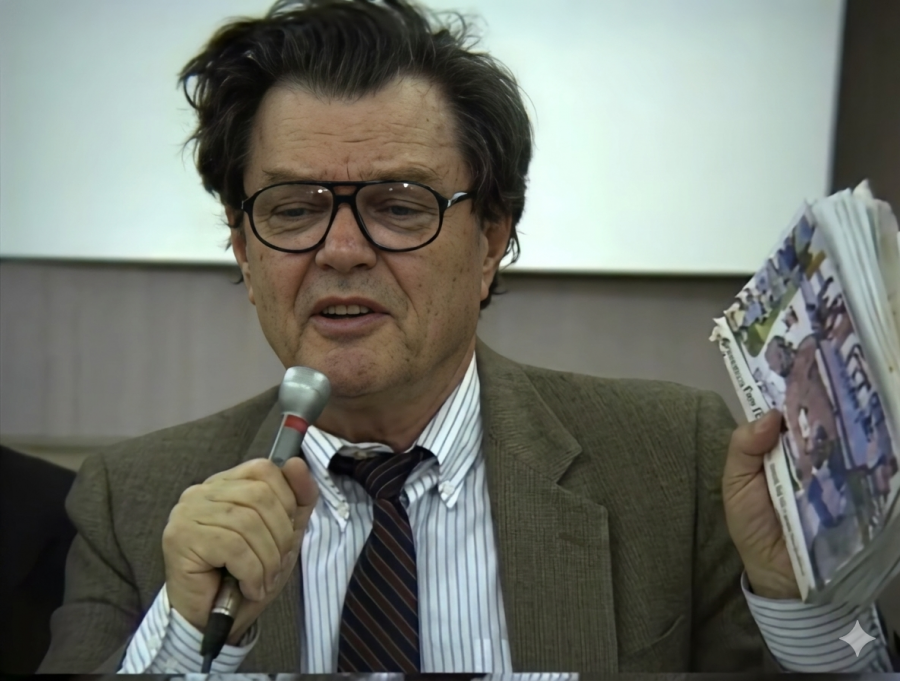
On December 3, 1995, the Canadian Macedonian Heritage Society (CMHS) organized a landmark event in their ongoing lecture series titled "Macedonian History" (Makedonska Istorija), featuring the distinguished scholar and paleolinguist Professor Tashko Belchev.
Thelecture by Professor Tashko Belchevbegins with an evocative recitation of two poems by a friend and fellow Patelaits villager.The poems are read by Stefan Bouktsev and represent the work of Tome Katsorev. These verses serve as a poetic synthesis of Belchev’s theories, moving from the academic study of ancient inscriptions to a spiritual and national affirmation of Macedonian identity.
Below is the full transcription and translation of the poems as read in the video.
Poem 1: „Македонија“ (Macedonia)
Macedonian Transcription: „Македонијо! Земјо на библиското слово и сонцето вечно, ти си колевка на човештвото, на вистината извор бескраен. Твоите корени не се од вчера, ниту од шестиот век во магла скриени, туку се длабоко во исконот, во каменот и во коските на твоите синови. Ти си мајка на писменоста, на сите словенски народи учителка, со Светите Кирил и Методиј го осветли светот со божја светлина. Твојот јазик е жив оган, што низ вековите не згасна, туку гореше и кога те делеа, и кога те негираа. Македонијо, ти си вечност, ти си име што не се брише, ти си душата што за слобода и за вистина дише!“
English Translation: "Macedonia! Land of the biblical word and the eternal sun, You are the cradle of humanity, an endless source of truth. Your roots are not from yesterday, nor hidden in the mists of the sixth century, But are deep in the beginning, in the stone and in the bones of your sons. You are the mother of literacy, the teacher of all Slavic nations, With Saints Cyril and Methodius, you illuminated the world with divine light. Your language is a living fire, which through the centuries did not go out, But burned even when they divided you, and even when they denied you. Macedonia, you are eternity, you are a name that cannot be erased, You are the soul that breathes for freedom and for truth!"
Poem 2: „Гласот на Предците“ (The Voice of the Ancestors)
Macedonian Transcription: „Слушнете го гласот на каменот, врежан со знаци од антиката, тоа е нашиот код, нашата крвна група, нашата македонска вистина. Професорот Белчев ги разбуди буквите што со векови молчеа, за да ни кажат дека не сме дојденци, туку овдешни, свои на своето. Филип и Александар се нашиот крик, нашата сила и гордост, тие го носеа сонцето од Македонија до крајот на светот. Ние не сме гранка без корен, ниту народ без историја, ние сме наследници на слава, на писмо и на голема сторија. Нека знаат сите, и пријатели и душмани клети, дека македонскиот збор е свет, и вечно ќе свети. Ние сме овде, ние сме Македонци, и така ќе биде довека!“
English Translation: "Listen to the voice of the stone, etched with signs from antiquity, That is our code, our blood type, our Macedonian truth. Professor Belchev awakened the letters that were silent for centuries, To tell us that we are not newcomers, but of this place, masters of our own. Philip and Alexander are our cry, our strength and our pride, They carried the sun from Macedonia to the end of the world. We are not a branch without a root, nor a people without history, We are heirs to glory, to a script, and to a grand story. Let all know, both friends and cursed enemies, That the Macedonian word is sacred, and will shine eternally. We are here, we are Macedonians, and so it shall be forever!"
1. The Thesis of Linguistic Continuity: Decoding the "Silent" CenturiesProfessor Belchev’s primary mission was to bridge the gap between ancient and modern Macedonia by proving that the language never "died" or was replaced; it simply evolved.
- Refuting the "Empty Balkans" Theory: Mainstream history often suggests that the pre-Slavic populations of the Balkans were entirely assimilated or displaced. Belchev argued that linguistic evidence—such as place names (toponyms) and river names (hydronyms)—remained Macedonian throughout the Roman and Byzantine eras.
- The Grammar of Inscriptions: He pointed to specific grammatical markers in ancient inscriptions, such as the use of articles and specific case endings, that align more closely with modern Macedonian than with other Slavic languages. He viewed these as "linguistic fossils" that prove the people remained in place while the political empires around them changed.
2. Ancient Macedonia: The Ethnic and Linguistic Distinction
Belchev dedicated a significant portion of his research to the "Macedonian vs. Greek" debate, using linguistics to define ethnic boundaries.
- The "Koine" as a Second Language: He argued that while the ancient Macedonian court used Attic Greek for international diplomacy and trade (much like English is used today), the common people and the soldiers spoke their native Macedonian tongue. This explains why ancient chroniclers noted that Alexander’s troops cheered in a language distinct from that of the Greek mercenaries.
- Cultural Sovereignty: Belchev emphasized that the ancient Macedonian religion and social structure—focused on the "Basileus" (King) rather than the "Polis" (City-State)—created a unique psychological and cultural identity. He argued that this identity was preserved in the folklore, songs, and oral traditions that survived into the medieval period.
3. The Evolution of the Alphabet: From Runes to Cyrillic
Belchev’s paleolinguistics research sought to prove that the Cyrillic script was a "restoration" of ancient literacy rather than a 9th-century invention.
- The "Crnorizec Hrabar" Connection: He referenced the medieval monk Crnorizec Hrabar, who wrote that before the alphabet of Cyril and Methodius, the Slavs used "strokes and notches" (chrti i rezki) to read and divine. Belchev argued these were not primitive marks but a sophisticated runic system.
- Standardization, Not Invention: He posited that Saints Cyril and Methodius were linguistic geniuses who took these indigenous "strokes and notches" and refined them into a liturgical script. This theory transforms the saints from "teachers of the illiterate" into "preservers of ancient knowledge," giving the Macedonian people a much longer history of written culture.
4. Addressing Historical Propaganda and Diaspora Identity
In the final part of the lecture, Belchev turned to the contemporary struggle for recognition, speaking to the Toronto audience about the "Politics of History."
- History as a Shield: Belchev argued that for a small nation like Macedonia, history is the most potent form of national defense. By proving their ancient roots, Macedonians could defend their right to their name, their church, and their land against neighboring claims.
- The Diaspora’s Intellectual Duty: He challenged the Canadian Macedonian Heritage Society and its members to become "ambassadors of truth." He argued that while the Republic of Macedonia was under intense diplomatic pressure in the 90s, the diaspora had the freedom and the resources to fund research, publish books, and influence Western academic circles with this "new" (but actually ancient) perspective on Macedonian history.