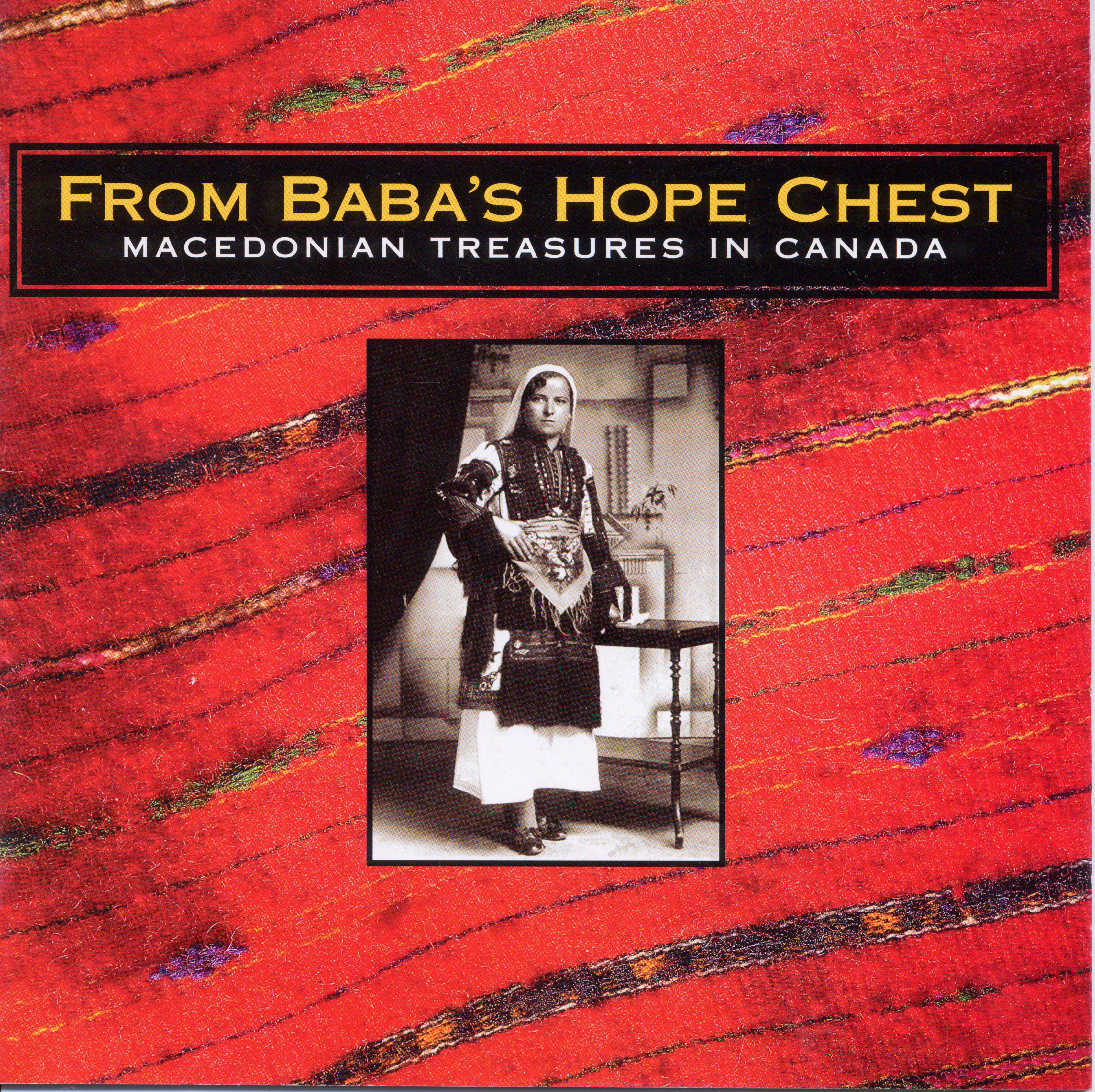




From Baba's Hope Chest
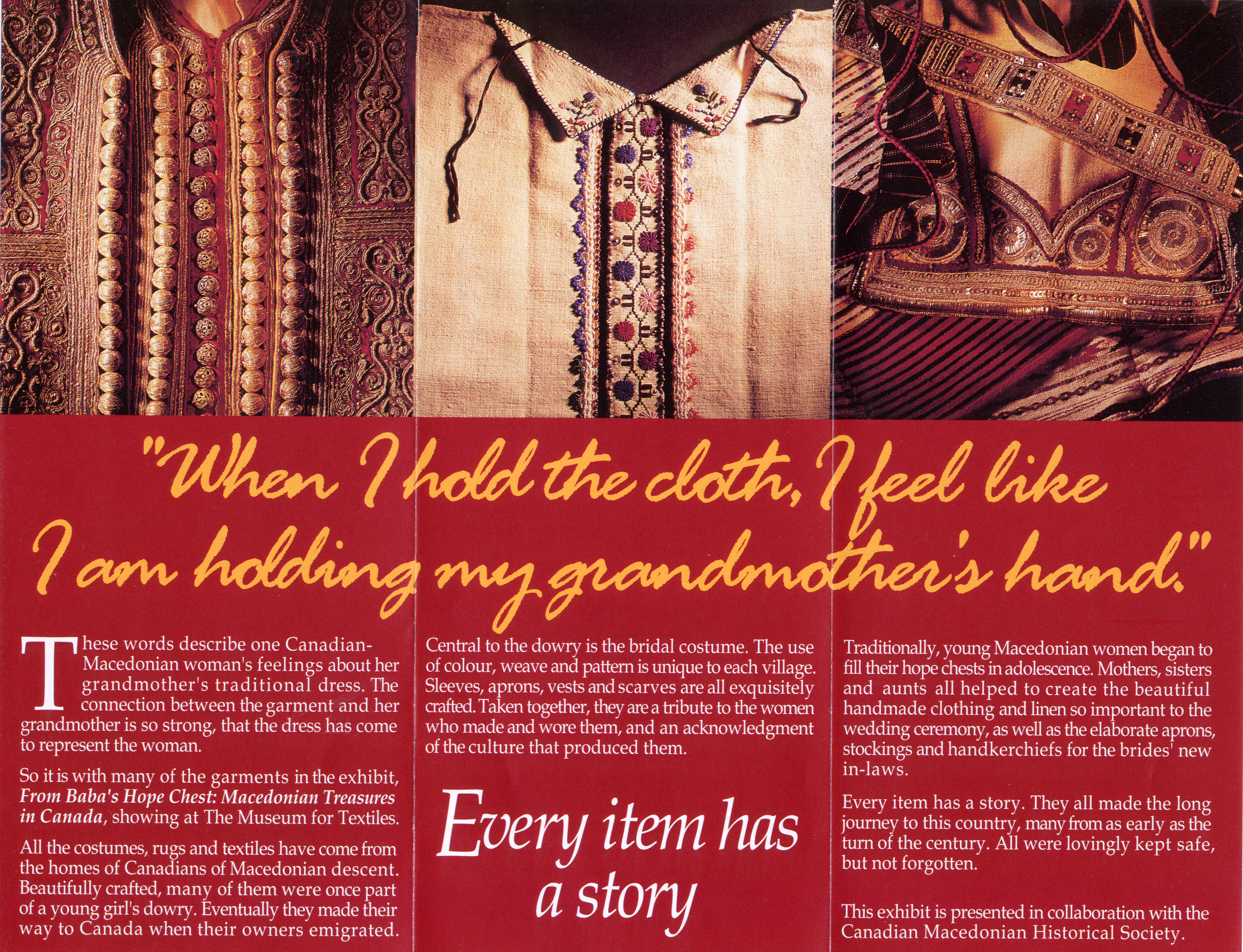
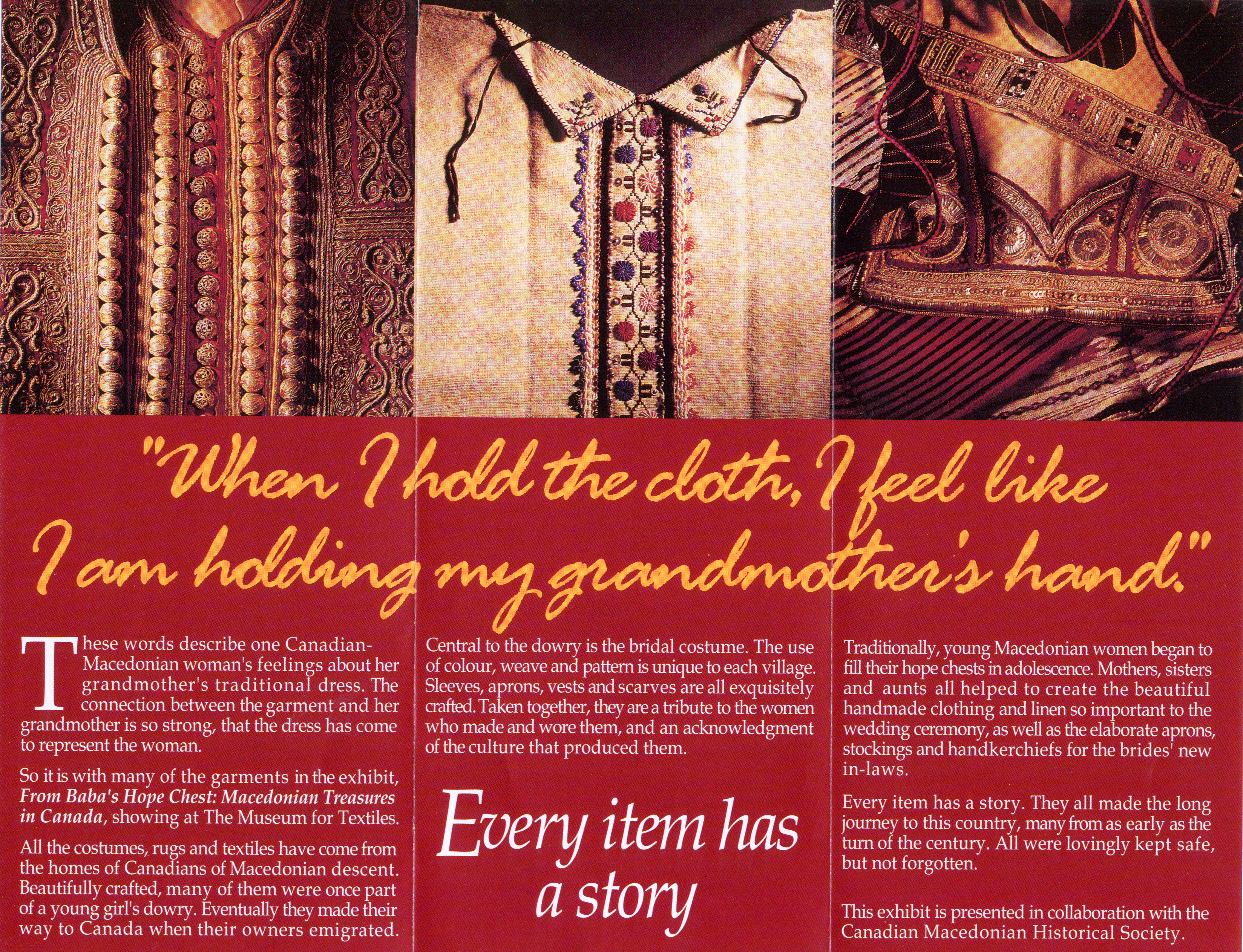
The exhibition "From Baba's Hope Chest: Macedonian Treasures in Canada" was a landmark cultural event co-presented by the Museum for Textiles and the Canadian Macedonian Historical Society (CMHS). Running from March 1 to October 15, 1995, the showcase was the culmination of three years of exhaustive research, documentation, and community outreach. Curated by CMHS member and educator Angela (Annie) Wood, the exhibition provided a rare and intimate look at the textile heritage of the Macedonian diaspora in Canada.
The Vision and The Committee
The genesis of the project was personal. While visiting the Museum for Textiles with her students, Annie Wood noticed a profound absence of Macedonian textile art. Driven by a desire to see her own heritage represented, she brought the ambitious concept to the Canadian Macedonian Historical Society.
The CMHS recognized the potential of the project and struck a dedicated committee of 19 members to transform the dream into a reality. This committee worked diligently through a rigorous three-phase process:
- Public Funding: The team successfully secured the necessary grants and public funding to finance the large-scale operation.
- Institutional Partnership: They worked closely with the Museum for Textiles to develop a professional program that met museum standards for preservation and curation.
- Community Execution: The committee acted as the bridge to the community, facilitating the massive intake of family heirlooms.
The Preparation and Documentation
Over the course of three years, the committee visited numerous Macedonian-Canadian homes, documenting over 1,500 individual pieces. These visits were more than technical documentation; they were social exchanges involving oral histories, coffee, and the building of trust with families who were parting with precious heirlooms for the first time. Before the display opened, each item underwent a specialized preservation process, including freezing the textiles to protect them from environmental degradation.
The Exhibition Content
The show was designed as a "package" of history and identity, featuring:
- Traditional Clothing: An array of chemises, vests, aprons, and complete regional costumes.
- Textiles and Rugs: Intricately woven rugs and household textiles.
- Oral History and Photography: The display included personal stories and photographs of the "Babas" (grandmothers) who created the works, ensuring the artisans' faces were seen alongside their crafts.
Impact on Contemporary Fashion
The exhibition’s influence extended into the world of modern design. Renowned Canadian fashion designer Marilyn Brooks was so moved by the patterns of "Baba's Hope Chest" that she used them as the primary theme for her Fall collection. Brooks noted that these "tribal treasures" mirrored international trends she had observed in Paris, emphasizing a return to heritage and the "comfort of ancestors". The finale of her fashion show featured a direct tribute to these Macedonian designs.
Cultural Significance
Opening on March 1st, the day of the Macedonian Martinki tradition, the exhibition created a "bridge to memory." It allowed the Macedonian community to see their private family treasures recognized as masterpieces of textile art. For the diaspora in Toronto, the realization of Annie’s dream served as a powerful affirmation of their identity within the Canadian multicultural mosaic.
Source: Wood, Angela. From Baba's Hope Chest: Macedonian Treasures in Canada. The Museum for Textiles,Toronto, 1995.