


Father Nikodim Tsarknias and the Struggle for Religious Freedom
Special Interview Report: Father Nikodim Tsarknias and the Struggle for Religious Freedom
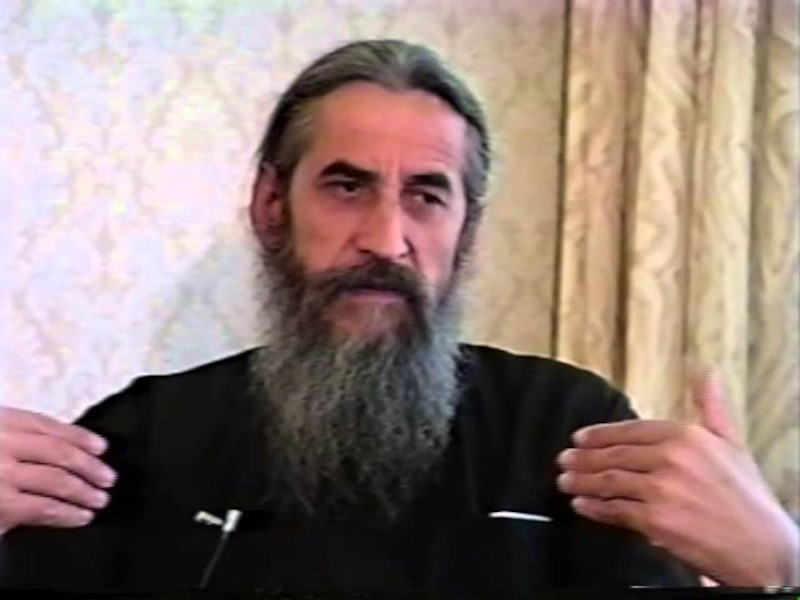
On December 18, 1993, the Canadian Macedonian Historical Society (CMHS) conducted a landmark interview led by Nickey Alexiou with Father Nikodim Tsarknias. The interview took place during Tsarknias’s high-profile visit to Toronto, a trip intended to alert the international community and the Macedonian diaspora to the systematic suppression of ethnic Macedonian cultural and religious life within the borders of northern Greece (Aegean Macedonia).
Biographical Background and the Path to Dissent
Born in 1942 in Aridaia (Subotsko), Father Tsarknias was raised within the cultural fabric of the Aegean region. He was ordained as a priest in the Greek Orthodox Church in 1973, serving the faithful for nearly two decades. However, his tenure was marked by increasing friction with the church hierarchy. Tsarknias detailed how his refusal to use exclusively Greek in liturgical services—preferring to acknowledge the local Macedonian dialects and customs of his parishioners—led to his eventual expulsion in 1991. The official charge was "misconduct," but as Tsarknias explained to Alexiou, the true cause was his open declaration of Macedonian ethnic identity and his resistance to the Hellenization policies of the Florina (Lerin) diocese.
The Eradication of Customs in the Lerin Region
A central theme of the interview was the administrative attempt to "eradicate" ethnic Macedonian religious traditions. Tsarknias described several specific grievances:
- The Ban on Macedonian Songs: The prohibition of traditional Macedonian folk songs and chants during religious festivals and weddings.
- Linguistic Suppression: The mandatory use of the Greek language in confession and sermons, even in villages where the elderly population spoke only Macedonian.
- The Destruction of Heritage: The subtle and overt removal of Slavic-style iconography or inscriptions from local churches to align with a strictly Greek historical narrative.
The October 18 Precursor and the Toronto Mission
The December interview expanded upon a shorter address Tsarknias gave on October 18, 1993, shortly after his arrival in Canada. In the December session, he went into greater detail regarding the legal and physical harassment he faced in Greece, including multiple court summons and threats from ultra-nationalist groups. He framed his struggle not as a political rebellion, but as a human rights mission, arguing that the right to pray in one's mother tongue is a fundamental liberty.
Impact on the Toronto Diaspora
The interview served as a call to action for Macedonian-Canadians. By documenting his testimony, the CMHS provided a primary source account of the "Aegean Question" that moved beyond abstract history and into the lived reality of the 1990s. Tsarknias’s presence in Toronto galvanized local organizations to petition the Canadian government and international human rights monitors to pressure Greece into recognizing its Macedonian minority and restoring their religious autonomy.
Summary of Significance
Father Nikodim Tsarknias’s 1993 interview remains one of the most critical documents in the CMHS archives regarding the modern human rights struggle. It highlights the intersection of faith and identity, illustrating how the pulpit became a front line for the preservation of Macedonian culture in the Aegean region. His defiance led to the eventual establishment of a Macedonian Orthodox presence independent of the Greek Church, a movement that continues to be a point of cultural pride and controversy today.