Pastry & pies
Pogača
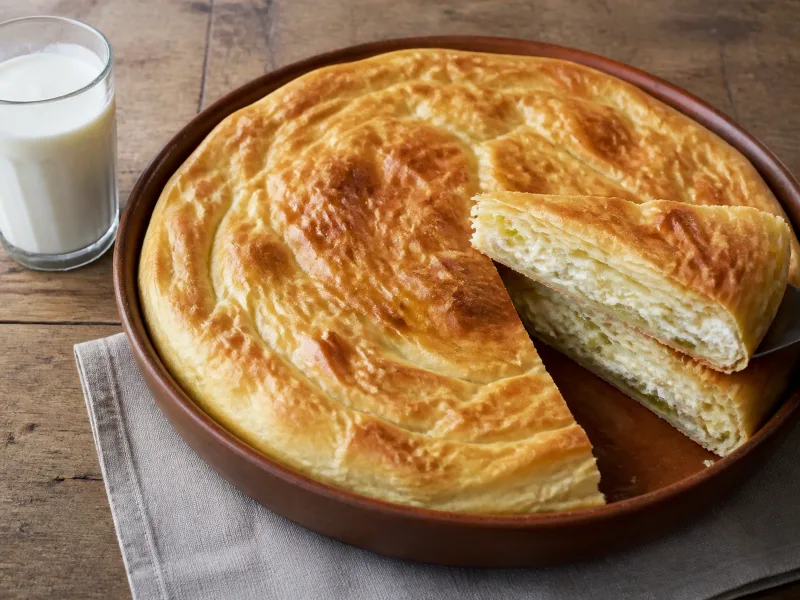
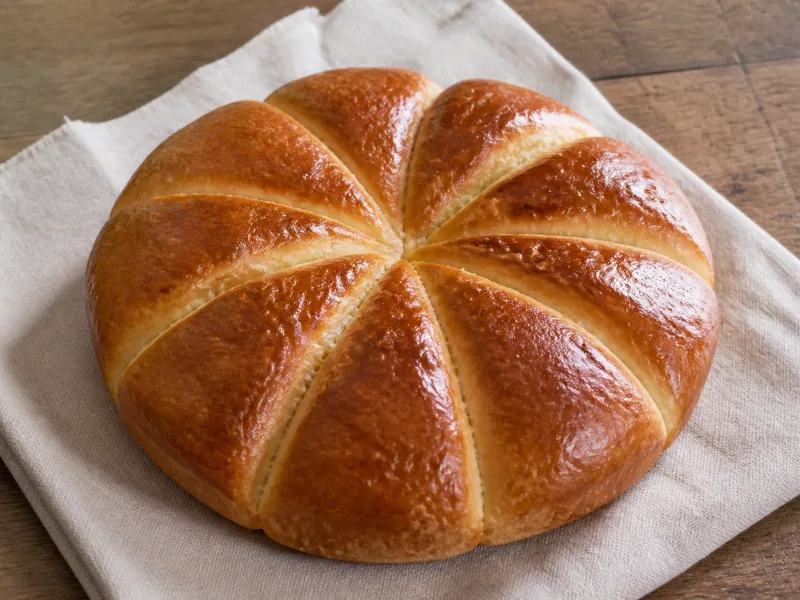
The round loaf broken by hand at Christmas Eve, at a slava, or at any table with something to mark.
Recipe from Туѓино Јабано
- Prep
- 1 hr 45 min
- Cook
- 40 min
- Total
- 2 hr 25 min
- Fasting
- Not suitable
Ingredients 11 ingredients
Method
- Stir the yeast and sugar into the lukewarm milk and leave it ten minutes, until it foams. If nothing happens, the yeast is dead and there is no sense going further.
- Put the flour in a wide bowl, make a well in the middle and add the yeasted milk, the yoghurt, the oil and one beaten egg. Bring it together with your hand, then work in the salt.
- Knead on a lightly floured board for a full ten minutes. The dough should stay soft and a little tacky. Resist adding flour — a dry pogača is stale by the next morning.
- Cover the bowl with a cloth and leave it somewhere warm for about an hour, until it has doubled.
- Knock the dough back and divide it into ten balls. Flatten each one, put a pinch of sirenje in the centre, close the dough over it and roll the ball in the softened kajmak.
- Sit the balls side by side in a greased round tin about 26 cm across, leaving a finger's width between them. Cover and prove for thirty minutes, until they swell and touch.
- Beat the second egg, brush the tops and scatter over the sesame seeds.
- Bake at 200°C for fifteen minutes, then drop the heat to 180°C for another twenty to twenty-five minutes, until deep brown and hollow-sounding underneath.
- Turn the loaf onto a cloth and cover it while it cools, so the steam softens the crust. Bring it to the table whole and let people pull the pieces apart, which is the point of the shape.
If you cannot find it
Substitutions that work outside Macedonia.
- Kajmak
- Clotted cream beaten with a pinch of salt, or mascarpone loosened with double cream. Melted butter will do, though the crumb comes out less tender.
- Sirenje
- Feta, rinsed and drained so the loaf does not turn out too salty.
- Sheep's yoghurt
- Full-fat Greek yoghurt; thick enough, if without the same tang.