
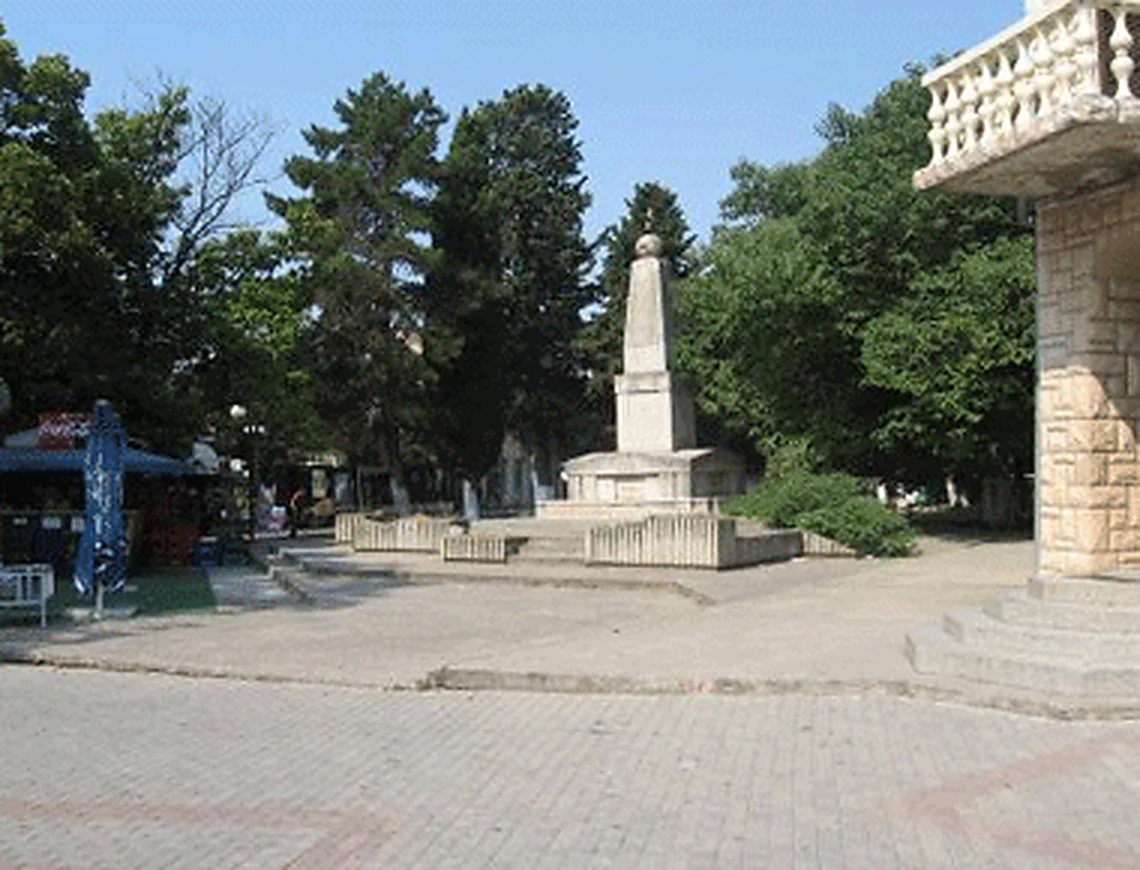
Southeastern
Valandovo
Валандово
- Residents · 2021 census
- 3,671
- Old photographs
- 1
- Photographs
- 18
Mediterranean warmth, orchards and southern landscapes
Valandovo rests in a low, warm basin near the Vardar corridor, between the slopes of Plavush and the wider Belasica country. Its modified Mediterranean climate supports vineyards, figs, pomegranates, persimmons and early vegetables, giving the town and its villages a southern garden character that feels distinct within North Macedonia.
Overview
City overview
Meet Valandovo.
A grounded introduction to the city, its landscape, people, history and wider municipality.
Valandovo rests in a low, warm basin near the Vardar corridor, between the slopes of Plavush and the wider Belasica country. Its modified Mediterranean climate supports vineyards, figs, pomegranates, persimmons and early vegetables, giving the town and its villages a southern garden character that feels distinct within North Macedonia.
The nearby site of Isar-Marvinci carries the landscape's much older history through Iron Age, Hellenistic and Roman-period material. The modern town developed as a local administrative and trading centre, then had to rebuild after the destructive 1931 earthquake, an event still visible in municipal memory and the shape of the twentieth-century settlement.
Valandovo town counted 3,671 residents in 2021 and the municipality 10,508. Macedonian and Turkish language and family traditions meet across the area; the Valandovo Folk Fest brings new songs to a national stage, while Chalakli's Hid-Bah Shen gathering celebrates spring within the municipality's Turkish community.
Twenty-eight villages surround the town. Josifovo, Pirava and Udovo are the largest rural communities, while Marvinci sits beside the ancient Isar site and eleven current settlements recorded no resident population in 2021. The municipality is therefore at once an active farming district, a transport crossroads and a place confronting deep rural change.
At a glance
Useful facts, in one place.
Settlement and municipality figures are kept distinct wherever sources permit.
- Municipality
- Valandovo Municipality
- City population
- 3,671
- Municipality population
- 10,508
- Population outside the city
- 6,837
- Population year
- 2021
- Municipal area
- 331 km²
- Elevation
- 110 m
- Approx. road distance from Skopje
- 142 km
- Postal code
- 2460
- Climate
- Modified Mediterranean climate with hot summers and comparatively mild winters
- Sports teams
-
- FK Pobeda Valandovo
- WFC Pobeda Valandovo
- Culture
-
- Valandovo Folk Fest is the municipality's best-known music event and a stage for newly written folk songs.
- Hid-Bah Shen in Chalakli celebrates spring through the traditions of the local Turkish community.
- Warm-climate fruit, vineyards and early vegetables are strong signatures of the local table and economy.
- Population snapshot
- 3,671 city residents and 10,508 municipality residents in the 2021 census; 6,837 lived outside the city settlement.
- Average elevation of the Valandovo field
- 82 m
- Average municipal elevation
- 226 m
Known for
The city's signature.
Landmarks, foods, landscapes and traditions that give Valandovo its character.
- Figs, pomegranates and early produce
- Folk Fest Valandovo
- Isar-Marvinci archaeological site
- Wine growing
- Legacy of the 1931 Valandovo earthquake
Geography
Geography
Land shapes the city.
Terrain, waterways, climate and transport explain why Valandovo grew where it did.
Valandovo rests at the northern end of the Gevgelija-Valandovo basin, beneath the low slopes of Mount Plavush and near the Vardar corridor. Elevations around town are low by Macedonian standards, and warm air moving inland from the Aegean gives the district a strongly modified Mediterranean climate. The borderland position places Valandovo between the Vardar railway and motorway, the Dojran area and roads east toward Strumica.
The climate turns the countryside into an extended garden. Figs, pomegranates, Japanese persimmons, early vegetables, grapes and tobacco grow around the town, alongside fields and patches of Mediterranean vegetation. The Anska River drains toward the Vardar, while rocky hills mark the transition from fertile basin to upland. Agriculture remains the clearest link between Valandovo's landscape, economy and local cuisine.
History
History
A concise, rewritten account.
Written afresh from cross-checked municipal, archaeological, heritage and institutional sources—not copied website text.
Archaeological sites show that the lower Anska and Vardar country was settled from prehistory onward. At Isar-Marvinci, a fortified ancient town developed above the river routes and maintained contacts with major centres in Macedonia and the Aegean. Finds from the wider municipality include Iron Age burials, classical and Hellenistic ceramics, coins, Roman mosaics and early Christian remains. The exact identification of ancient place-names is still a subject for scholarship, so the material record is more reliable than a single legendary label.
Valandovo itself grew as a small Ottoman-era town serving farmers and travellers near the Vardar route. The nineteenth and early twentieth centuries brought new schools, commerce and transport connections. A major earthquake in 1931 destroyed or damaged much of the town and surrounding villages, leaving a lasting mark on local memory and on the rebuilt urban fabric.
Post-war Valandovo remained an agricultural and service centre. Wine cellars and food production developed alongside the fruit for which the area was already known. Since 1985, Folk Fest Valandovo has given the town a national cultural profile as a showcase for newly composed Macedonian folk music.
The preserved legacy narrative
Open the preserved legacy narrative
The earliest evidence of life in the Valandovo area dates from the tenth to the seventh centuries BC. Later remains include a Roman-period settlement known in local tradition as Mal Konstantinopol (Small Constantinople), while Marko's Tower represents the medieval landscape. Two especially important archaeological areas lie near the town: Isar-Marvinci and the remains associated in scholarship and local interpretation with ancient Idomenae. Other notable finds include the Valandovo mosaics, an Iron Age necropolis near Dedeli, and religious sites such as the monastery and church of St George. On Isar hill, beside Marvinci, stood an ancient community in the southern Macedonian district called Amphaxitis. Its many archaeological layers indicate long occupation with no major interruption. The hill rises about 40 to 45 metres above the mouth of the Anska River, where it joins the Vardar.
The town's acropolis was protected by defensive ramparts. Most architectural remains belong to secular residential buildings, while the latest phase may include a pottery workshop. Construction techniques changed substantially between the earlier, simpler phases and the later settlement. Archaeological interpretations suggest that the town first suffered destruction in the third century BC, often linked with the Celtic incursion of 279 BC. Excavated material demonstrates centuries of cultural and economic development. During the fifth and fourth centuries BC, goods were imported from Corinth and Ionia in Asia Minor. Iron Age pottery was found in graves, together with Greek amphorae from the Classical and late Hellenistic periods. Alongside ceramics imported from major production centres, local potters maintained indigenous traditions while frequently imitating Greek forms. In the Hellenistic era, connections intensified with leading Macedonian centres including Pella, Beroea, Amphipolis and Thessalonica. Terracotta figurines, jewellery and coinage followed models from these developed cities. Agriculture, animal husbandry and mining supported the economy of the town on Isar, while regional mining and pottery continued into the Roman period.
Profile sources (23)
- valandovo.gov.mk/?page_id=1886
- valandovo.gov.mk/?page_id=2069
- portal.mdt.gov.mk/post-body-files/proekt-za-podobruvanje-na-opstinskite-uslugi-finansirani-so-zaem-od-megjunarodnata-banka-za-obnova-i-razvoj-file-myTT.pdf
- stat.gov.mk/pdf/2022/2.1.22.10Popis-mk-en.pdf
- citypopulation.de/en/northmacedonia/jugoistocen/609__valandovo
- valandovo.gov.mk/?page_id=2080
- valandovo.gov.mk/wp-content/uploads/2026/05/SECAP_Valandovo_MK.pdf
- travel2macedonia.com/destinations/valandovo
- valandovo.gov.mk/?cat=19
- valandovo.gov.mk/?page_id=2162
- valandovo.gov.mk/?page_id=162
- povardarska-eparhija.org.mk/pe/index.php?Itemid=55&id=364&option=com_content&task=view
- ffm.mk/sq/odredeni-dvojkite-za-barazot-za-popolnuva-e-na-vmfl
- ffm.mk/media/files/Macedonian-Womens-Football-Strategy-a4.pdf
- pretsedatel.gjorgeivanov.mk/en/president/biography.html
- macedonianfootball.com/tihomir-kostadinov
- en.wikipedia.org/wiki/Aleksandar_Teneked%C5%BEiev
- en.wikipedia.org/wiki/%C5%BDanko_Savov
- martinrizov.com/about
- musik-aus-mazedonien.blogspot.com/2015/05/clarinet-wonder-martin-kocev-to-solo-in.html
- saatchiart.com/en-ie/account/profile/995629
- arm.mil.mk/wp-content/uploads/2019/01/monografija-generali.pdf
- makstat.stat.gov.mk/PXWeb/pxweb/en/MakStat/MakStat__Popisi__Popis2021__NaselenieVkupno__PodatociNaselenie/T1501P21.px
Interesting Facts
Interesting facts
Details worth remembering.
Local landmarks, customs, foods and historical details that reward a closer look at Valandovo.
-
One of the country's warmest farming landscapes
The modified Mediterranean climate supports grapes, figs, pomegranates, persimmons and early vegetables across the Valandovo field.
-
The 1931 earthquake reshaped the town
A powerful earthquake struck the Valandovo area in 1931, destroying or damaging much of the settlement and forcing extensive rebuilding.
-
Isar-Marvinci preserves a long archaeological sequence
The fortified site and cemetery near Marvinci have yielded important Iron Age, Hellenistic and Roman-period material from the lower Vardar region.
-
Folk Fest began in 1985
Valandovo's festival of newly composed folk songs began in 1985, and a purpose-built festival hall opened in 1989.
-
Hid-Bah Shen welcomes spring
Held at Chalakli since the early 1990s, Hid-Bah Shen brings music, dance and community gatherings together around a Turkish spring tradition.
-
A small municipality on a major corridor
Valandovo is connected to the E-75 route and lies within easy reach of the crossings and roads toward Greece, Dojran and Strumica.
-
Saint George overlooks the field
The monastery above Valandovo occupies a medieval religious site; the present church was rebuilt in 1934 and later expanded as a monastery complex.
-
Both town and municipality have become smaller
Census figures show Valandovo town declining from 4,402 residents in 2002 to 3,671 in 2021, while the municipality fell from 11,890 to 10,508.
People
Celebrities
Lives linked to the city.
Writers, musicians, artists, athletes, public figures and historical personalities with a clearly stated connection to Valandovo.
- Notable person Gjorge Ivanov Valandovo-born political scientist who served as president of Macedonia from 2009 to 2019.
-
Gjorge Ivanov Public life
Born in Valandovo and educated there before university.
Law professor and political scientist who served as president of North Macedonia from 2009 to 2019.
Source -
Tihomir Kostadinov Sport
Born in Valandovo.
Professional midfielder who has represented North Macedonia internationally and played for clubs in several European leagues.
Source -
Aleksandar Tenekedzhiev Sport
Born in Valandovo.
Professional footballer who has played in the domestic league and abroad.
Source -
Zhanko Savov Sport
Born in Udovo, in Valandovo Municipality.
Former footballer and coach whose career included leading domestic clubs.
Source -
Martin Rizov Music
Born in Valandovo.
Concert pianist and educator with performances in North Macedonia and internationally.
Source -
Martin Kocev Music
Born and raised in Valandovo.
Classical clarinettist whose solo and orchestral work has reached audiences beyond North Macedonia.
Source -
Snezana Ilieva Visual art
Born in Valandovo.
Visual artist known especially for transparent, light-filled watercolour work.
Source -
Save Janev Public service
Born in Balinci, Valandovo Municipality.
Army officer who attained the rank of major general in the country's armed forces.
Source
Villages & Monasteries
Villages
The wider municipality.
Every verified village and rural settlement in the current municipal scope, followed by known monasteries in the surrounding cultural landscape.
28 villages and rural settlements are included.
- Ajranli A current municipal settlement with no resident population recorded in the 2021 census. Source
- Arazli A current municipal settlement with no resident population recorded in the 2021 census. Source
- Bajrambos A small rural settlement with 1 resident recorded in 2021. Source
- Balinci A substantial farming village with 366 residents recorded in 2021. Source
- Barakli A current municipal settlement with no resident population recorded in the 2021 census. Source
- Bashali A current municipal settlement with no resident population recorded in the 2021 census. Source
- Bashibos A rural settlement with 110 residents recorded in 2021. Source
- Brajkovci A substantial village with 384 residents recorded in 2021. Source
- Buluntuli A current municipal settlement with no resident population recorded in the 2021 census. Source
- Chalakli A Turkish-community village with 412 residents in 2021, known for the Hid-Bah Shen spring festival. Source
- Chestevo A current municipal settlement with no resident population recorded in the 2021 census. Source
- Dedeli A rural settlement with 252 residents recorded in 2021. Source
- Gradec A small village with 3 residents recorded in 2021 and the Saint Athanasius monastery above it. Source
- Grchishte A village with 176 residents recorded in 2021 and a historical Saints Peter and Paul monastic site. Source
- Gjuleli A current municipal settlement with no resident population recorded in the 2021 census. Source
- Josifovo The municipality's largest village in 2021, with 1,651 residents. Source
- Kazandol A rural settlement with 182 residents recorded in 2021. Source
- Kochuli A small village with 53 residents recorded in 2021. Source
- Marvinci A village with 437 residents in 2021 beside the important Isar-Marvinci archaeological site. Source
- Pirava A major rural community with 1,586 residents recorded in 2021. Source
- Plavush A current municipal settlement with no resident population recorded in the 2021 census. Source
- Prsten A small rural settlement with 30 residents recorded in 2021. Source
- Rabrovo A village with 248 residents recorded in 2021. Source
- Sobri A rural settlement with 180 residents recorded in 2021. Source
- Tatarli A current municipal settlement with no resident population recorded in the 2021 census. Source
- Terzeli A current municipal settlement with no resident population recorded in the 2021 census. Source
- Udovo One of the municipality's largest villages, with 766 residents recorded in 2021. Source
- Vejseli A current municipal settlement with no resident population recorded in the 2021 census. Source
Monasteries nearby
Places of continuity.
Verified monastic sites within the municipality or its immediate cultural landscape.
-
Monastery of St George the Great-Martyr
Plavush slopes above Valandovo
A monastery on a medieval sacred site; the present church dates from 1934 and the wider complex includes accommodation and gathering space.
Source -
Monastery Church of Saints Peter and Paul
Grchishte
The ruins of a historical monastery church recorded by the Povardarie Diocese near the village of Grchishte.
Source -
Monastery of St Athanasius
Hill above Gradec
A late-medieval monastery site renewed several times, with surviving traces of older wall painting and a commanding view over the Valandovo area.
Source
Old Photos (1)
Old Photos
The rare collection.
Every surviving full-size historical file is included, including originals that the old page markup accidentally omitted. Family-preserved originals remain untouched.
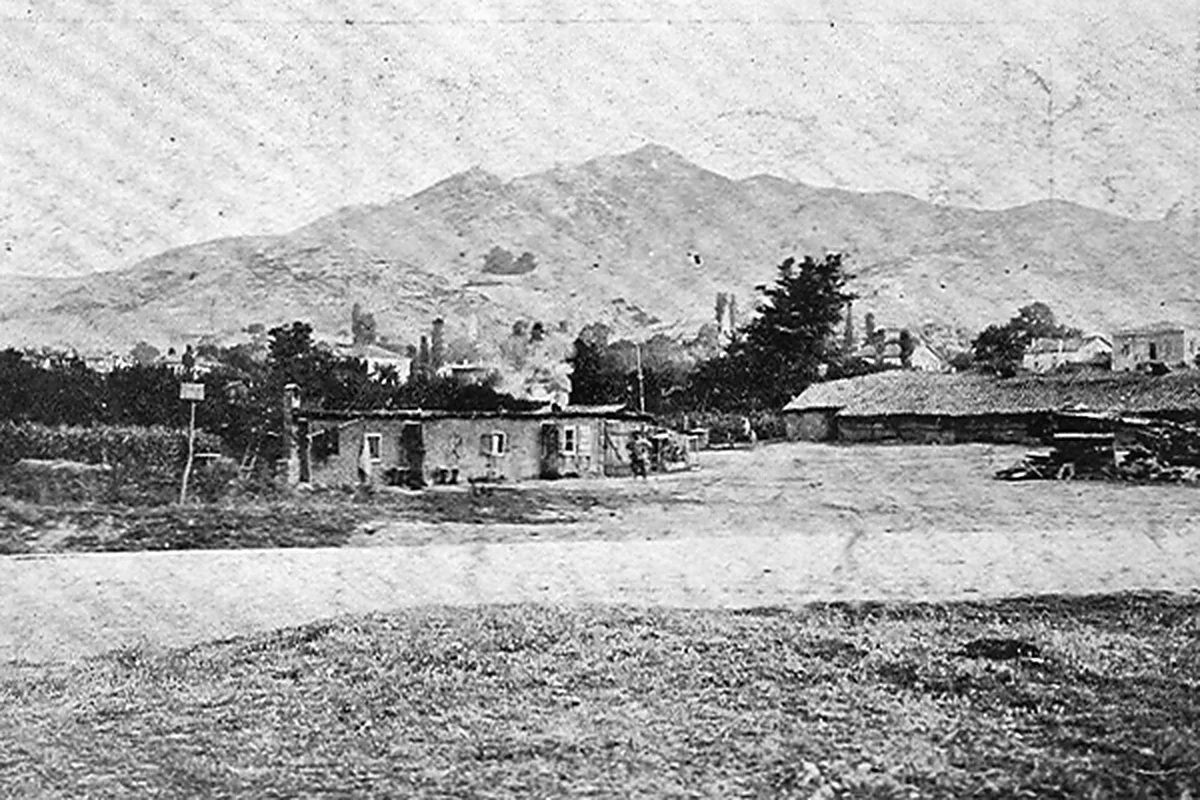
Photo Gallery (18)
Photo Gallery
Valandovo, frame by frame.
A responsive family gallery, including city views recovered from the old rotating banner system.
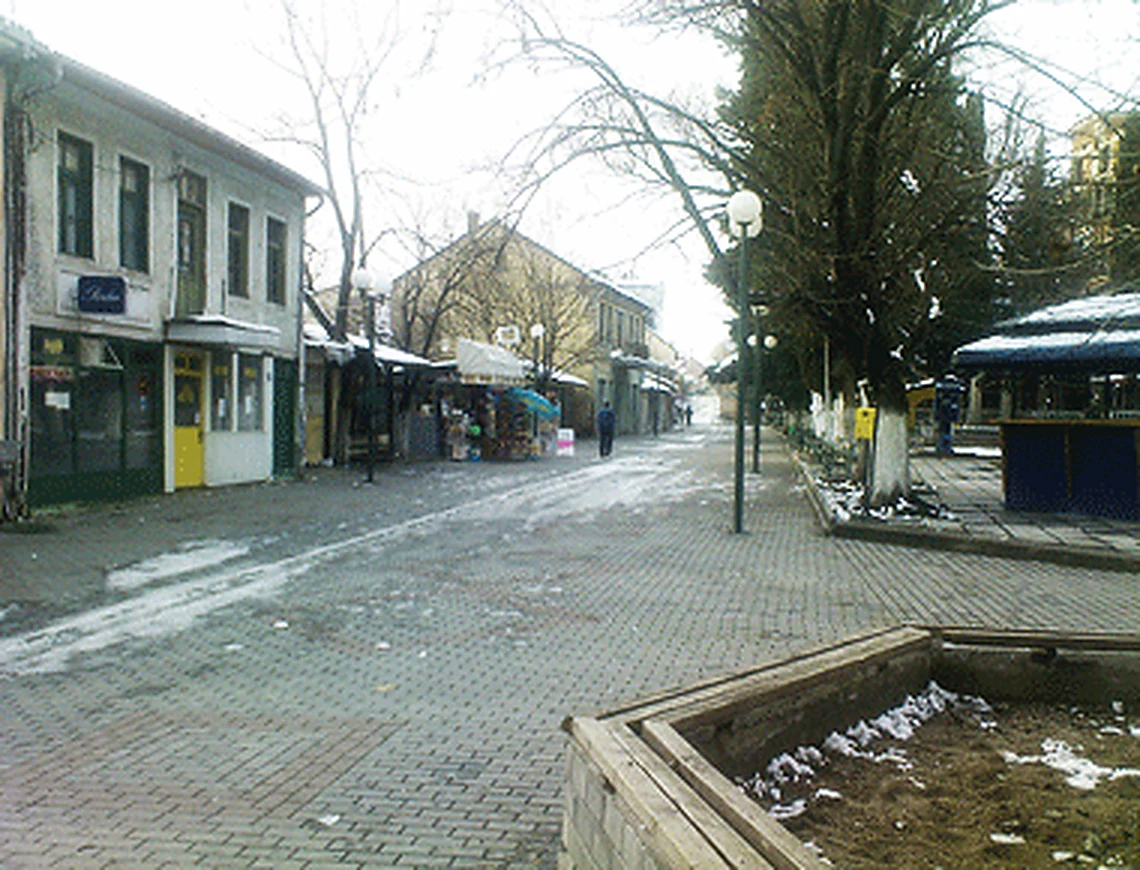
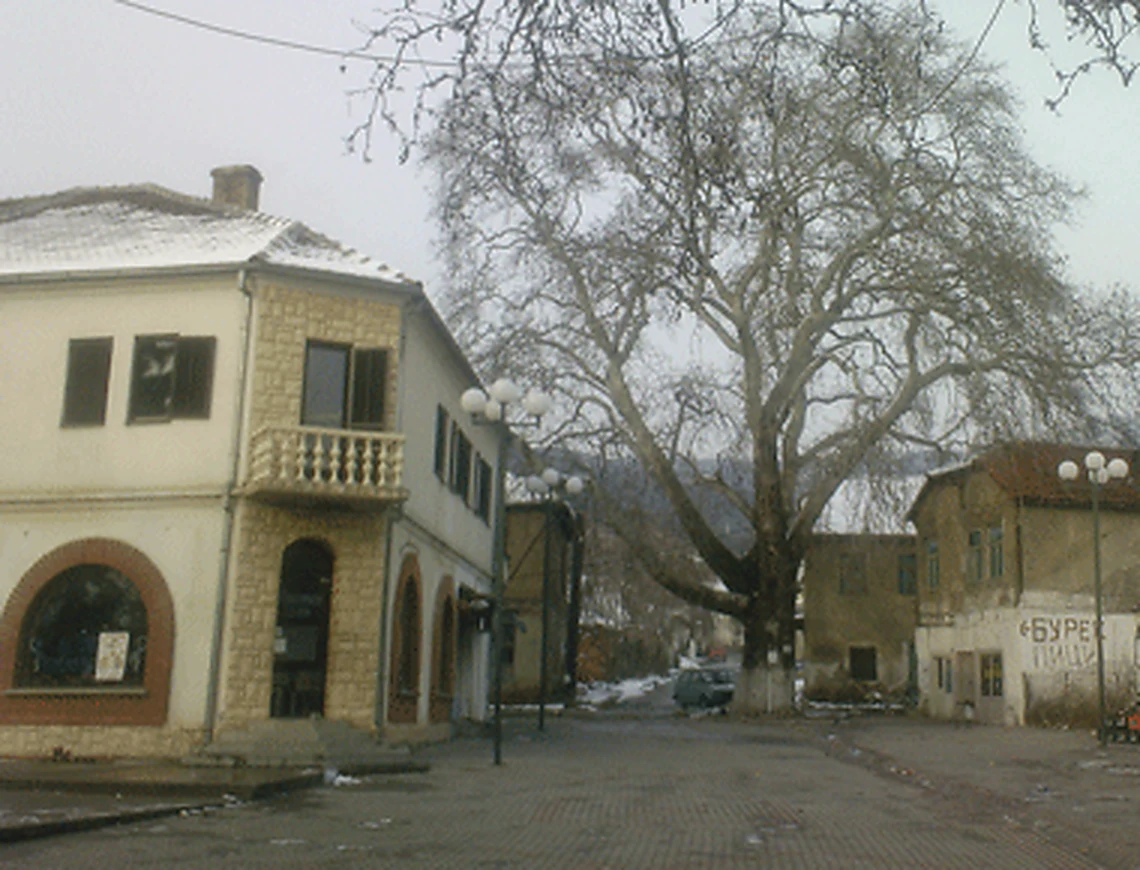
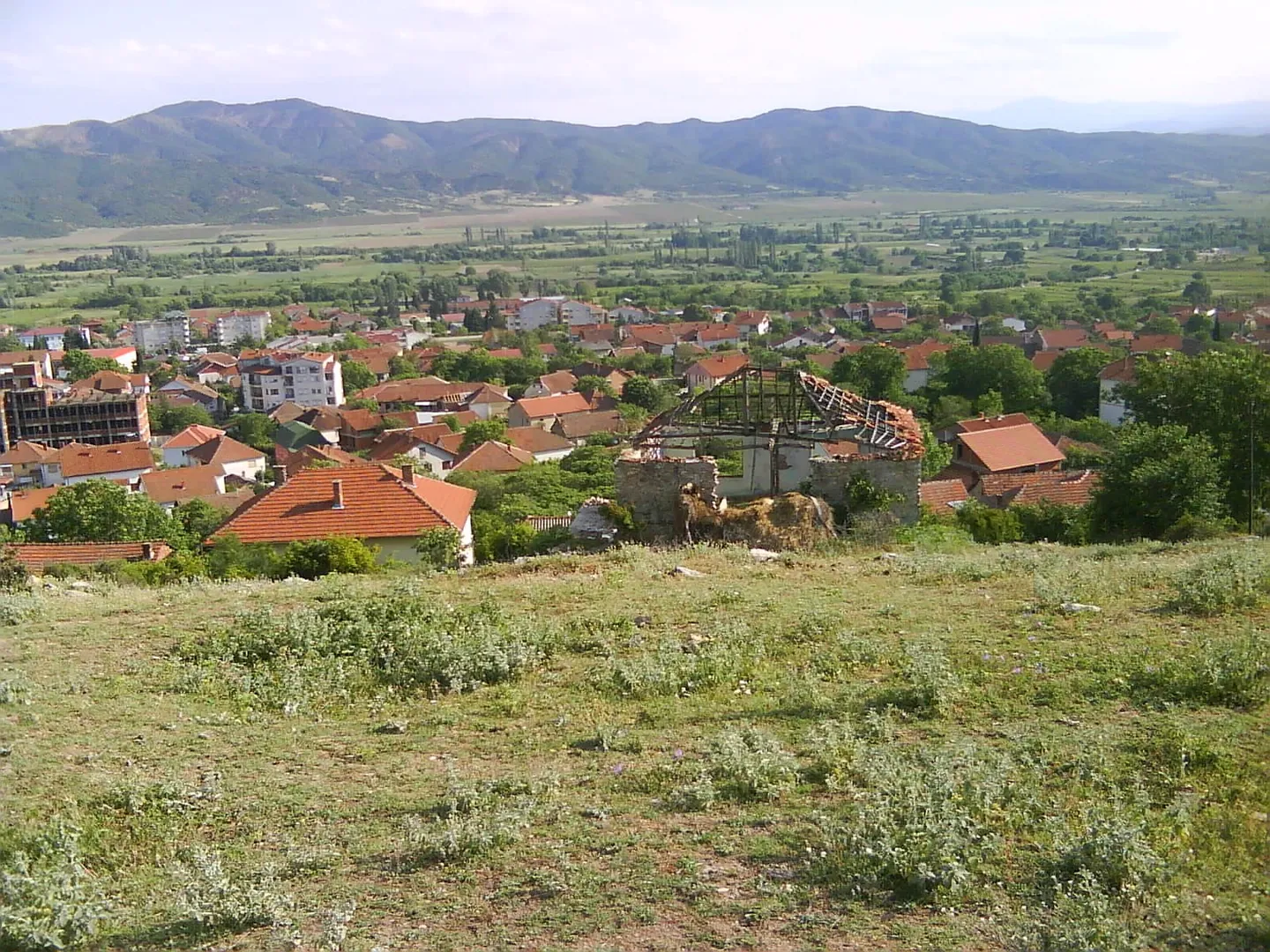
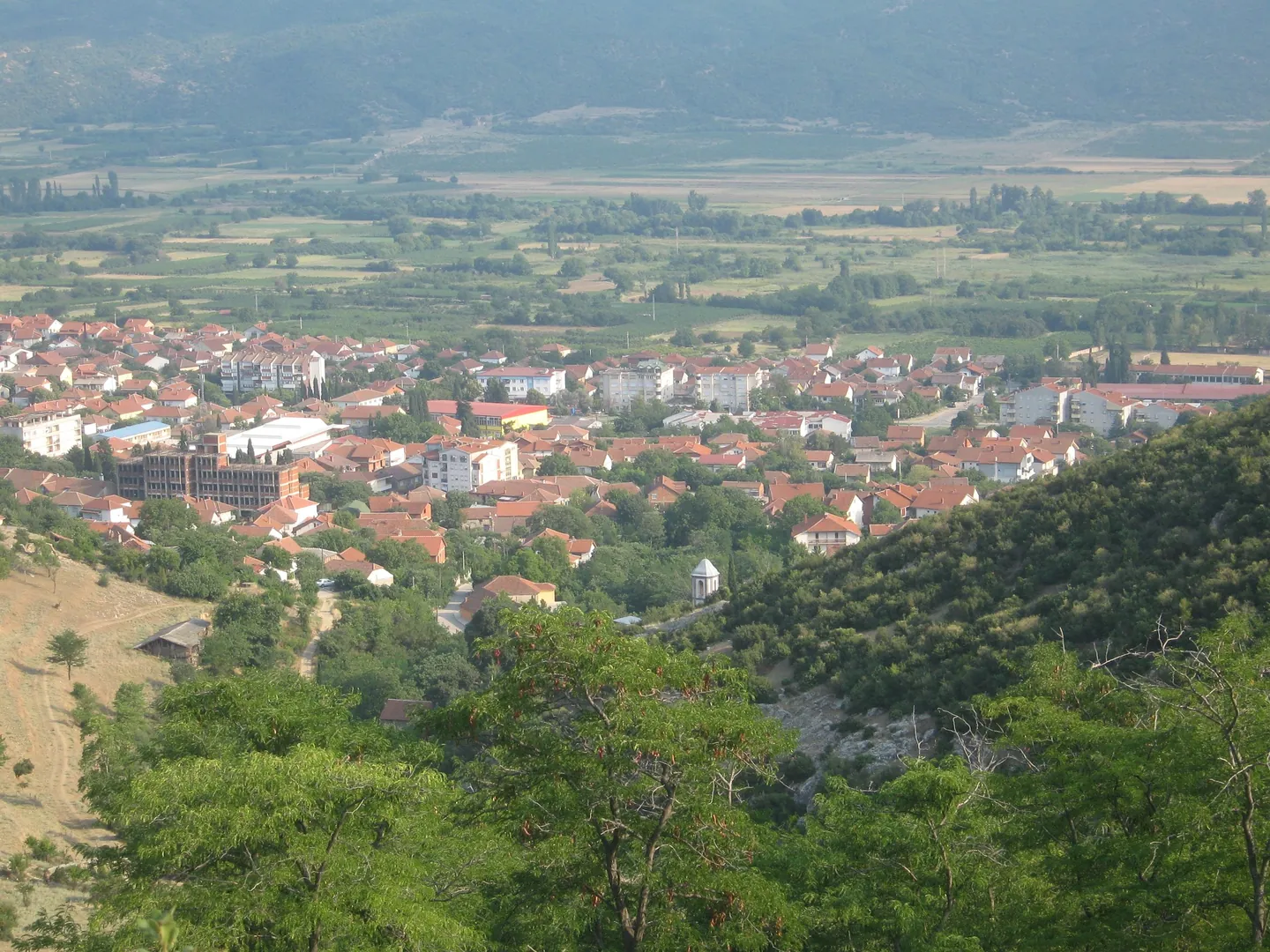
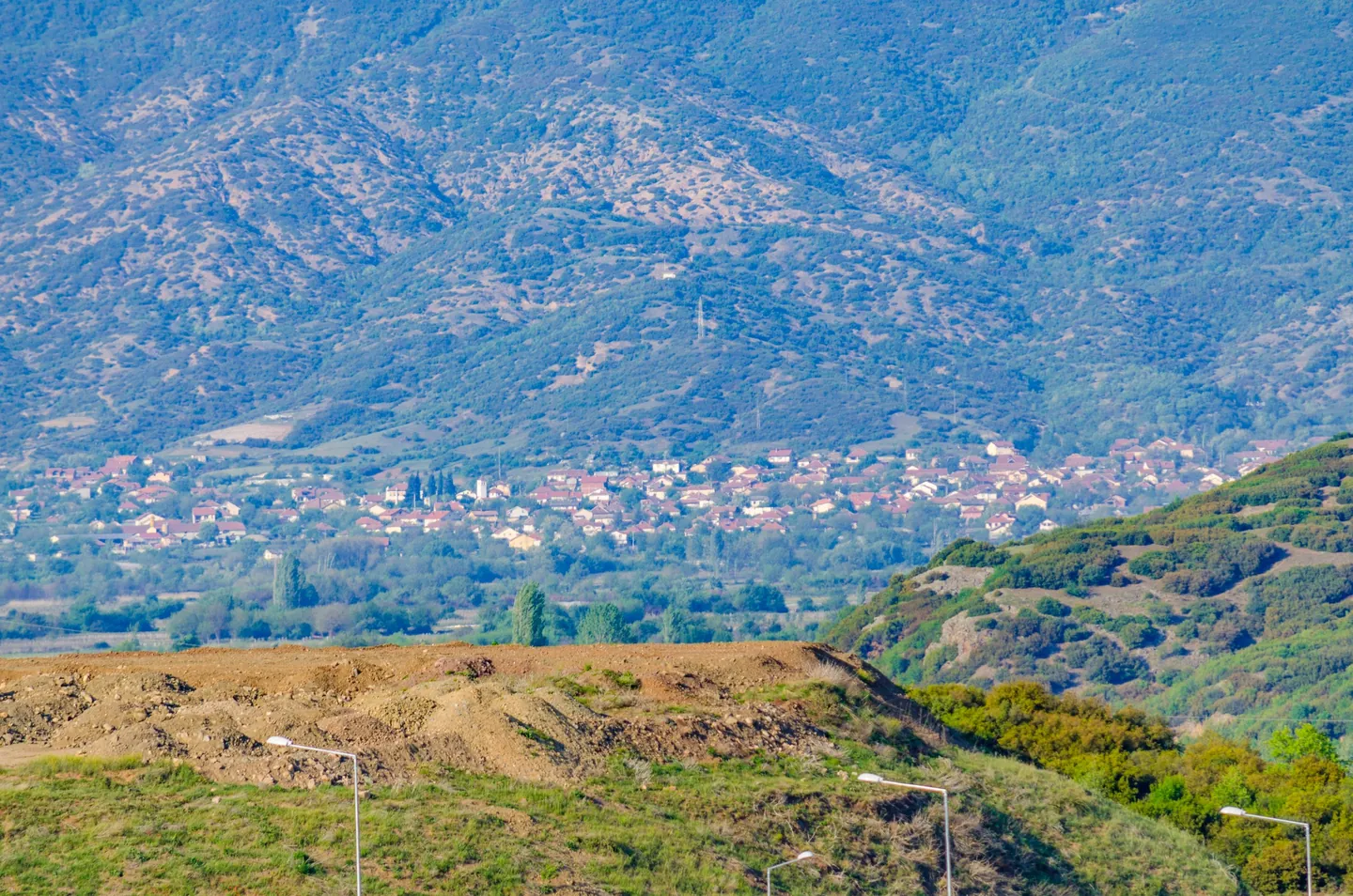
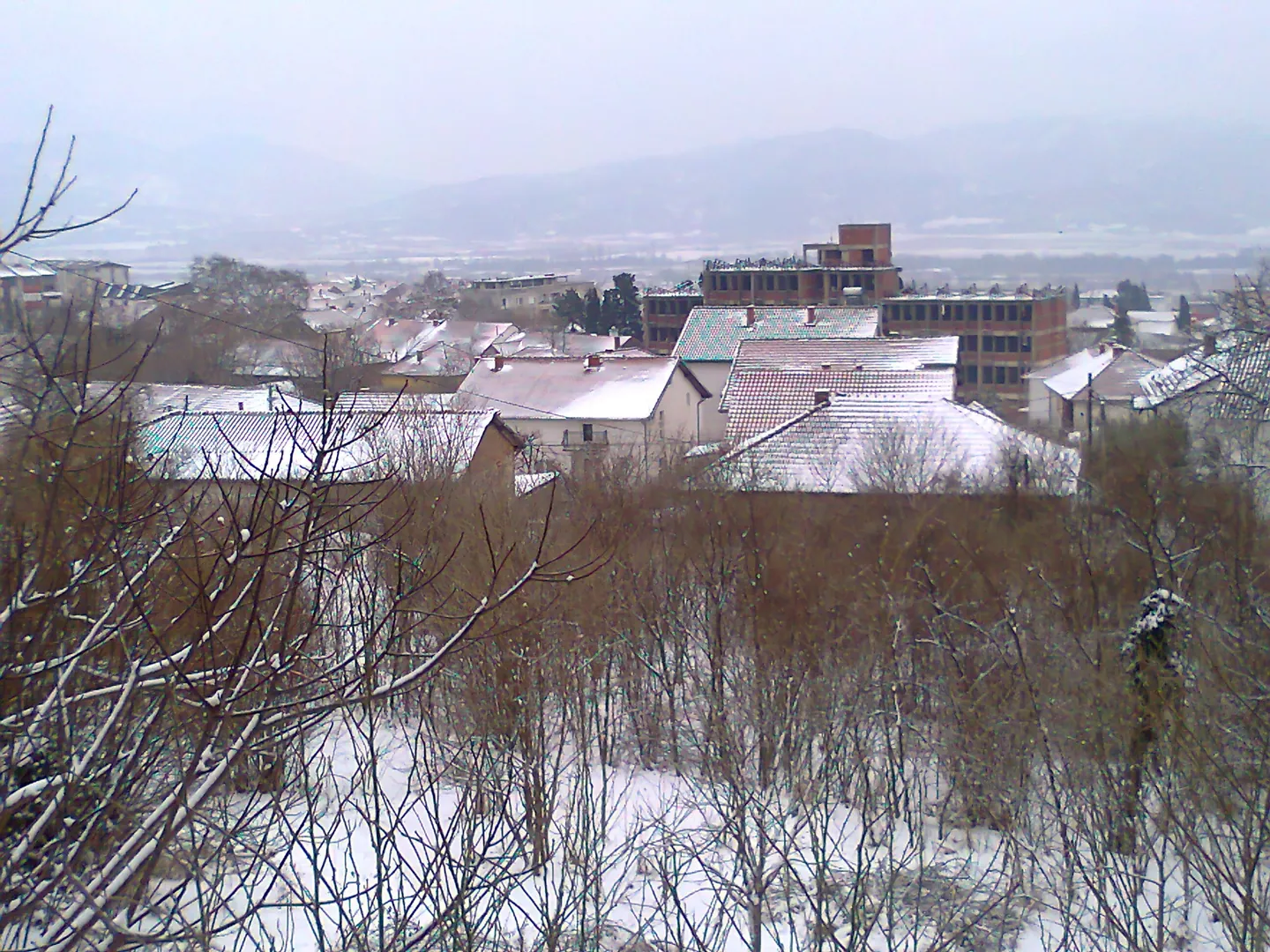
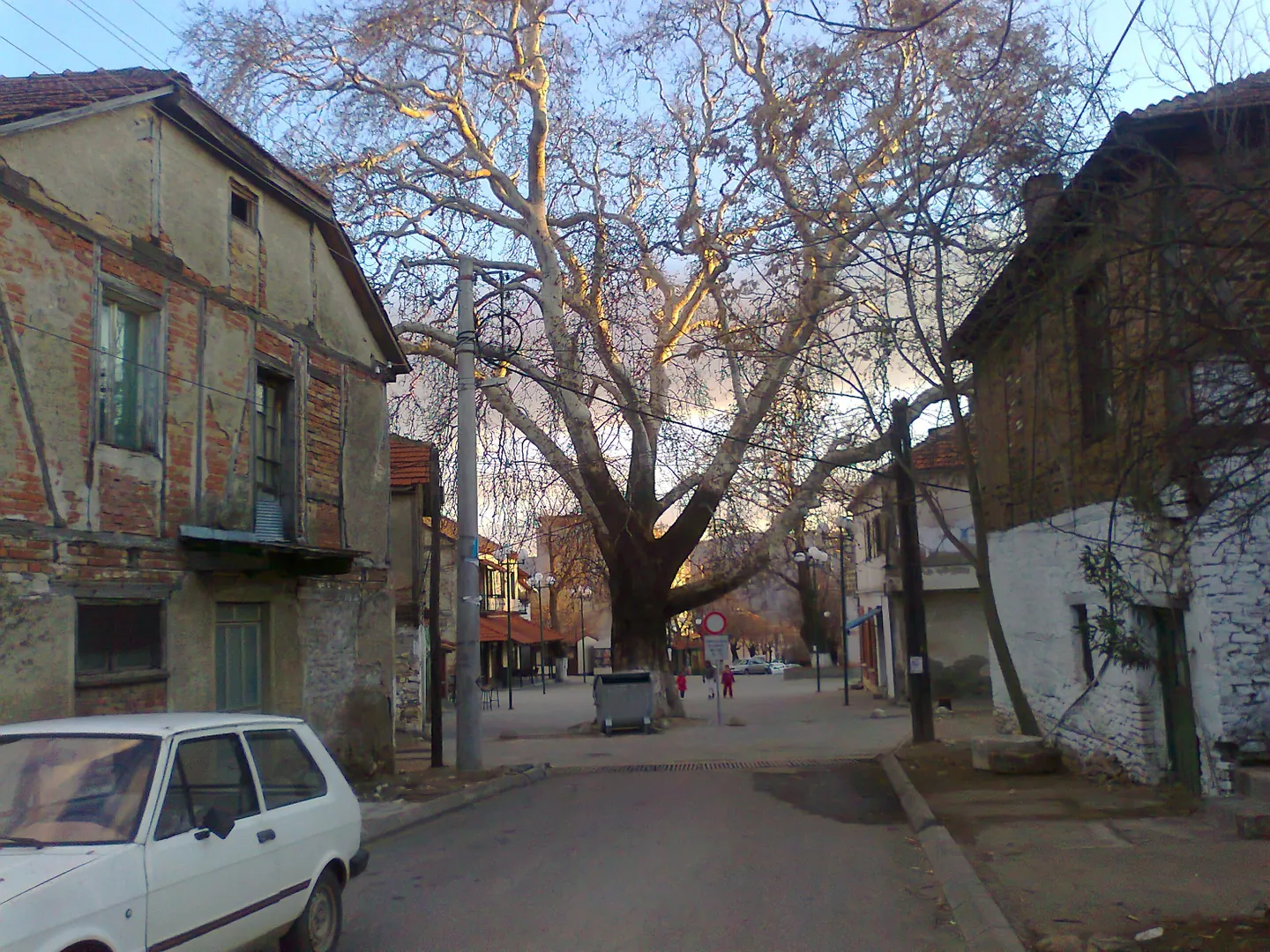
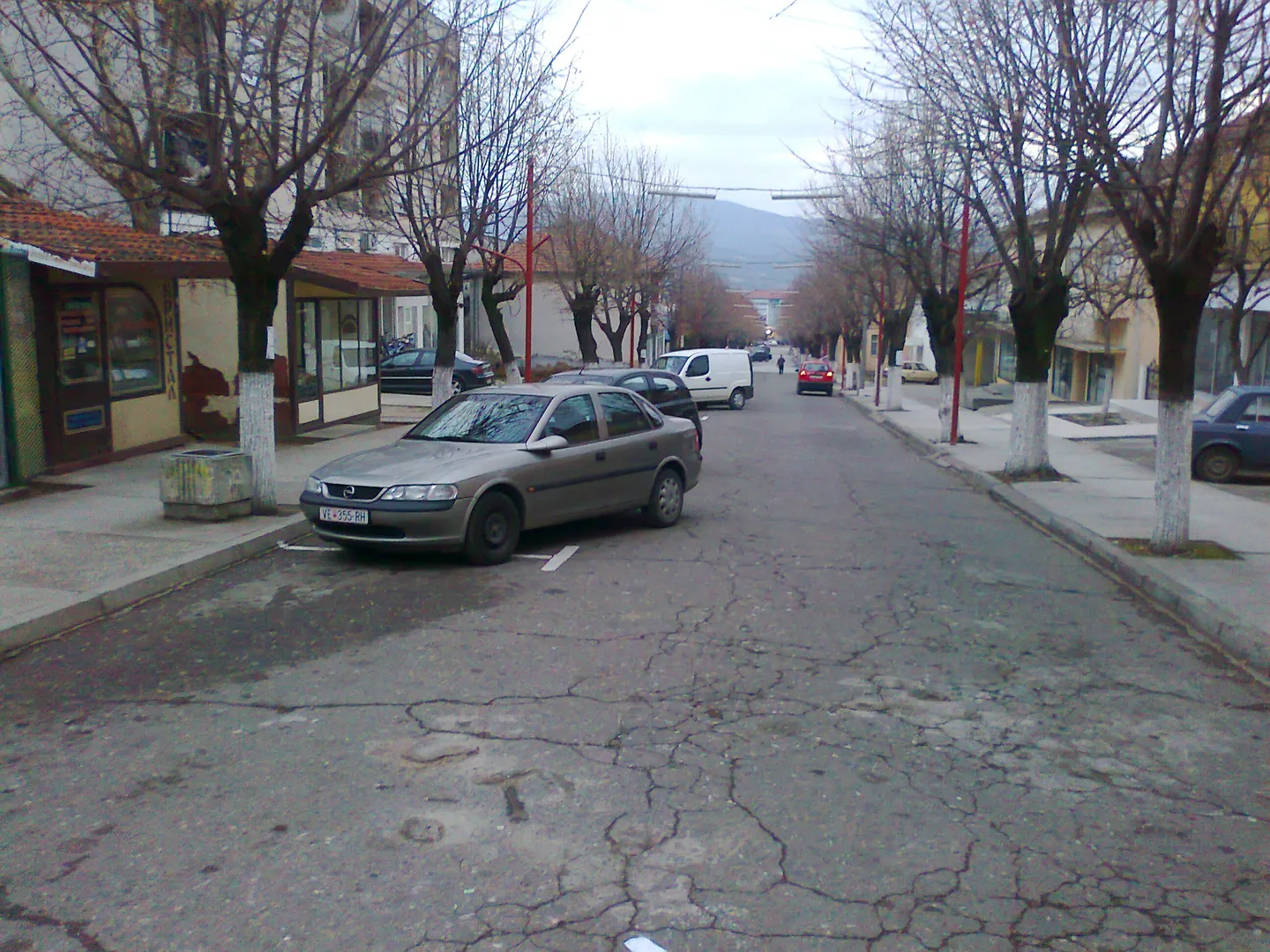
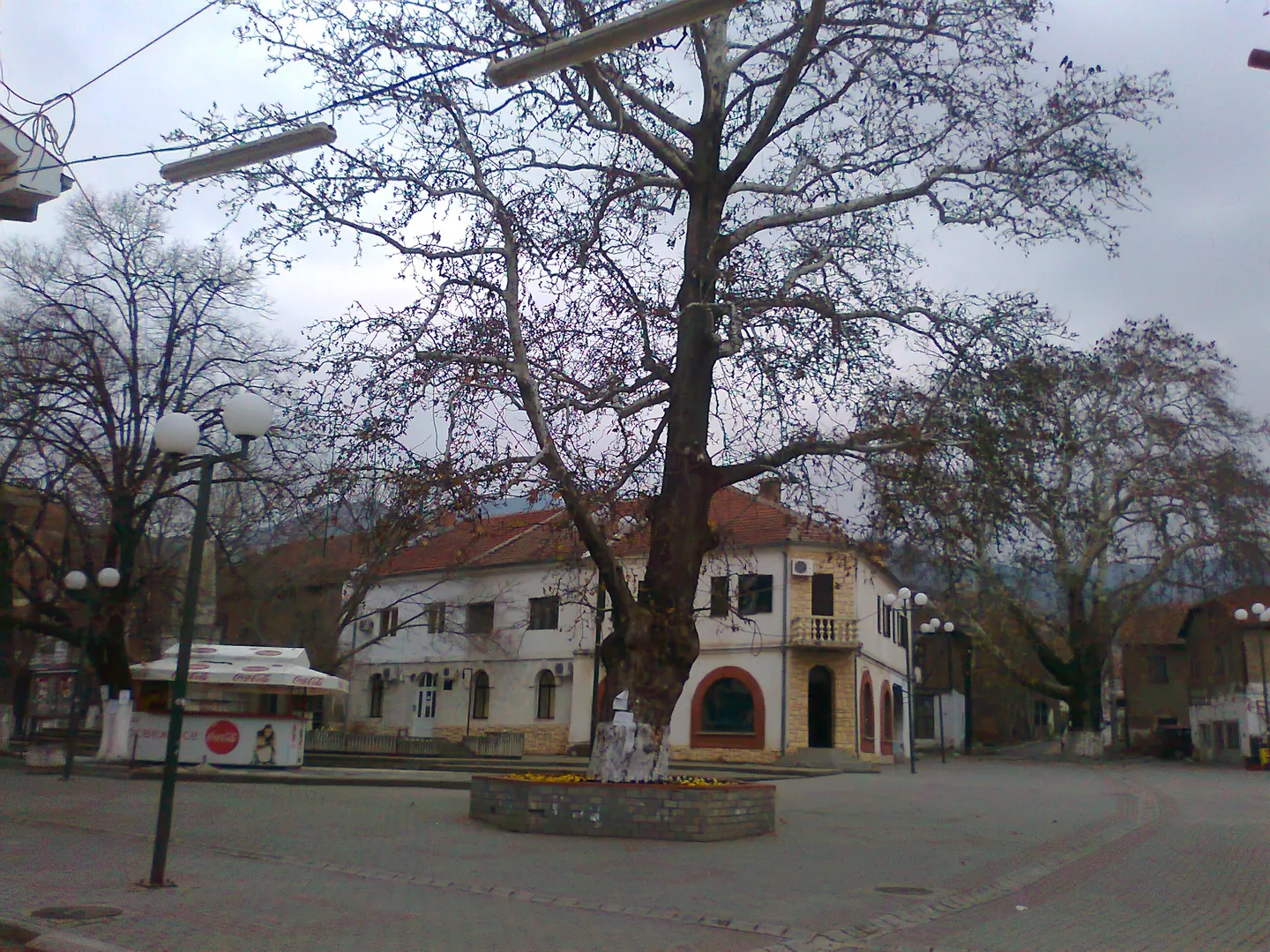
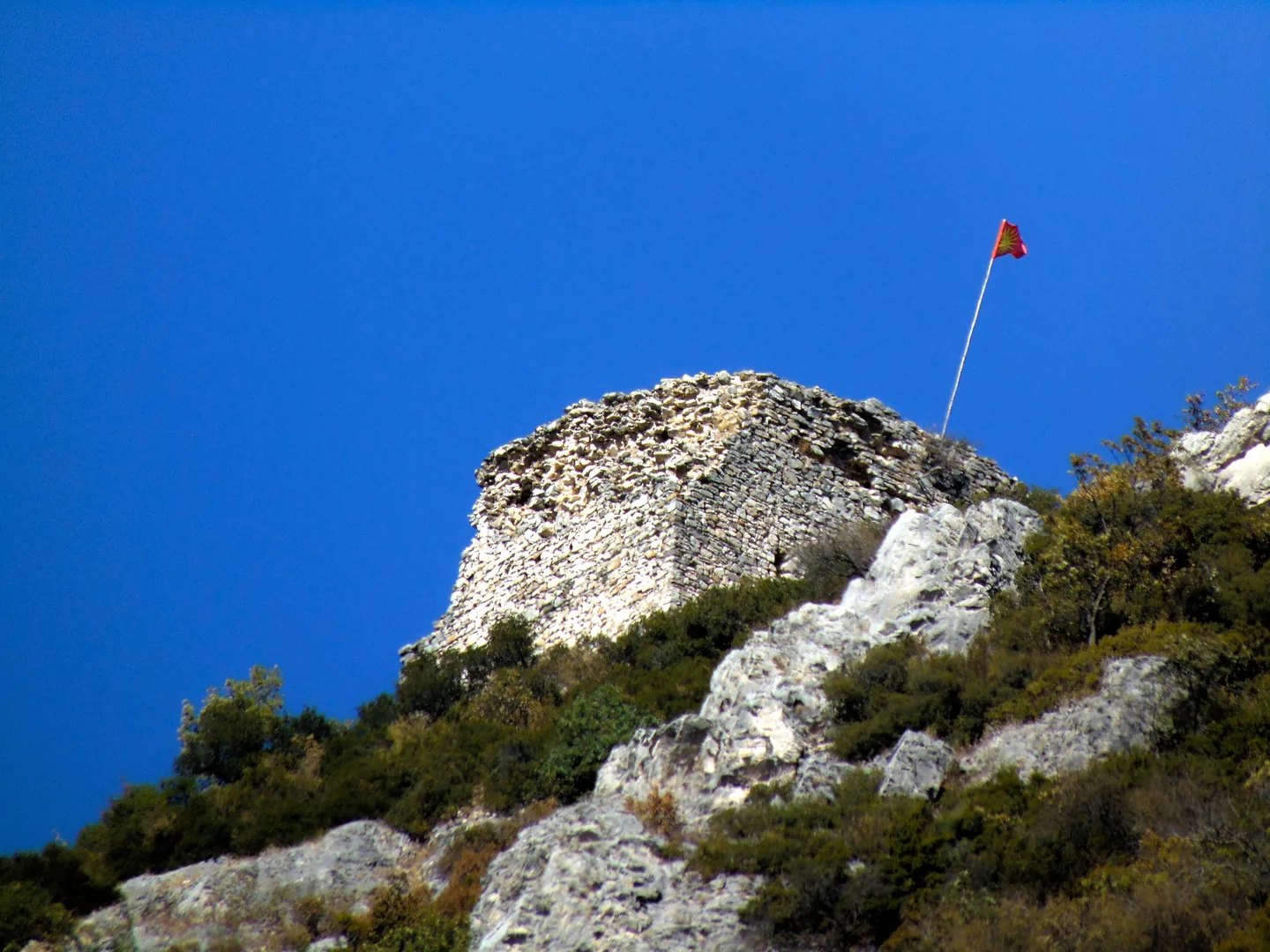
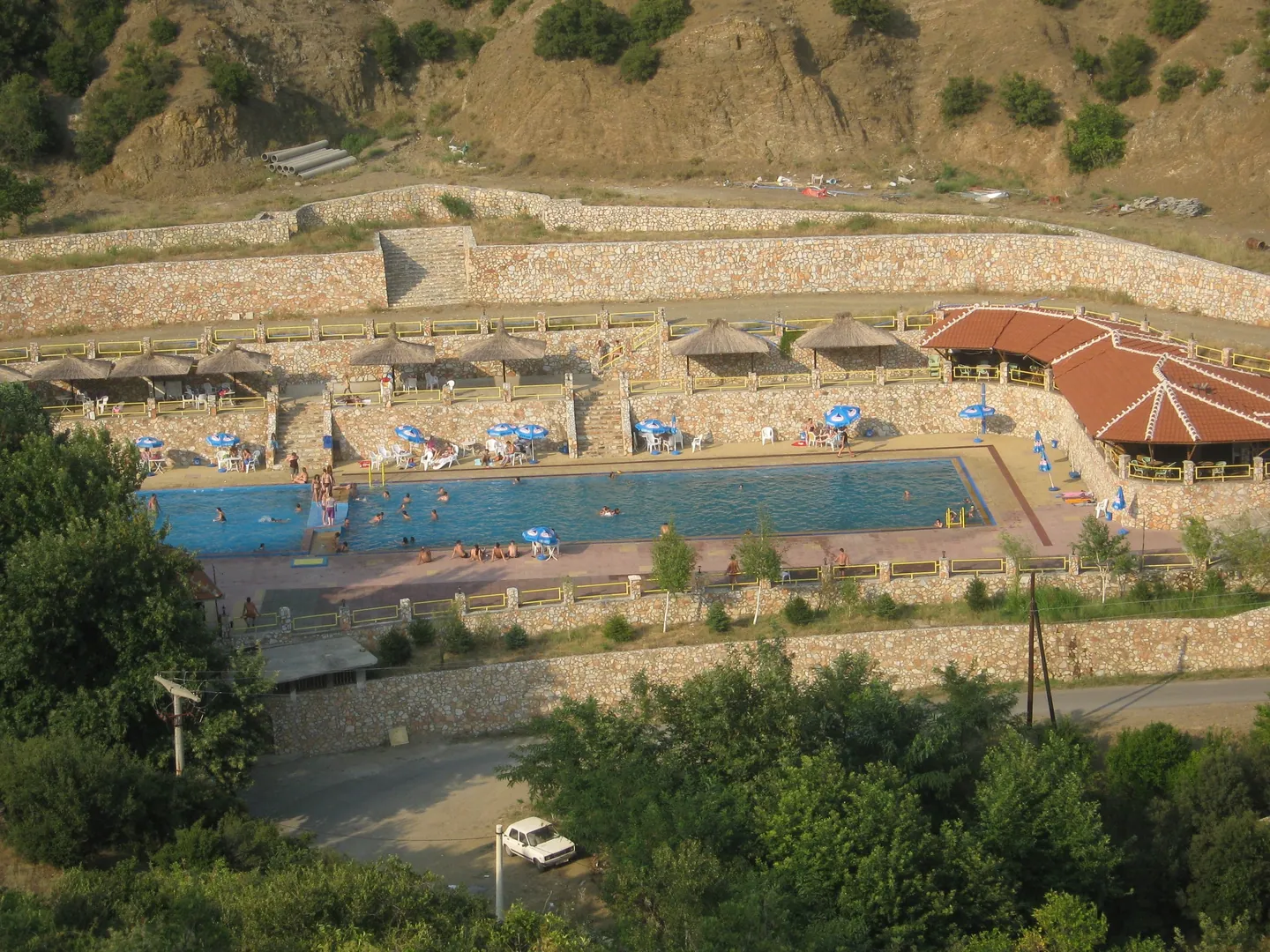
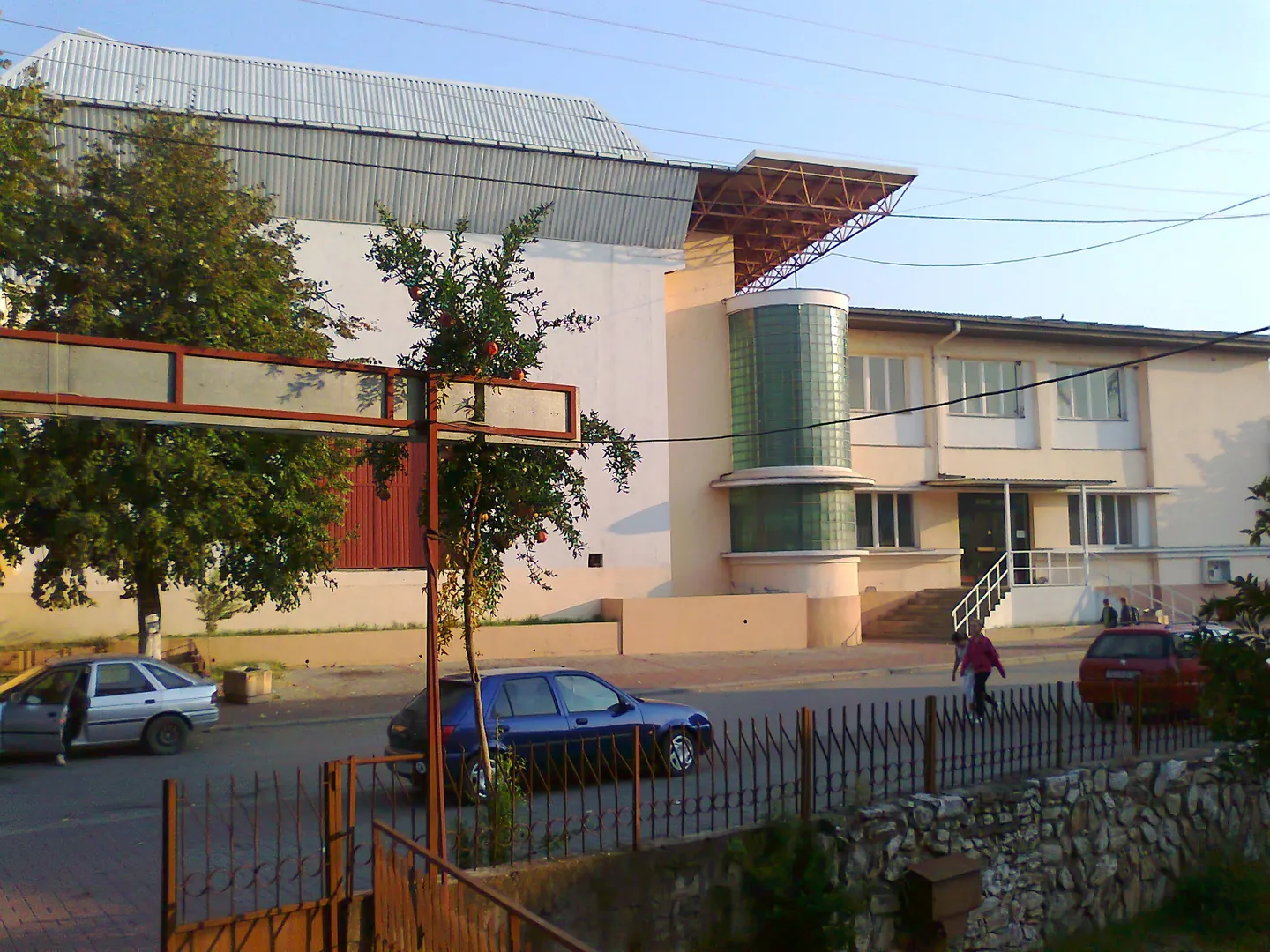
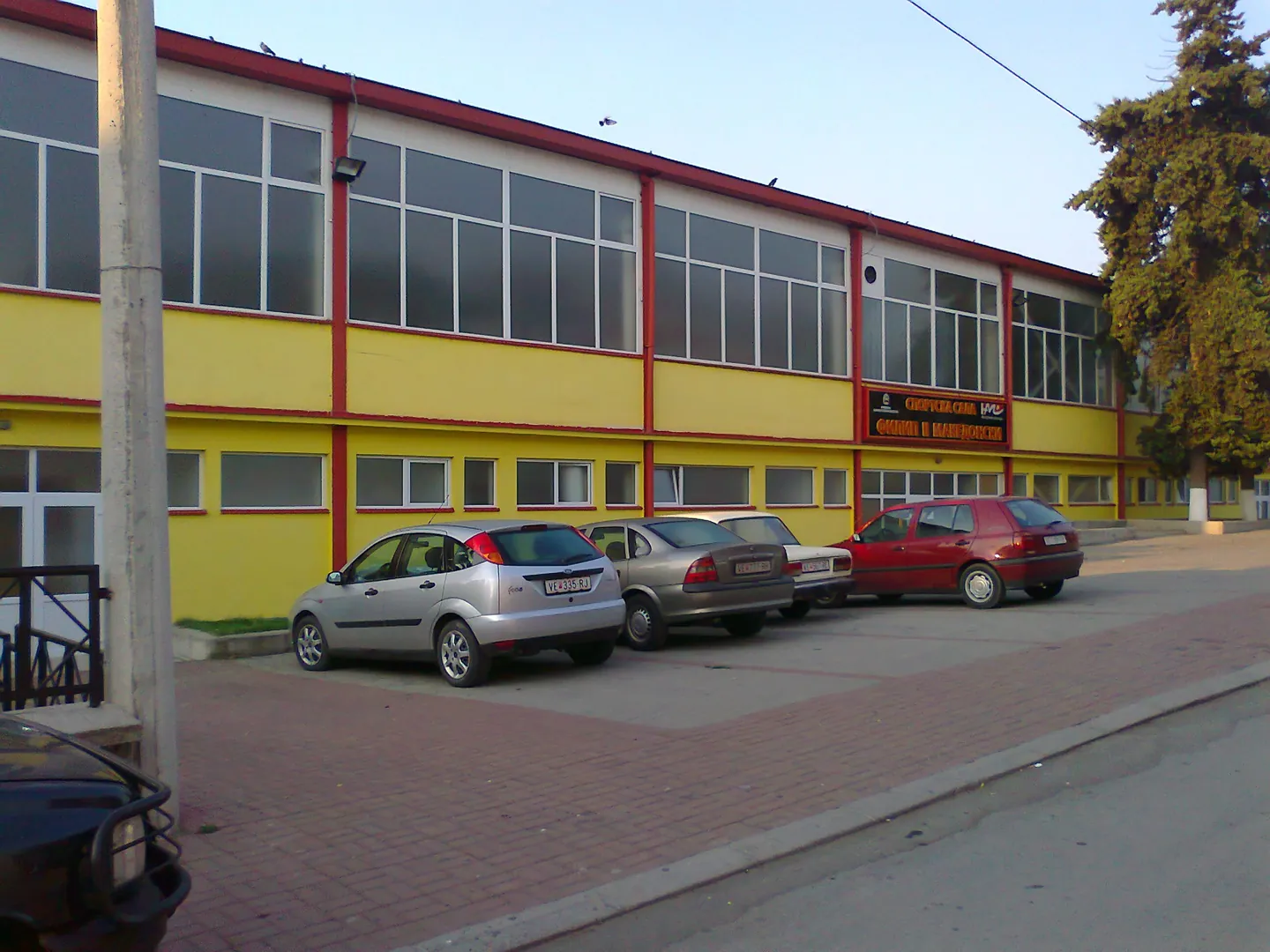
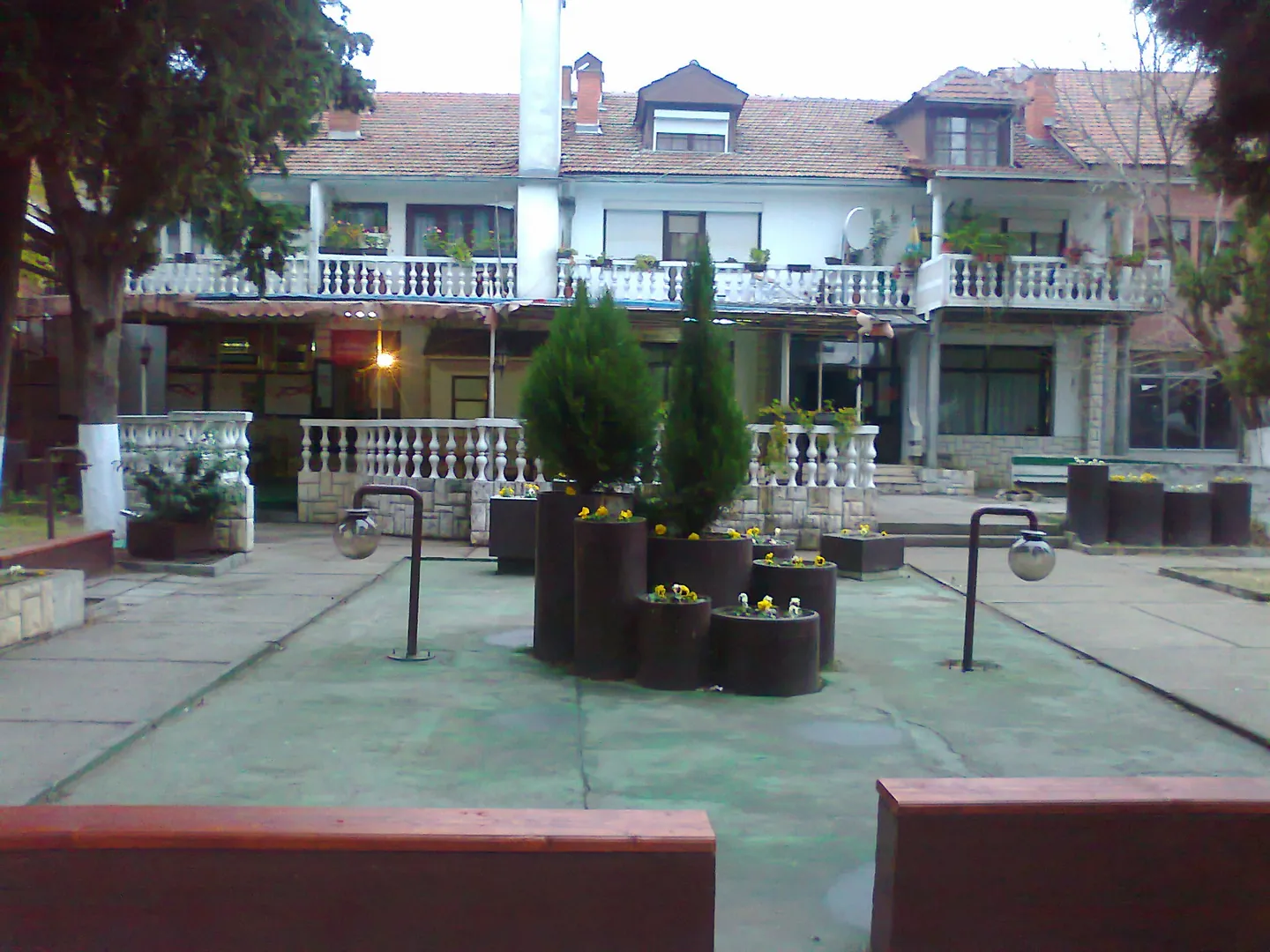
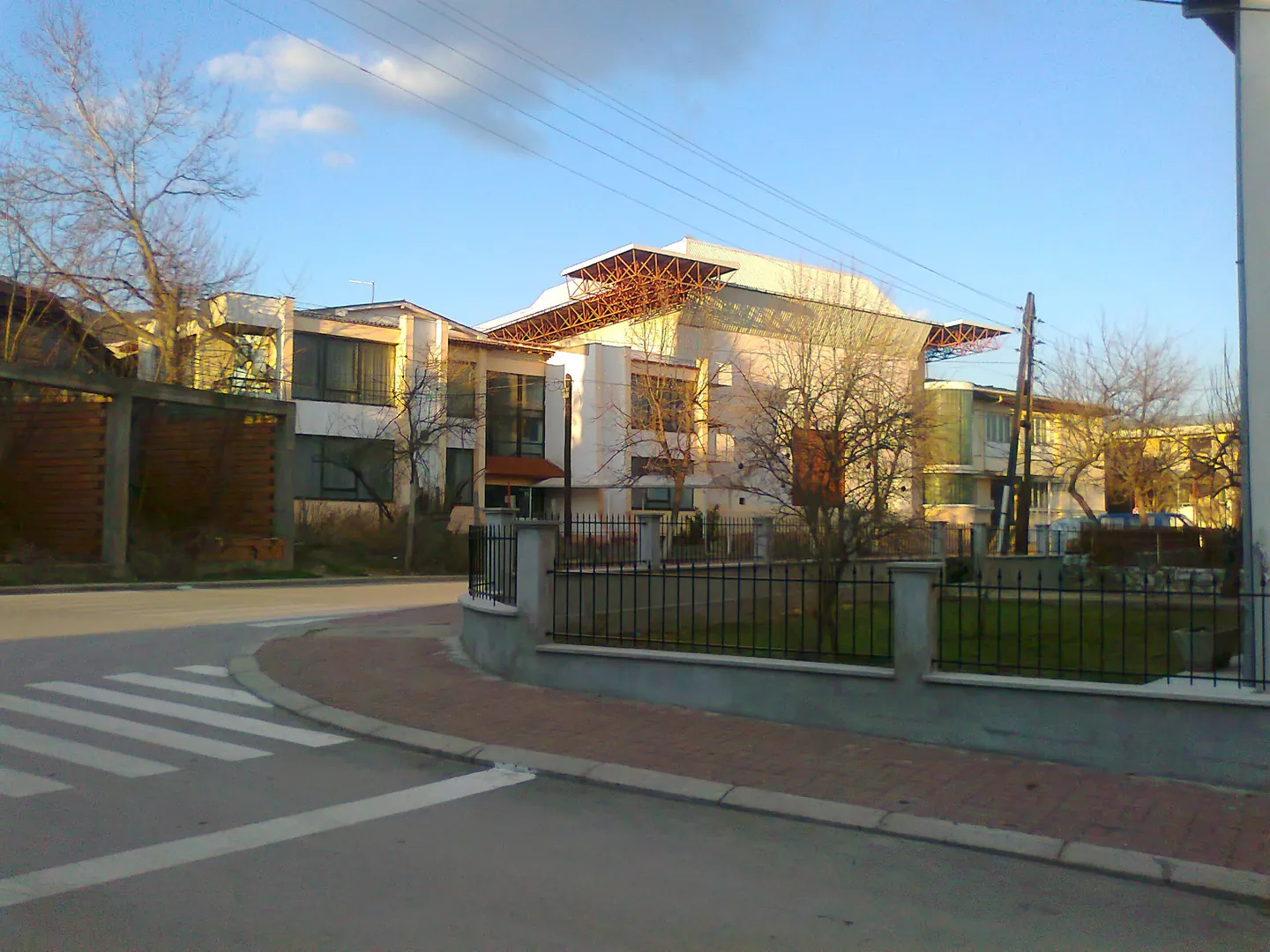
Photo credits
- Valandovo: red-roofed houses spread across a plain below mountains, seen over a grassy slope with a ruined roof. Photo: Gorge MuratCC BY 3.0Wikimedia Commons
- Valandovo: a view over the town's red roofs to a wide green plain, taken from a wooded hillside. Photo: Gorge MuratCC BY 3.0Wikimedia Commons
- Valandovo: the town far below, seen from a hillside across the valley to steep blue mountains. Photo: M.pvskCC BY-SA 4.0Wikimedia Commons
- Valandovo: snow-dusted roofs and bare trees in winter, with misty mountains behind. Photo: Gorge MuratCC BY 3.0Wikimedia Commons
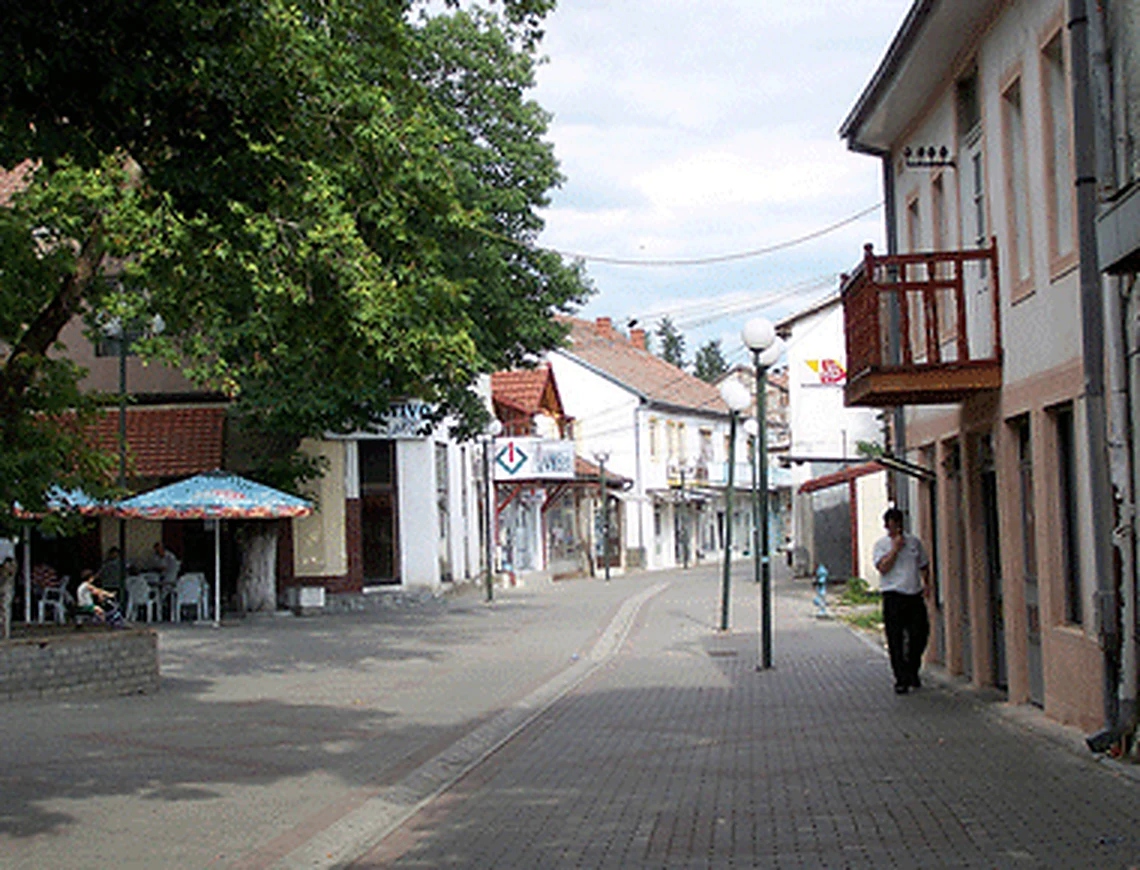
- Valandovo: a quiet street of old brick houses under a large bare plane tree, with a white car at the kerb. Photo: Gorge MuratCC BY 3.0Wikimedia Commons
- Valandovo: Mosa Pijade street running down from the centre, with whitewashed tree trunks and cracked tarmac. Photo: Gorge MuratCC BY 3.0Wikimedia Commons
- Valandovo: a large bare plane tree in a paved square with lamps, and a white two-storey building behind. Photo: Gorge MuratCC BY 3.0Wikimedia Commons
- Valandovo: Isar Kale archaeological site, weathered rock and stone ruins on a crest under a deep blue sky, with a flag. Photo: ТиверополникCC BY-SA 4.0Wikimedia Commons
- Valandovo: the public pool, a terraced stone-walled lido with parasols and swimmers below a bare hillside. Photo: Gorge MuratCC BY 3.0Wikimedia Commons
- Valandovo: a pale building with a tall roof and a green glass stair tower behind a stone wall and railings. Photo: Gorge MuratCC BY 3.0Wikimedia Commons
- Valandovo: Sala Filip II, a yellow building with red trim and long windows, with cars parked in front. Photo: Gorge MuratCC BY 3.0Wikimedia Commons
- Valandovo: Penzionerski dom, a white building with balconies behind a paved square with planters. Photo: Gorge MuratCC BY 3.0Wikimedia Commons
- Valandovo: the cultural centre, a pale modern building with a red roof frame, seen behind iron railings from a street corner. Photo: Gorge MuratCC BY 3.0Wikimedia Commons


